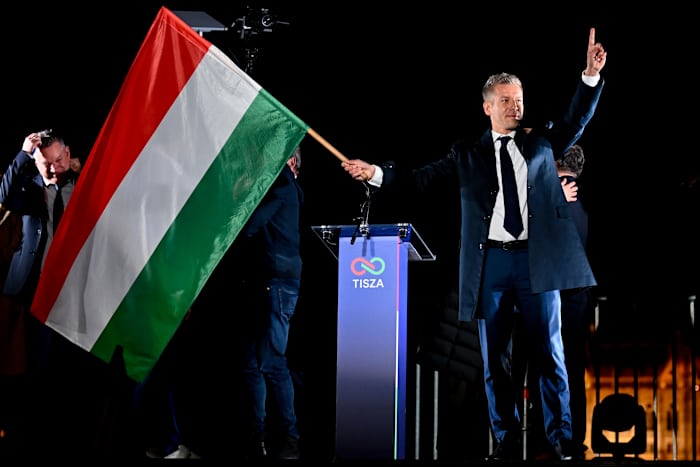
Budapest is buzzing with an energy I haven't seen in decades. If you walk through Kossuth Square today, you’ll feel a strange mix of disbelief and pure, unadulterated adrenaline. After 16 years of Viktor Orbán’s iron-clad grip on the country, the "system of national cooperation" isn't just cracking—it’s being dismantled in real-time. Péter Magyar, the man who went from an inner-circle lawyer to the face of a political earthquake, is calling for a "regime-change celebration" this Saturday. It’s not just a party; it’s a statement that the old rules don't apply anymore.
People are asking if this is just another political transition or something deeper. Let's be real: when you win 138 seats in a 199-seat parliament, it’s not a transition. It’s a mandate to tear it all down and start over. Magyar isn't just moving into the Prime Minister's office; he's inviting the whole country to watch him sweep the floor.
The party that feels like a revolution
Magyar’s planned celebration on Saturday coincides with his official swearing-in. He’s explicitly calling it a "regime change" event. That choice of words is deliberate and heavy with historical baggage in Eastern Europe. It mirrors the language used when the Iron Curtain fell in 1989. For a 45-year-old leader who built his Tisza party in less than two years, the optics are everything.
While Magyar takes the oath inside the neo-Gothic Parliament building, the real action will be outside. He’s promised surprise guests and artistic performances, but the biggest draw is the symbolic return of the European Union flag. Orbán’s government famously yanked it down in 2014. Seeing it fly again over the Danube isn't just about diplomacy; it’s a middle finger to the isolationism of the last decade.
Budapest Mayor Gergely Karácsony is even throwing his own "system-closing" bash along the river. It’s a coordinated effort to mark a clean break from the past. You don't see this kind of jubilant, multi-event coordination in "normal" elections. This is what happens when a country feels like it’s finally exhaling after holding its breath for 16 years.
Cleaning out the cupboards
Magyar knows that a party won't fix a broken economy or bridge-building with Brussels. He’s already moving to establish the National Asset Recovery and Protection Office. If you think that sounds like a hunt for missing cash, you’re right. One of the biggest complaints from the 3.4 million people who voted for Tisza was the perceived enrichment of Orbán’s family and business allies.
Magyar isn't playing around with his cabinet picks either. He’s leaning on actual experts instead of political loyalists. He’s tapped Anita Orbán—no relation to the outgoing PM—as Foreign Minister and former Shell executive István Kapitány for the economy. This is a clear signal to international markets: the era of "unorthodox" economics is over. He wants competence over ideology.
Key structural changes on the table
- New Ministries: Under Orbán, specific ministries for health, education, and the environment didn't even exist. Magyar is bringing them back.
- Media Reform: He’s promised to suspend the news services of the public broadcaster until they can prove they aren't just a government mouthpiece.
- EU Relations: The goal is to unlock 17 billion euros in frozen funds. That money is the difference between a stalling economy and a recovery.
Why the youth vote changed everything
The numbers are staggering. In the April election, some estimates showed Magyar capturing nearly 90% of the under-30 vote. That’s not just a lead; it’s a generational rejection. Younger Hungarians grew up knowing only one leader. They saw their peers move to London, Berlin, or Vienna for better pay and more freedom.
Magyar’s genius was speaking their language. He used social media to bypass the state-controlled TV channels and went straight to the people. He talked about everyday stuff like the state of public transport and the fact that you have to wait months for a basic medical procedure. He made politics feel like a tool for life improvement rather than a cultural war.
The risks of the new era
It’s not all fireworks and champagne. Magyar is inheriting a mess. The fiscal situation is tight, and many of the institutions—the courts, the media, the central bank—are still packed with people appointed by the previous administration. You can’t just fire everyone on day one.
Magyar has also been careful about his stance on the war in Ukraine. While he's more pro-EU than his predecessor, he’s still playing a delicate game. He suggested Hungary might "opt out" of specific loans for Ukraine while still allowing the rest of the EU to move forward. It’s a pragmatic approach that aims to keep his domestic base happy while repairing the bridge to Brussels.
Honestly, the biggest challenge might be the expectations. When you promise a "regime change," people expect their lives to look different by Monday morning. Magyar has the seats and the momentum, but he’s fighting against a system that was built over nearly two decades to be permanent.
What happens next
If you're watching this from the outside, pay attention to the first 100 days. Watch for the return of the EU flag this Saturday. Watch for the first official visits to Warsaw and Brussels. These aren't just photo ops; they’re the first steps in a massive geopolitical shift.
To really see if the change is sticking, look at these specific indicators:
- The Public Media Reset: If the evening news stops sounding like a government press release, the "regime change" is real.
- Asset Recovery: Keep an eye on those investigations into public funds. If they actually happen, it’s a sign that the old guard’s protection is gone.
- The EU Funds: When that 17 billion euros starts flowing, it will be the ultimate validation of Magyar’s strategy.
The celebration on Saturday isn't the end of the story. It’s the starting gun. Hungarians are ready to celebrate, but they’re also ready to see results. The party is going to be great, but the cleanup starts on Sunday.