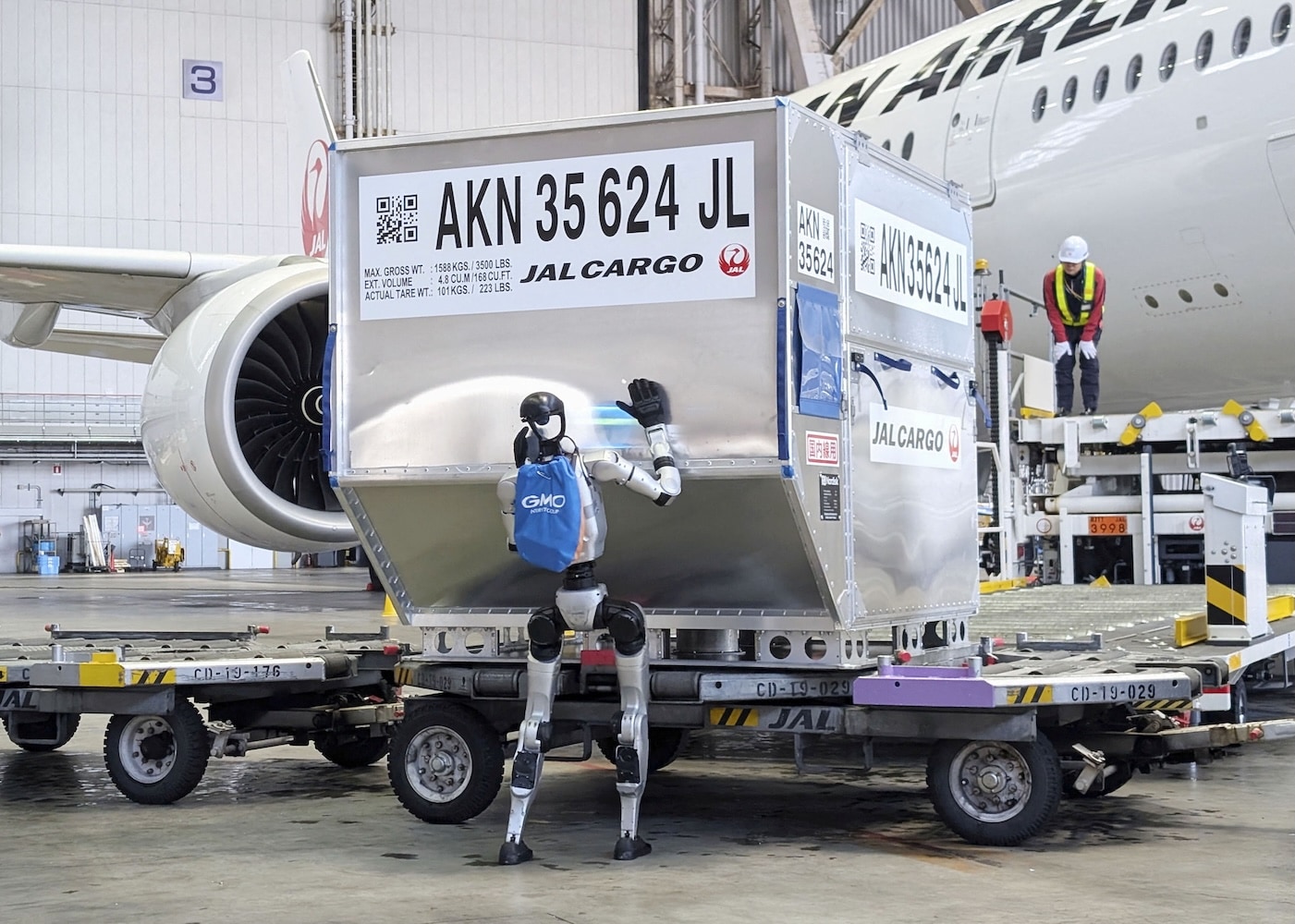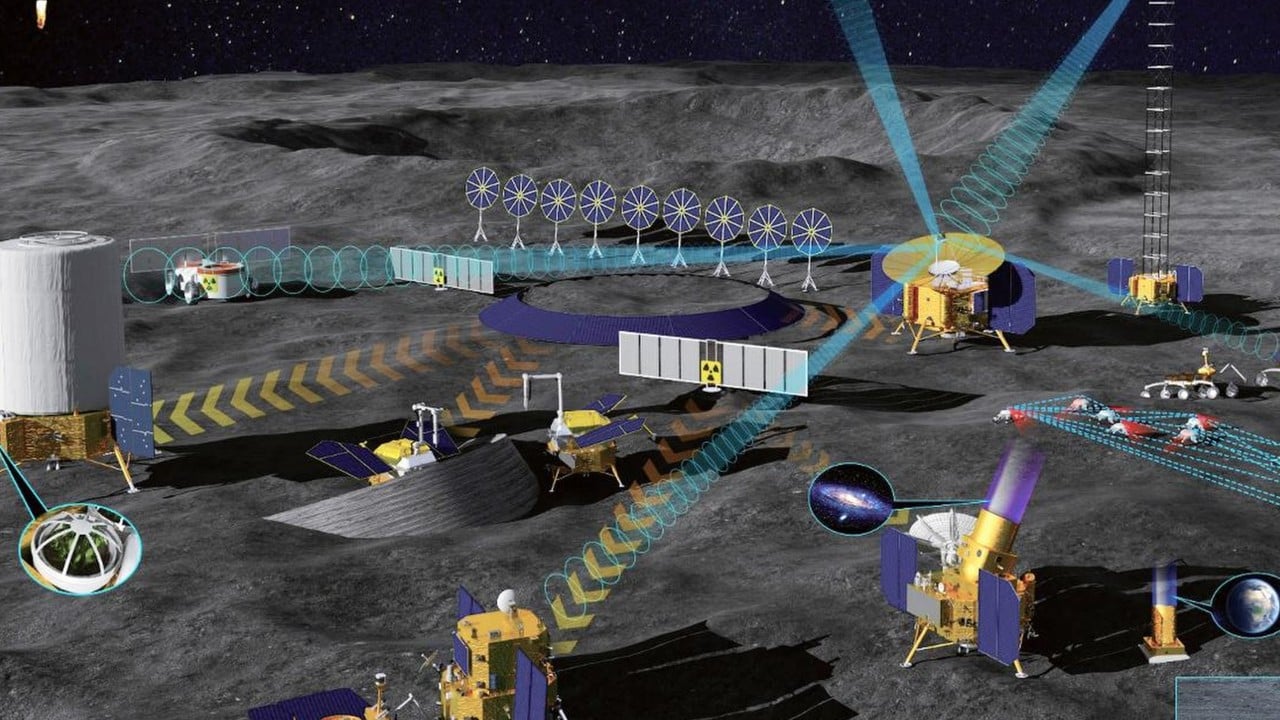
The recent fascination with China’s "weird-looking" humanoid lunar robot is a masterclass in PR over performance. Headlines are screaming about a revolution in space travel because a piece of titanium and silicon has two legs and a torso. It is a seductive image. It looks like us. It feels like the sci-fi future we were promised.
It is also an engineering disaster waiting to happen.
If you want to conquer the moon, the last thing you should send is a machine that mimics the flawed, fragile architecture of a human being. We are celebrating a design choice that prioritizes vanity over physics. While the media fawns over "human-like dexterity," they are ignoring the brutal reality of lunar regolith, thermal swings, and the sheer stupidity of balancing on two points in one-sixth gravity.
The Biomorphic Fallacy
Engineers keep trying to build robots in our image because our world is built for us. We have stairs, door handles, and chairs. On the moon, there is no infrastructure. There are no ladders to climb or espresso machines to operate.
Designing a lunar robot to look like a person is like bringing a Ferrari to a swamp because you like the leather seats. It is an aesthetic choice masquerading as a technical requirement.
The moon is a jagged, abrasive, radiation-soaked wasteland. A humanoid shape is objectively the worst configuration for this environment.
- Center of Gravity: A bipedal robot is a falling hazard. In low gravity, a simple trip becomes a slow-motion catastrophe.
- Mechanical Complexity: Every "human" joint is a point of failure. A humanoid needs dozens of actuators just to stand still. A rover needs four wheels and a motor.
- Energy Waste: Maintaining balance consumes constant power. On the moon, where every watt is paid for in millions of dollars of launch costs, wasting energy on "standing" is a fireable offense.
I have watched aerospace firms burn through nine-figure budgets trying to make robots "walk" across uneven terrain. It’s a parlor trick. If you want to move dirt, buy a bulldozer. If you want to explore a crater, build a hexapod or a rover. Stop trying to build a metal boyfriend for the lunar south pole.
The Regolith Problem
Space enthusiasts love to talk about "dexterity." They imagine these humanoid robots delicately handling tools or assembling habitats.
They clearly haven't spent enough time studying lunar regolith.
Moon dust isn't like Earth dust. It isn't weathered by wind or water. It is microscopic shards of glass. It is electrostatic. It clings to everything. It eats seals. It grinds gears into useless powder.
When you build a humanoid, you are multiplying the surface area of exposed joints and moving parts by a factor of ten compared to a sealed, wheeled unit. You are creating a buffet for regolith. Every knee, hip, and elbow is a vacuum-sealed invitation for mechanical seizure.
Efficiency vs. Ego
The Chinese aerospace sector is brilliant, but they are not immune to the "Cool Factor" trap. There is a geopolitical race to look the most advanced. A six-wheeled box that can operate for ten years without a glitch doesn't make the front page. A silver humanoid that looks like it stepped out of a movie set creates a narrative of dominance.
But narratives don't survive the lunar night.
Temperatures on the moon swing from $120^{\circ}C$ to $-130^{\circ}C$. Materials expand and contract. In a humanoid, the tolerances required to keep those "limbs" moving are impossible to maintain over long durations without massive, heavy thermal management systems.
The weight you spend on heaters for a robot’s "ankles" is weight you aren't spending on scientific sensors, drill bits, or extra batteries. We are sacrificing mission capability for a photo op.
Stop Asking if They Can Walk
People keep asking, "Can these robots replace astronauts?"
The question is fundamentally flawed. We shouldn't be trying to replace the human form; we should be trying to transcend it.
If we are building a machine to build a base, give it six arms. Give it tank treads. Give it a 360-degree field of vision. Why limit a machine to the pathetic $210^{\circ}$ horizontal arc of human sight? Why limit it to two hands?
The "weird" look of the Chinese humanoid isn't the problem—the "human" part is.
The Economics of Failure
Let’s talk numbers. The cost to put a kilogram on the moon is astronomical.
- Mass Efficiency: A humanoid's structural mass-to-payload ratio is garbage. You are hauling dead weight (limbs) to move a small camera (the head).
- Redundancy: If a humanoid loses a leg, the mission is over. If a six-wheeled rover loses a wheel, it keeps rolling.
- Development Time: Coding bipedal locomotion in shifting lunar dust is a software nightmare that adds years to a program.
I’ve sat in rooms where "innovation" was defined by how many legs a robot had. It’s a distraction. The real innovation is in power density, autonomous navigation, and material science.
The Better Way
If we actually want a presence on the moon, we need to embrace the "Spider and the Hive" model.
- The Hive: A central, heavily armored, wheeled hub that provides power and data processing.
- The Spiders: Small, specialized, multi-legged or wheeled drones that do one job perfectly.
One drone collects samples. One drone welds. One drone scouts. If one breaks, you have ten more. They don't need to look like people. They just need to work.
We are currently in the "Steam Engine" phase of space robotics, where we think we have to build things that mimic horses because that’s all we’ve ever known. It’s time to stop building mechanical horses and start building the lunar equivalent of the internal combustion engine.
China’s humanoid isn't a sign they are winning. It’s a sign they are susceptible to the same vanity that has slowed down Western robotics for decades.
Build for the vacuum. Build for the dust. Build for the cold.
Throw the humanoid blueprints in the trash.