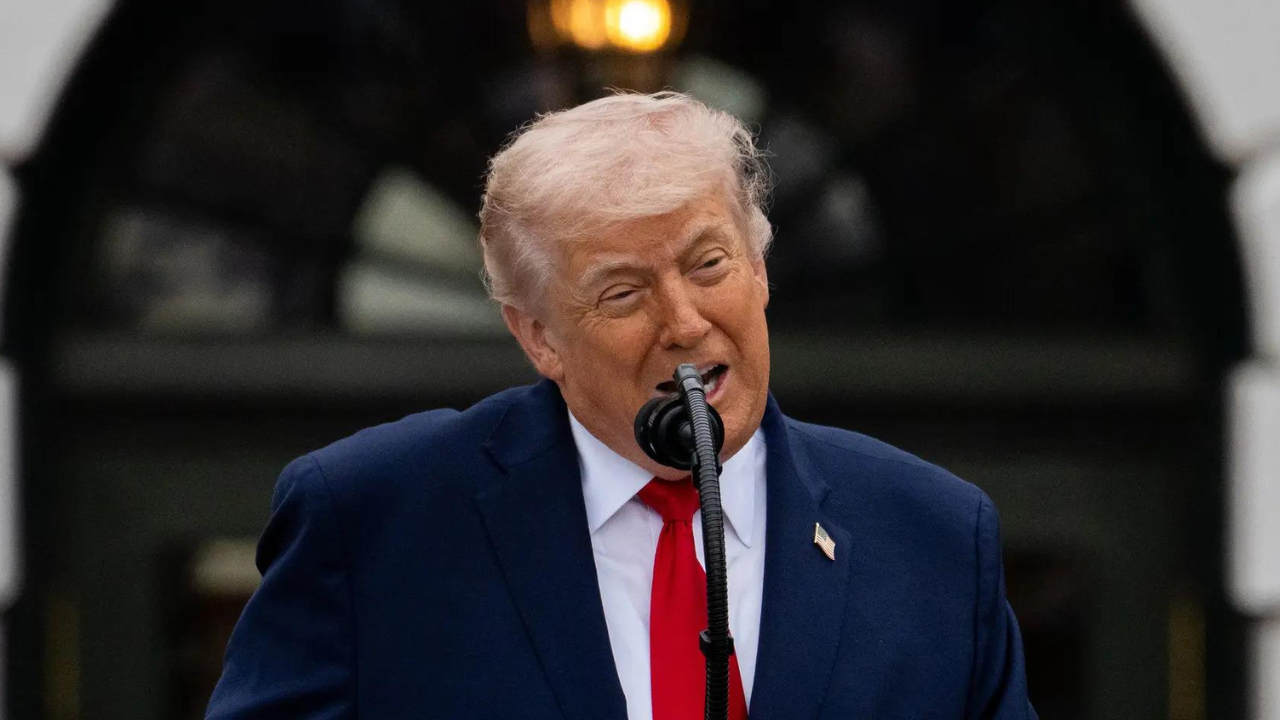
The global economy is currently holding its breath, pinned under the weight of a 29-mile-wide choke point that has effectively become a private toll road for the United States Navy. While the headlines focus on the erratic nature of the 4 am social media posts emanating from the White House, the reality on the water is far more systematic, colder, and more dangerous than a mere "summer of gridlock."
Operation Economic Fury is not just a blockade; it is a fundamental rewriting of maritime law and global energy security. By implementing a total "maritime interdiction" of Iranian-linked vessels, the Trump administration has moved past traditional sanctions and into the territory of active, kinetic economic warfare. The goal is no longer to bring Tehran to the negotiating table, but to physically prevent the molecules of Iranian hydrocarbons from entering the global market.
The Physics of the Choke Point
To understand why this strategy is causing such a violent tremor in global markets, one must look at the raw numbers. The Strait of Hormuz is the artery of the world. Through this narrow passage flows approximately 20 million barrels of oil per day (mb/d), accounting for nearly 25% of all seaborne-traded crude.
When the US Navy intercepts a tanker like the Touska—as it did last Sunday while the vessel was carrying two million barrels of Iranian crude—it does more than stop a single shipment. It sends a shockwave through the insurance markets. War-risk premiums for vessels transiting the Gulf have spiked from 0.125% to as high as 0.4% of a ship’s total value. For a Very Large Crude Carrier (VLCC), this represents a quarter-million-dollar surcharge for a single trip.
These costs are not absorbed by the shipping conglomerates; they are passed directly to the consumer. In the United States, gasoline prices have already surged to an average of $4.23 per gallon, a 40% increase since late February. While the administration frames this as a necessary price for "toughness," the domestic political capital is burning as fast as the fuel.
The Controlled Suffocation Strategy
Behind the "No more Mr. Nice Guy" rhetoric lies a policy that Pentagon insiders are calling "controlled suffocation." The logic is simple: by using naval assets and advanced sensor arrays to enforce a total blockade, the US can bankrupt the Iranian regime without the political fallout of a full-scale ground invasion or a massive bombing campaign.
However, this strategy relies on several high-stakes assumptions:
- The China Factor: China receives nearly a third of its oil via the Strait. While the administration claims Beijing is "happy" with the opening of the Strait to non-hostile traffic, the reality is that China is aggressively tapping its state stockpiles and expanding overland pipelines to bypass the American naval wall.
- The Fragility of the GCC: Our allies in the Gulf Cooperation Council (GCC) are in a precarious position. While they benefit from the removal of a regional rival, they are physically trapped. The Strait is the route for 80% of their caloric intake. A "grocery supply emergency" is already unfolding in states like Bahrain, where food prices have climbed between 40% and 120% as retailers resort to expensive airlifts for basic staples.
- The Spare Capacity Myth: The administration often cites Saudi Arabia’s spare capacity as a safety net. But if the Strait remains a contested war zone, that spare capacity is effectively stranded. You cannot export what you cannot move.
The Silicon and Steel Wall
The sophistication of this blockade is what separates it from the "Tanker Wars" of the 1980s. This is a tech-integrated siege. The US is utilizing a mesh network of unmanned surface vessels (USVs) and high-altitude long-endurance (HALE) drones to provide a 24/7 digital map of every hull in the Persian Gulf.
When a ship is flagged—whether for an "illegal toll" paid to Iran or for obfuscating its transponder data—the response is automated and clinical. The vessel is contacted, warned, and if it fails to comply, disabled. This is "piracy" in the eyes of Tehran and "sovereign enforcement" in the eyes of Washington. The distinction is becoming irrelevant as the physical reality of the blockade takes hold.
The $3.5 Trillion Bill
Economically, we are moving toward a period of global stagflation that hasn’t been seen since the 1970s. The International Monetary Fund (IMF) has warned of a potential $3.57 trillion loss to global GDP if the blockade persists through the next quarter. The gap between the physical price of oil (what it costs to actually get a barrel delivered) and the benchmark futures is now over $30. This premium is the "war tax" the world is paying for the Hormuz impasse.
For countries like India and Japan, the situation is even more dire. They lack the domestic production cushions of the United States. Their refiners are paying record premiums for alternative cargoes from West Africa and the US Gulf Coast, stretching supply chains to their breaking points and increasing the carbon footprint of every liter of fuel produced.
The Missing Exit Strategy
The most glaring flaw in the current "fury" is the lack of a clear off-ramp. History shows that blockades, once established, are notoriously difficult to dismantle without a definitive military or diplomatic climax. By making the blockade the "end state" rather than a means to an end, the administration has created a scenario where any relaxation of the pressure looks like a retreat.
The Iranian response has been predictably asymmetrical. Rather than a head-on naval confrontation they cannot win, they have focused on "denial of access" through mine-laying and drone harassment. The US Navy is currently clearing mines at a "tripled-up level," but for every mine removed, the threat of a "lucky" hit on a commercial tanker looms.
We are no longer looking at a temporary flare-up in a long-standing rivalry. This is the transformation of the world's most vital waterway into a fortress. The "long, hot summer" isn't just about the weather in the Gulf; it’s about the heat being applied to the very gears of global trade.
The administration believes that time and financial strain are on America’s side. But as gasoline hits $5 in the Midwest and the GCC states face a winter of food insecurity, the question is no longer whether Iran will break, but who will break first.
The era of the "open sea" in the Middle East is over. It has been replaced by a system of sovereign permissions, where your right to trade is dictated by your proximity to the current resident of the Oval Office.
Stop looking at the social media feed. Watch the tankers. They are the only true barometer of the new world order.
Move your capital into hard assets and localized supply chains. The gridlock isn't clearing any time soon.