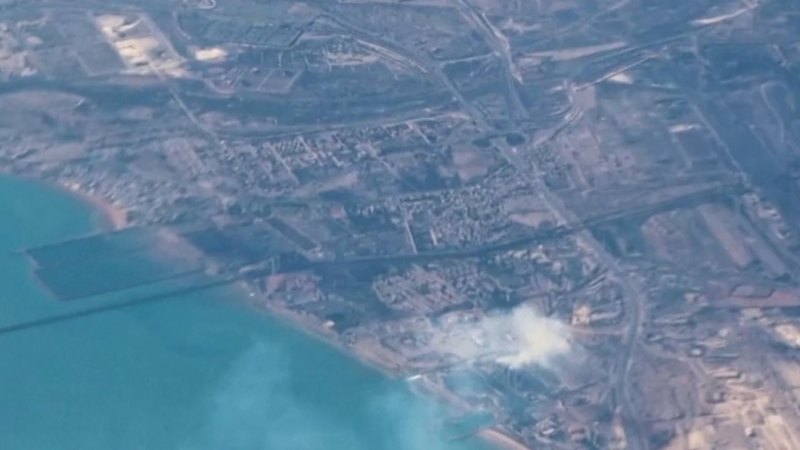
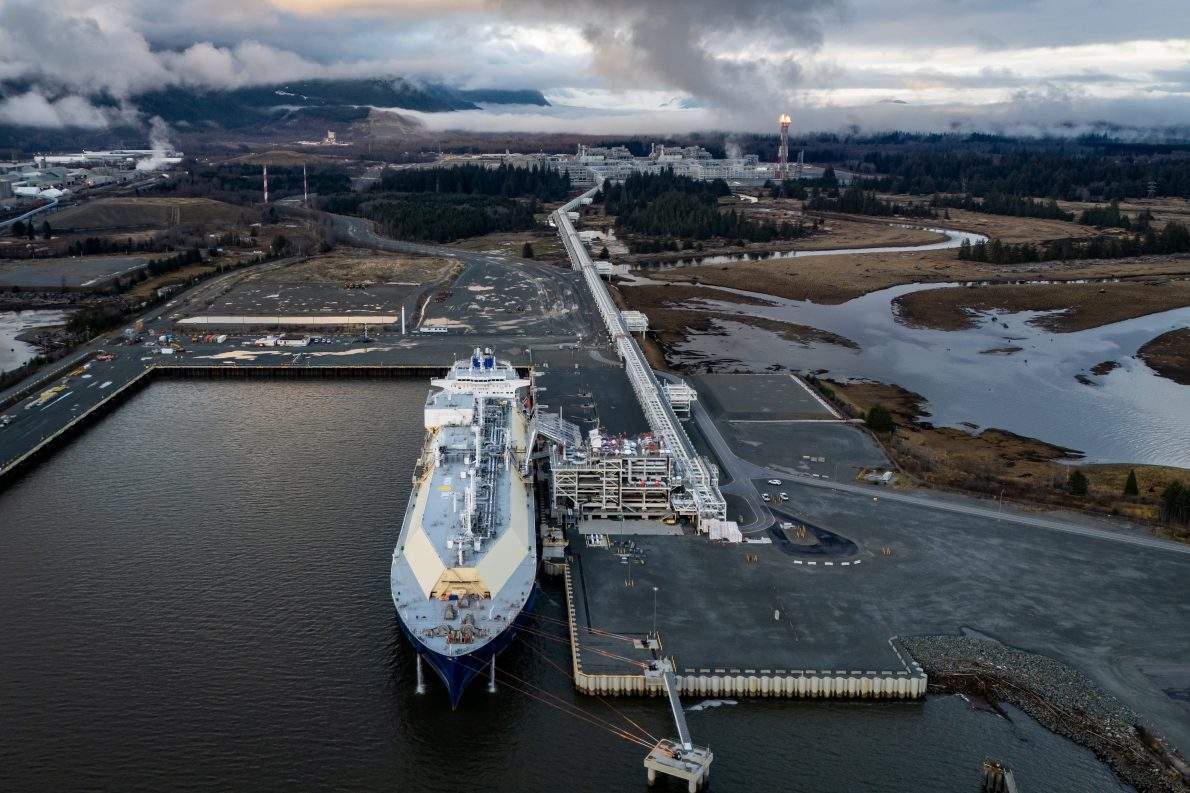
The maritime blockade of the Strait of Hormuz has effectively paralyzed the world’s most critical energy artery, but the economic shockwaves are not being felt equally across the globe. While Asian industrial giants like Japan and South Korea face an immediate existential threat to their power grids, the Kremlin is watching its ledger move into the black for the first time in eighteen months. By choking off 20% of the world’s daily oil supply, the crisis has handed Moscow a geopolitical gift: a massive price premium on Russian crude that bypasses the Middle East entirely.
The math of the blockade is brutal and immediate. Brent crude, which hovered around $73 in late February 2026, has already spiked past $98 per barrel. If the closure persists into April, analysts warn of a "price break" scenario where values could test the $150 or even $200 mark. For a Russian economy battered by four years of Western sanctions and the high costs of the ongoing war in Ukraine, this is more than just a windfall. It is a strategic lifeline. Every dollar added to the price of a barrel of Urals crude translates into billions for the Russian federal budget, effectively neutralizing the impact of the G7 price cap through sheer market scarcity.
The Choke Point Paradox
The Strait of Hormuz is a geographic bottleneck that dictates the terms of global energy security. At its narrowest, the shipping lanes are only two miles wide. When Iran declared the corridor closed following the U.S.-Israeli strikes of early March 2026, the global "on-water" inventory of oil was immediately revalued.
Unlike the Persian Gulf producers—Saudi Arabia, Iraq, Kuwait, and the UAE—who are largely trapped behind the Iranian blockade, Russia’s export infrastructure remains wide open. Moscow ships its crude from Baltic ports like Primorsk and Ust-Luga, and from Black Sea terminals like Novorossiysk. These routes are thousands of miles away from the kinetic activity in the Gulf. This geographic immunity allows Russia to command "scarcity pricing" without the risk of its own tankers being seized or struck by drone fire.
The logistical nightmare for the rest of the world is Russia's competitive advantage. Tankers that used to transit from the Gulf to Asia in 20 days are now being forced to reroute around the Cape of Good Hope, adding weeks to the voyage and sending freight rates into the stratosphere. Russia, meanwhile, continues to utilize its "shadow fleet"—a clandestine network of over 600 aging tankers—to move oil to its primary customers in China and India.
China’s Impossible Choice
The crisis has placed Beijing in a diplomatic vice. China is the world’s largest importer of crude oil and the primary destination for shipments passing through Hormuz. Approximately one-third of the oil transiting the strait is destined for Chinese refineries. A prolonged blockade threatens to stall the Chinese manufacturing engine and ignite domestic inflation.
However, the blockade also forces China to lean more heavily on its "no limits" partner. With Middle Eastern supplies cut off, Russia is the only producer with the immediate capacity and the alternative routes to fill the gap. We are seeing a massive pivot where Russian oil, once seen as a risky sanctioned commodity, is now being treated as the only reliable supply available. This shift doesn't just increase Russian revenue; it deepens the strategic dependency of the world's second-largest economy on Siberian energy.
The Failure of Bypass Infrastructure
There is a common misconception that pipelines can mitigate a Hormuz closure. They cannot. While Saudi Arabia operates the East-West Pipeline to the Red Sea, and the UAE has the Habshan-Fujairah line, these systems can only handle a fraction of the 20 million barrels that typically move through the water.
| Route | Capacity (Million Barrels/Day) | Status in Blockade |
|---|---|---|
| Strait of Hormuz | 20.0 | Blockaded / Halted |
| KSA East-West Pipeline | 5.0 | Operating at Max |
| UAE Habshan-Fujairah | 1.5 | Operating at Max |
| Russia Baltic/Black Sea | 4.0+ | Fully Operational |
As the table shows, the bypass routes are essentially a drop in the bucket. The resulting supply deficit is what drives the panic buying we are seeing in the futures markets. Russia isn't just winning on price; it is winning on volume and reliability at a time when the traditional giants of the oil world are effectively sidelined.
The Shadow Fleet Factor
The Biden and Trump administrations have both attempted to crack down on the "shadow fleet" through a series of sanctions in early 2026. However, the Hormuz crisis has made these enforcement efforts nearly impossible. When the world is starving for oil, few governments have the stomach to seize tankers, even if they are uninsured and operating under "flags of convenience" like Palau or Barbados.
Russia’s shadow fleet is now the primary mechanism for global price stabilization. It is a dark irony of the current geopolitical moment: the very vessels that Western powers sought to drive from the seas are now the only thing preventing global oil prices from hitting $200. This gives Moscow immense leverage. If the Kremlin were to "voluntarily" restrict its own exports in solidarity with Tehran, the global economy would face a collapse of 1970s proportions.
The Arctic Alternative
While the world focuses on the warm waters of the Gulf, Moscow is accelerating its push for the Northern Sea Route (NSR). The blockade has served as the ultimate marketing campaign for Russia’s Arctic ambitions. For years, the NSR was seen as a seasonal, expensive niche. Now, with the Suez Canal and Hormuz both looking like high-risk war zones, the prospect of a controlled, Russian-guarded transit through the Arctic is becoming attractive to Asian buyers.
This is the long-term play. By demonstrating that traditional maritime chokepoints are easily neutralized by regional conflict, Russia is positioning itself as the guardian of the new energy Silk Road. It is a play for more than just money; it is a play for the total reorganization of global trade.
The conflict in the Middle East has created a "perfect storm" for energy markets. The United States finds itself in a paradox: military intervention to open the strait may only further inflame the region, while inaction allows the price of oil to fund the Russian war machine. Every day the blockade remains in place, the financial and strategic map of the world tilts further toward the Kremlin.
The real danger isn't just the price at the pump today. It is the permanent shift in how energy is moved and who controls the valves. The Hormuz blockade has effectively ended the era of cheap, secure energy from the Gulf, and in the vacuum left behind, Russia is building a new, more expensive, and far more dangerous energy order.
Would you like me to analyze the specific impact of this blockade on the European natural gas market?