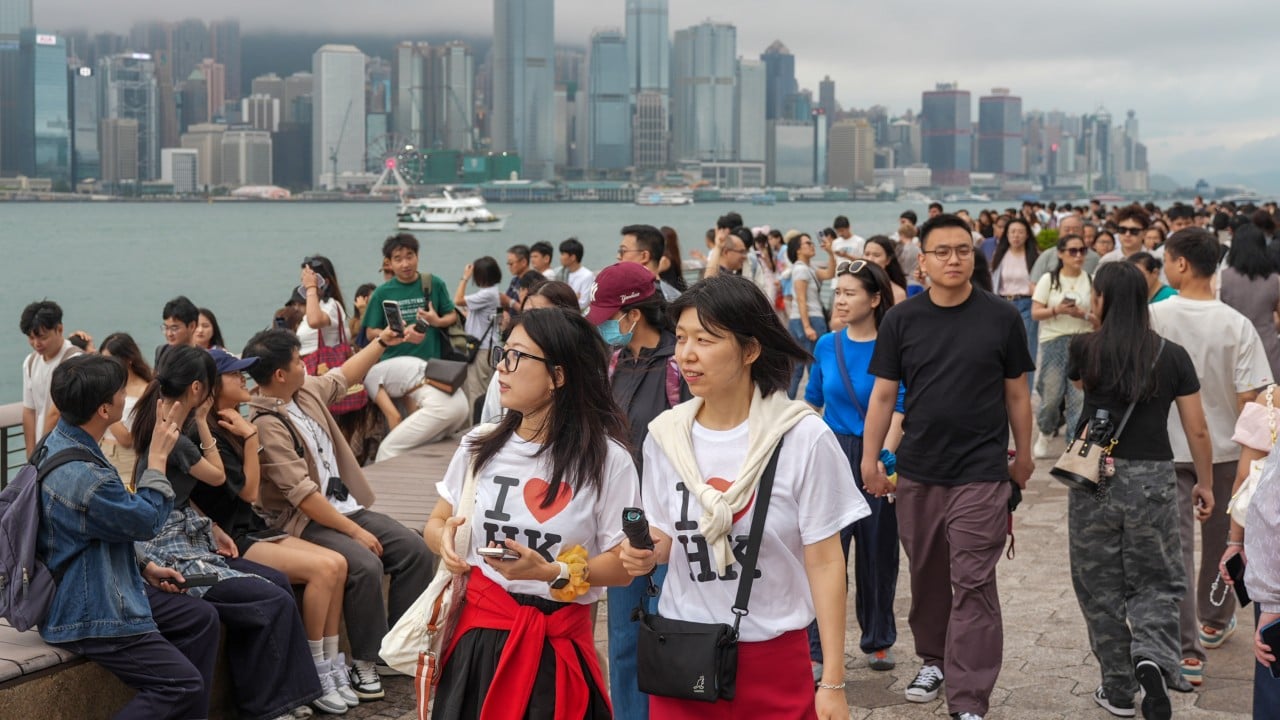
The headline figures look like a victory lap for the Hong Kong Tourism Board. A 10% year-on-year surge in April arrivals suggests a city finally shaking off its post-pandemic lethargy. Much of this spike is credited to the Hong Kong Sevens, the legendary rugby tournament that turned the stadium into a three-day carnival of high-stakes sports and higher-stakes drinking. But behind the roar of the South Stand and the glossy press releases lies a more sobering reality. While the crowds are coming back, the money is staying in their pockets.
The tourism sector is facing a fundamental shift in consumer behavior that a few weekend-long sporting events cannot fix. We are seeing a "volume high, value low" trap. The city is successfully attracting bodies, but it is failing to capture the spending power that once made Hong Kong the undisputed retail and hospitality capital of Asia.
The Sevens Mirage
The Hong Kong Sevens remains a powerful magnet. It draws a specific demographic—high-spending Western expats and regional corporate travelers—who fill five-star hotels and keep the bars in Lan Kwai Fong humming. However, using this event as a bellwether for the city’s economic health is a mistake. It is an anomaly, not a trend.
The 10% growth in April reflects a low baseline from the previous year rather than a return to the city's glory days. More importantly, the composition of these tourists has changed. The influx is dominated by short-haul visitors from Mainland China who are increasingly price-sensitive. They are not here for the luxury watches or the designer handbags that used to fly off the shelves in Tsim Sha Tsui. They are here for "city walks"—low-cost, social-media-driven tours of photogenic streets and inexpensive local eateries.
This change in "traveler DNA" means that while the streets feel crowded, the cash registers are quiet. For a city built on high-margin consumption, 10% more people spending 30% less per head is a mathematical disaster.
The Shrinking Premium
Hoteliers and restaurateurs are feeling the squeeze. During the Sevens, occupancy rates in the North Point and Causeway Bay districts hit impressive peaks, but the surrounding weeks told a different story. The "shoulder periods" between major events are thinning out.
The struggle is rooted in two main factors:
- The Strength of the Hong Kong Dollar: Pegged to the US dollar, the local currency has made the city prohibitively expensive for almost everyone except Americans and those from dollar-linked economies.
- Regional Competition: Tokyo and Seoul have become significantly cheaper due to currency depreciation, while Singapore has aggressively outmaneuvered Hong Kong in securing high-profile entertainment residencies and tech conferences.
When a bowl of noodles in Central costs twice what it does in Ginza, the "value proposition" of Hong Kong vanishes. Travelers are savvy. They are comparing the cost of a weekend in Hong Kong against a week in Vietnam or Thailand, and Hong Kong is losing that argument.
The Spend Gap
Data from retail associations indicates that while foot traffic in shopping malls has rebounded to roughly 80% of pre-2019 levels, actual sales volume is lagging far behind at around 60%. The "Shopping Paradise" moniker is under threat. The rise of cross-border e-commerce and the price parity of luxury goods globally means that the old incentive to fly to Hong Kong to save on taxes is dead.
Infrastructure and the Service Deficit
Quantity is currently being prioritized over quality. The push to bring in "mega-events" has put a strain on a service sector that is still reeling from a massive brain drain. During the April peak, visitors reported long wait times at immigration, a shortage of taxis, and a noticeable decline in the legendary "Hong Kong efficiency."
The hospitality workforce hasn't recovered. Many veteran servers, drivers, and hotel staff left the industry during the three years of isolation, replaced by younger, less experienced workers or not replaced at all. This "service deficit" is dangerous. If Hong Kong becomes known as a place that is both expensive and inconvenient, the 10% growth seen in April will quickly evaporate into a long-term decline.
We are also seeing a friction point with the local population. When a city focuses on mass-market tourism to inflate arrival numbers, it inevitably leads to overcrowded public transport and the "Disneyfication" of local neighborhoods. This creates a resentment that tarnishes the visitor experience. A tourist who feels like an unwelcome intruder is a tourist who doesn't come back.
A Failure of Imagination
The government’s strategy has largely been to "rebuild the old." There is an obsession with returning to the 2018 peak, a year that was arguably an unsustainable bubble driven by a specific set of geopolitical and economic conditions.
Instead of trying to resurrect a dead model, the city needs to pivot.
- Niche Over Mass: Focus on high-value medical tourism, specialized tech summits, and art-driven travel that isn't dependent on the fluctuating whims of the retail market.
- Cultural Authenticity: Moving beyond the "Neon and Dim Sum" cliches. The current generation of travelers wants depth, not a curated photo-op.
- Digital Integration: Hong Kong is surprisingly behind in seamless digital payments for non-Mainland visitors. While Octopus is a local staple, the friction for international credit cards in many mid-tier establishments remains a hurdle.
The Regional Chessboard
Hong Kong is no longer the only gateway to China. Cities like Shenzhen and Guangzhou have modernized at a staggering pace, offering world-class infrastructure and a more affordable lifestyle. For many business travelers, the "layover" in Hong Kong is now seen as an unnecessary expense.
To remain relevant, Hong Kong must offer something that the Mainland and its Southeast Asian neighbors cannot. That used to be a unique blend of East-West cosmopolitanism and a frictionless business environment. As that edge blurs, the tourism numbers become a vanity metric. If the city cannot convert those 10% more visitors into meaningful economic activity, it is merely subsidizing the wear and tear on its own infrastructure.
The Hong Kong Sevens was a bright spot, but a city cannot survive on a handful of bright spots a year. It needs a sustainable, 365-day reason to exist in the minds of global travelers. Right now, that reason is increasingly hard to find.
Stop looking at the arrival gates and start looking at the hotel ledgers. The numbers tell a story of growth, but the bank accounts tell a story of survival. The city is busier, yes. But it isn't richer. Until Hong Kong addresses the massive gap between its high costs and its diminishing unique value, these monthly spikes will remain nothing more than statistical noise in a long, downward crawl. Move the focus from counting heads to measuring the depth of the engagement.