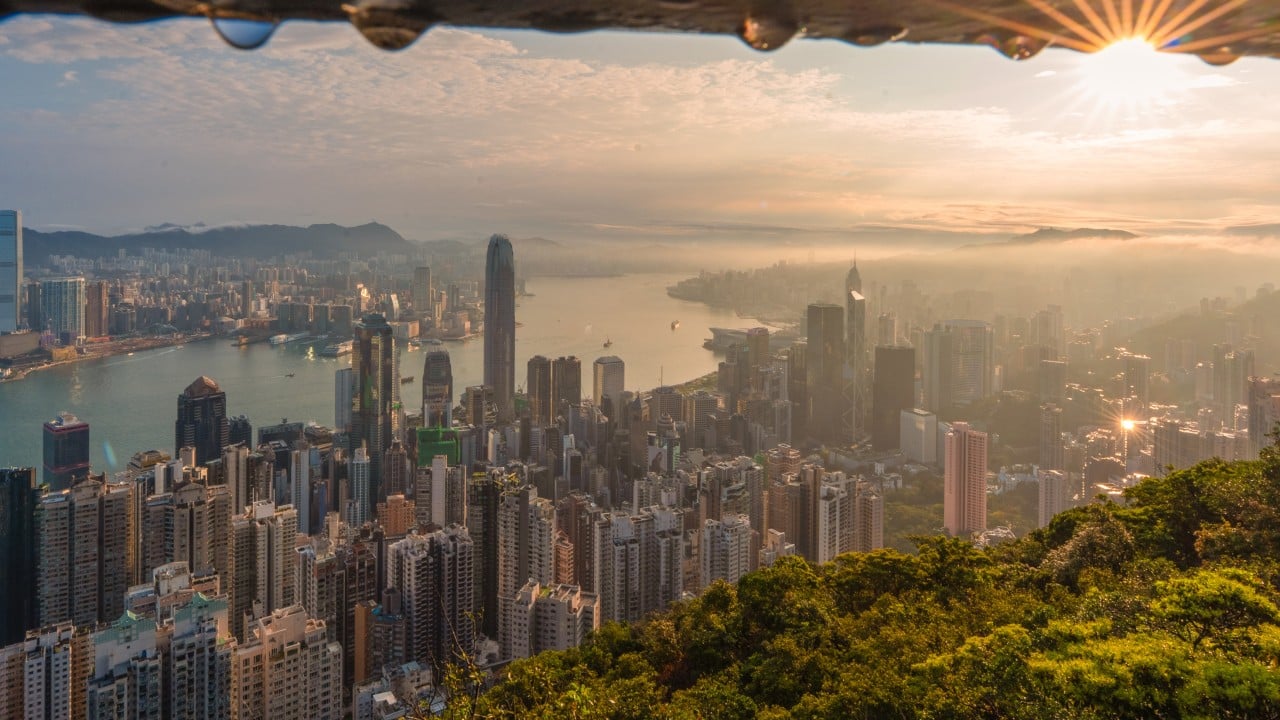
Hong Kong is currently trapped in a cooling cycle that traditional engineering cannot break. For decades, the city’s answer to every environmental challenge—from typhoons to record-breaking heatwaves—was to pour more cement. We built higher sea walls, deeper drainage tunnels, and more expansive air-conditioning networks. But the math no longer works. The "urban heat island" effect now keeps downtown temperatures significantly higher than the surrounding countryside, and the energy required to keep these glass towers habitable is skyrocketing. To maintain its status as a global financial hub, Hong Kong must pivot from gray infrastructure to nature-based solutions. This isn't a plea for aesthetics; it is a cold, hard requirement for economic survival.
The premise is simple. Nature-based solutions (NbS) involve protecting, sustainably managing, and restoring natural ecosystems to address societal challenges. In a city where every square foot is worth a fortune, the idea of "wasting" space on wetlands or urban forests used to be laughed out of boardroom meetings. That laughter has stopped. When Typhoon Mangkhut shattered windows and flooded the business district, it revealed the fragility of a city that tries to fight the ocean instead of absorbing it.
The Financial Case For Spongy Infrastructure
The bean counters are finally looking at the depreciation of concrete. Standard engineering has a fixed lifespan and high maintenance costs. A sea wall begins to degrade the moment it is finished. In contrast, a restored mangrove forest or a managed wetland grows more resilient over time. It self-repairs.
For a CFO, the attraction to nature-based solutions lies in "co-benefits." A traditional drainage pipe does exactly one thing: it moves water. A "sponge city" design—utilizing permeable pavements, green roofs, and bioswales—moves water while also lowering the ambient temperature of the neighborhood. This reduces the cooling load on surrounding buildings. We are talking about a direct reduction in electricity expenditures for some of the world’s most expensive real estate.
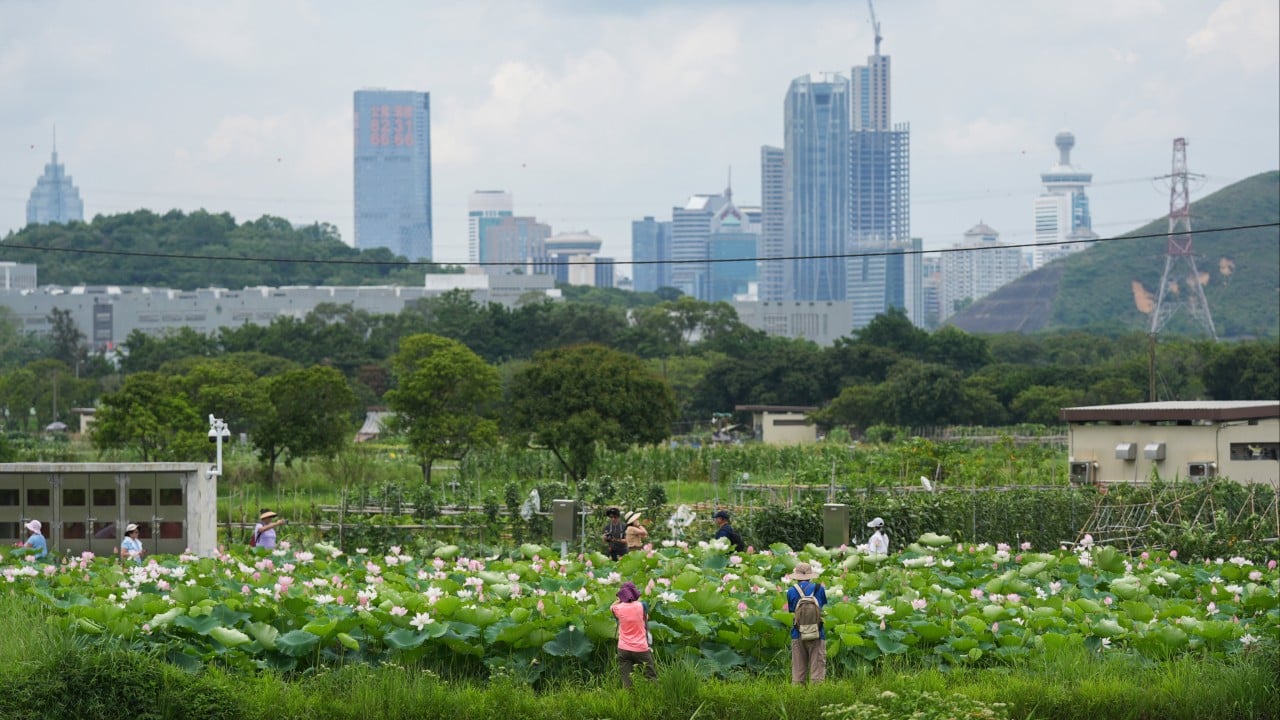
If we look at the Northern Metropolis development, the stakes are even higher. This isn't just a housing project; it’s a test of whether Hong Kong can integrate high-density living with the existing ecological value of the Deep Bay area. If the government sticks to the old playbook of "reclaim and pave," they risk creating a localized climate disaster that will drive away the very talent they are trying to attract.
The Heat Trap No One Wants To Talk About
Air conditioning is a suicide pact. The more we use it to cool our interiors, the more heat we dump into the narrow street canyons of Central and Mong Kok. This creates a feedback loop that necessitates even more power. Nature-based solutions break this cycle by providing passive cooling.
Strategic planting of urban forests and the mandatory inclusion of vertical greening on skyscrapers act as a giant heat sink. Trees don't just provide shade; they use evapotranspiration to actually lower the air temperature. Data from other high-density hubs suggests that increasing green cover by even 10% can reduce peak summer temperatures by several degrees. In a city where the "Very Hot Weather" warning is becoming a permanent summer fixture, those degrees represent the difference between a functional outdoor economy and a ghost town of people scurrying from one air-conditioned mall to the next.
Why The Policy Engine Is Stalling
The barrier isn't the technology. We know how to plant mangroves. We know how to build green roofs. The barrier is a rigid regulatory framework that was designed in the 1970s.
Government departments in Hong Kong often operate in silos. The Drainage Services Department cares about water flow. The Leisure and Cultural Services Department cares about park maintenance. The Buildings Department cares about structural loads. Nature-based solutions require these groups to work together because a "green" asset serves all three functions simultaneously. Under the current system, a developer who wants to install an innovative rainwater harvesting garden might face delays from four different bureaus, each confused about who owns the liability if a tree falls or a pond overflows.
To fix this, we need a unified "Green Infrastructure" mandate. We need to value natural capital on the city's balance sheet. When a wetland is destroyed for a highway, that shouldn't just be an "environmental loss." It should be recorded as the destruction of a flood-defense asset, with a corresponding dollar value attached to the replacement cost of a mechanical pump system.
The Myth Of The Land Shortage
Critics always point to the same thing: "We have no room." This is a fundamental misunderstanding of how modern NbS works. We aren't talking about turning the IFC into a forest. We are talking about "blue-green" integration.
Take the concept of the "Eco-Shoreline." Instead of a vertical concrete wall that kills all marine life and reflects wave energy back into the harbor, an eco-shoreline uses terraced rocks and mangroves. It occupies the same footprint but provides a nursery for biodiversity and better storm-surge protection. It turns a sterile barrier into a public amenity.
The same applies to our rooftops. Hong Kong has millions of square meters of flat, gray roof space that does nothing but absorb solar radiation. Converting these into "blue roofs" (which store and slowly release rainwater) or "green roofs" (which provide insulation) doesn't take up a single inch of developable land. It optimizes the land we already have.
Measuring Success Beyond The Photo Op
There is a danger that nature-based solutions become a greenwashing exercise. We see it already: a few potted plants in a lobby labeled as a "vertical forest." That is not what we are discussing here.
Definitive NbS requires scientific rigor. It requires monitoring soil moisture levels, tracking biodiversity return, and measuring the actual temperature delta at street level. If the government is serious, they need to release open-source data on the performance of these green assets. Show us the proof that a certain district's drainage costs went down after the implementation of permeable surfaces. Show us the heat maps.
The private sector is waiting for this signal. Insurance companies, in particular, are starting to look at nature as a risk-mitigation tool. In the near future, a building surrounded by resilient green infrastructure may command lower insurance premiums than a concrete bunker vulnerable to flooding and heat stress. This shift will do more to change the city’s skyline than any environmental protest ever could.
The New Urban Standard
The era of the "hard" city is ending. The cities that thrive in the mid-21st century will be those that mimic natural systems rather than trying to override them. Singapore has already stolen a march on Hong Kong in this regard, branding itself as a "City in Nature." For Hong Kong to catch up, it has to stop viewing green space as a luxury or a hobby for the middle class.
It is a core utility. Just like electricity, water, and the internet, the biological health of the city is an essential component of its functionality. We have the capital, we have the engineering expertise, and we certainly have the urgency. The only thing missing is the political will to stop pouring concrete and start planting the future.
Start by auditing the existing drainage master plans and identifying every "gray" project that can be replaced or augmented with a "green" alternative. Require every new land sale to include a minimum percentage of functional, high-performance green cover that isn't just grass on a podium. Force the inter-departmental cooperation that has been avoided for decades. If Hong Kong wants to remain a premier global city, it has to look like one that actually plans to survive the next fifty years.