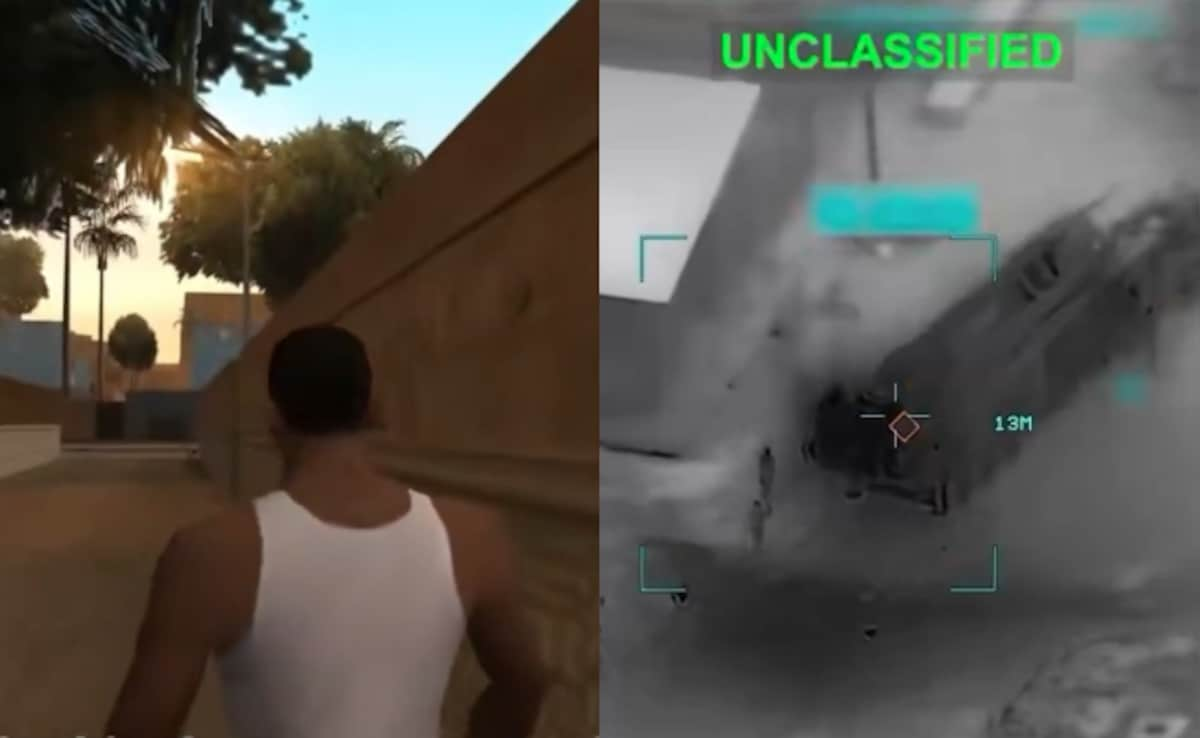
The images looked like they belonged in a high-budget summer blockbuster. Precision strikes captured in high-definition green hues. Night-vision footage that made destruction look clean, calculated, and weirdly beautiful. But for a group of prominent actors and activists, the White House’s presentation of recent military actions involving Iran isn't just PR. They’re calling it "juvenile war porn."
It’s a blunt critique. It’s also one that strikes at the heart of how modern conflict is sold to the public. When the government releases footage that strips away the blood, the screams, and the long-term wreckage, it turns a life-and-death struggle into a spectator sport. You aren't seeing a war. You’re seeing a highlight reel.
Why the Esthetic of Modern Warfare Matters
When we talk about "war porn," we aren’t just talking about violence. We’re talking about the fetishization of weaponry. Hollywood figures like Mark Ruffalo, Susan Sarandon, and others have often been the first to point out when the reality of the ground doesn't match the polished narrative from Washington. Their argument is simple. If you make war look like a video game, you make it easier for people to accept it.
The footage released by the Pentagon often emphasizes "surgical" precision. It’s designed to reassure the tax-paying public that we’re the good guys with the best toys. But as anyone who’s lived through the last twenty years of Middle East policy knows, "surgical" is often a marketing term. Missiles have a way of hitting things they weren't supposed to hit.
The Problem with Sanitized Violence
I’ve watched enough press briefings to see the pattern. A spokesperson stands at a podium, clicks a remote, and shows a building disappearing in a puff of smoke. There’s no sound of the blast. There’s no footage of the aftermath. It’s clean. It’s sterile.
Actors who spend their careers trying to portray human emotion find this particularly galling. Their job is to find the truth in a scene. When the White House presents a conflict with Iran as a series of successful "assets neutralized," they’re editing out the most important part of the story: the human cost.
The Disconnect Between Hollywood and DC
There’s a long history of friction here. Politicians often dismiss actors as "out of touch elites." But there’s a certain irony in that. Actors are literally trained to spot a performance. When they see a press secretary using cinematic tropes to justify a military escalation, they recognize the script.
The "juvenile" label comes from the lack of gravity. It’s the idea that we can provoke, strike, and "win" without any messy consequences. It treats international diplomacy like a Marvel movie where the hero walks away without a scratch while the city crumbles in the background. Real life doesn't have a post-credits scene where everything is fixed.
How Media Consumption Shapes Foreign Policy
We live in an era where information is consumed in ten-second bursts. If the only thing you see of a conflict with Iran is a cool infrared video of a drone strike, your perception of that conflict is skewed. You start to think of war as something that happens on a screen, not something that happens to people.
This isn't just about being "anti-war." It's about being pro-reality.
- Dehumanization through distance: The further we are from the impact, the less we care about the victims.
- The "Video Game" effect: High-tech interfaces make killing feel like scoring points.
- Lack of accountability: If the war looks clean, the public doesn't ask hard questions about the "why" behind it.
The Specifics of the Iran Narrative
The tension with Iran isn't new. It’s been a slow-motion car crash for decades. But the way it’s being framed now feels different. There’s a theatricality to it. Each side performs for their domestic audience. The White House releases its "war porn" to look strong. Tehran responds with its own propaganda videos to look defiant.
Critics argue that by engaging in this visual arms race, the U.S. government is actually making the situation more dangerous. When you lean into the "coolness" of the tech, you lose the diplomatic off-ramps. You’re committed to the show.
What's Missing from the Official Footage
You’ll never see a White House briefing show the economic collapse of a village after its infrastructure is "neutralized." You won't see the faces of the children living under the hum of drones. That stuff doesn't test well with focus groups. It doesn't make for a good "strong" headline.
The actors slamming this approach are essentially asking for the "director's cut"—the one that shows the blood, the mistakes, and the decades of blowback that follow every "surgical" strike. They’re tired of the sanitized version because they know it’s a lie.
The Role of the Citizen Spectator
You’re part of this too. Every time we share a clip of a "cool" explosion without context, we’re helping produce the sequel. We’ve become the ultimate test audience. If we cheer for the "war porn," the government will keep making it.
The pushback from the creative community is a reminder that we have a choice. We can demand a more adult conversation about foreign policy. We can ask for the truth instead of the trailer.
Moving Beyond the Highlight Reel
Stop looking at the screen and start looking at the maps. If you want to understand what's actually happening with Iran, ignore the Pentagon’s YouTube channel. Look at the humanitarian reports. Read the history of the 1953 coup. Understand the nuance of the nuclear deal.
Don't let a well-edited video clip replace your critical thinking. War is the most serious thing a nation can do. It shouldn't be treated like a teaser for a blockbuster. If the footage looks too clean to be true, it probably is. Pay attention to the parts they aren't showing you. That’s where the real story lives.
Check the sources of the footage you see on social media. Follow independent journalists who are actually on the ground in the region. Demand that your representatives provide more than just "operational updates" and start providing actual long-term strategies that don't involve endless cycles of "juvenile" violence.


