The Fed is Not in Control
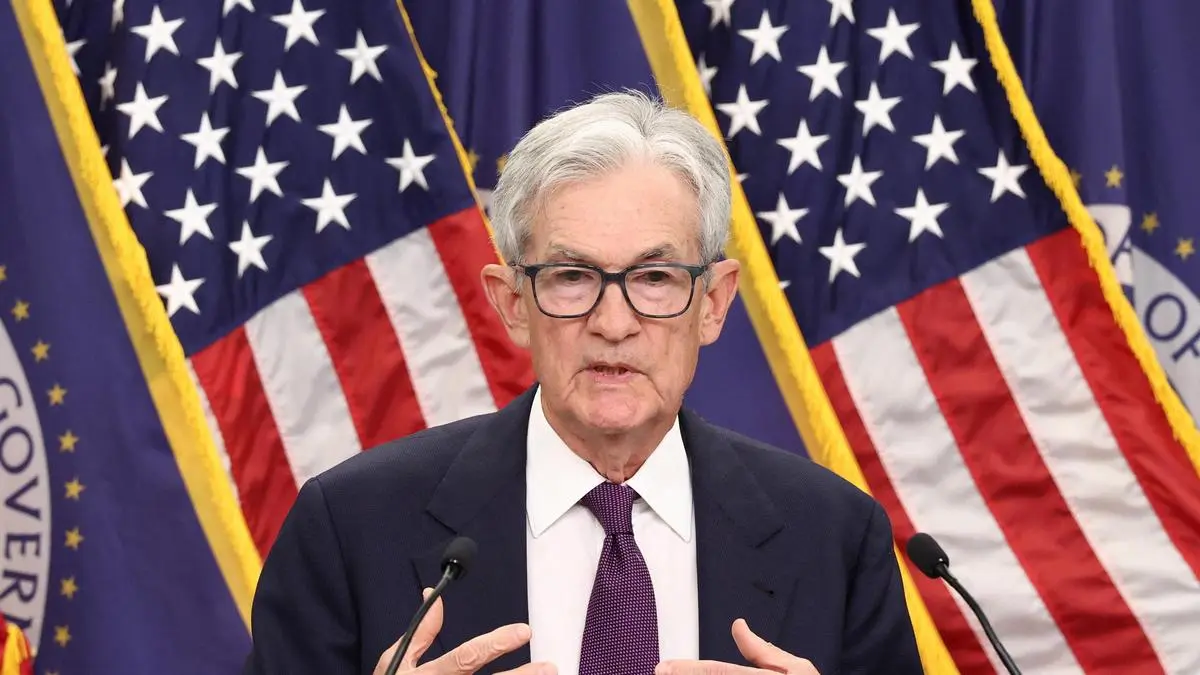
The financial press is currently obsessed with a singular, boring narrative: "The Fed keeps rates steady." They treat Jerome Powell like a high priest reading tea leaves, suggesting that by holding the federal funds rate between 5.25% and 5.5%, the central bank is "managing" the economy toward a soft landing.
It is a fairy tale.
The consensus view suggests that high rates are a restrictive tool used to beat back inflation until it hits a magical 2% target. This assumes the Fed is the primary driver of economic heat. It isn't. We are living through a period where fiscal policy—government spending—is sprinting in the opposite direction of monetary policy. While the Fed tries to tap the brakes, the Treasury is flooring the gas pedal with trillion-dollar deficits.
When you hear that "rates are steady," you should hear "the Fed is paralyzed." They cannot raise rates further without blowing up the interest expense on US debt, and they cannot lower them without reigniting a localized housing bubble. They aren't "holding steady" out of wisdom; they are trapped in a cage of their own making.
The 2 Percent Inflation Target is Arbitrary Nonsense
Every mainstream article mentions the 2% inflation goal as if it were a law of physics. It isn't. It was an arbitrary number cooked up in New Zealand in the late 1980s that the rest of the world's central banks adopted because it sounded professional.
By clinging to this 2% ghost, the Fed is actually damaging the structural integrity of the economy. We are no longer in the disinflationary world of the 2010s characterized by cheap Chinese labor and abundant Russian energy. We are in a de-globalizing world. Supply chains are regionalizing, which is inherently inflationary. If the Fed insists on forcing the economy into a 2% box in a 4% reality, they will have to break the back of the labor market to do it.
The "lazy consensus" says a soft landing is possible. Logic says you cannot offset structural global shifts with a simple interest rate lever without causing a massive spike in unemployment.
The Yield Curve is Screaming and You are Ignoring It
For over a year, the yield curve has been inverted. In normal human terms: the market is paying you more to lend money for three months than for ten years. Historically, this is the most reliable recession indicator in existence.
The "experts" say this time is different because consumer spending remains high. They said the same thing in 2007. Consumer spending is the last thing to die, not the first. By the time the average person stops buying $7 lattes, the floor has already fallen out from under the commercial real estate market.
We are seeing a massive "maturity wall" approaching. Trillions of dollars in corporate debt, inked when rates were at 0%, need to be refinanced in the next 24 months.
- A company that could survive at 2% interest often dies at 7%.
- Small businesses, the actual engine of US employment, do not have access to the bond markets. They rely on regional banks.
- Regional banks are currently sitting on mountains of unrealized losses from long-term Treasuries bought when rates were low.
The Fed keeping rates "steady" isn't a sign of stability; it is the sound of the clock ticking toward a massive refinancing crisis.
The Great Wealth Transfer to Savers is a Myth
You’ve likely read that "high rates are good for savers." This is a half-truth that masks a darker reality. While your high-yield savings account might be hitting 4.5%, your real purchasing power is being eroded by the very thing the Fed can't control: the cost of living.
If your savings earn 5% but the cost of housing, insurance, and healthcare is rising at 8%, you are losing 3% of your wealth every year. The Fed’s "steady" rates are actually a tax on the middle class. The wealthy don't keep their money in savings accounts; they own assets. And assets thrive when the government spends $2 trillion more than it takes in.
Stop Asking When Rates Will Cut
The most common question on financial forums is: "When will the Fed cut?"
You are asking the wrong question. The real question is: "What breaks first?"
If the Fed cuts rates because inflation hit 2%, your stocks go up. If the Fed cuts rates because the banking system is seizing up or the unemployment rate just jumped to 6%, your stocks will crater despite the cut. History shows that the initial pivot to lower rates is usually a signal of panic, not a signal of victory.
The markets usually bottom after the Fed starts cutting, not before. The "steady" period we are in right now is the eye of the storm.
The Strategy for the Disrupted Reality
The status quo advice is to "diversify and wait." That is a recipe for stagnation in a stagflationary environment. If you want to survive the Fed's paralysis, you have to move away from the "60/40" portfolio mindset.
- Prioritize Cash Flow over Growth: In a high-rate environment, "growth" companies that promise profits in 2032 are worthless. You want companies that make real things and collect real cash today.
- Short the Consensus: The market has priced in a "Goldilocks" scenario where inflation vanishes and growth stays high. It is statistically unlikely. Hedging against a volatility spike is no longer "bearish"—it’s pragmatic.
- Watch the Liquidity, Not the Rate: The federal funds rate is a headline. The actual liquidity in the system (the Reverse Repo facility and the Treasury General Account) is what actually moves markets. When the Treasury drains its account to fund spending, it pumps liquidity into the system, offsetting the Fed's "tightening."
The Fed is a lagging indicator. They are looking at data from three months ago to make decisions for six months from now. By the time they admit a recession has started, you will already be halfway through it.
The "steady" hand of Jerome Powell is actually a frozen hand. He is waiting for the market to force his move.
Stop waiting for a "soft landing." Start building a bunker.