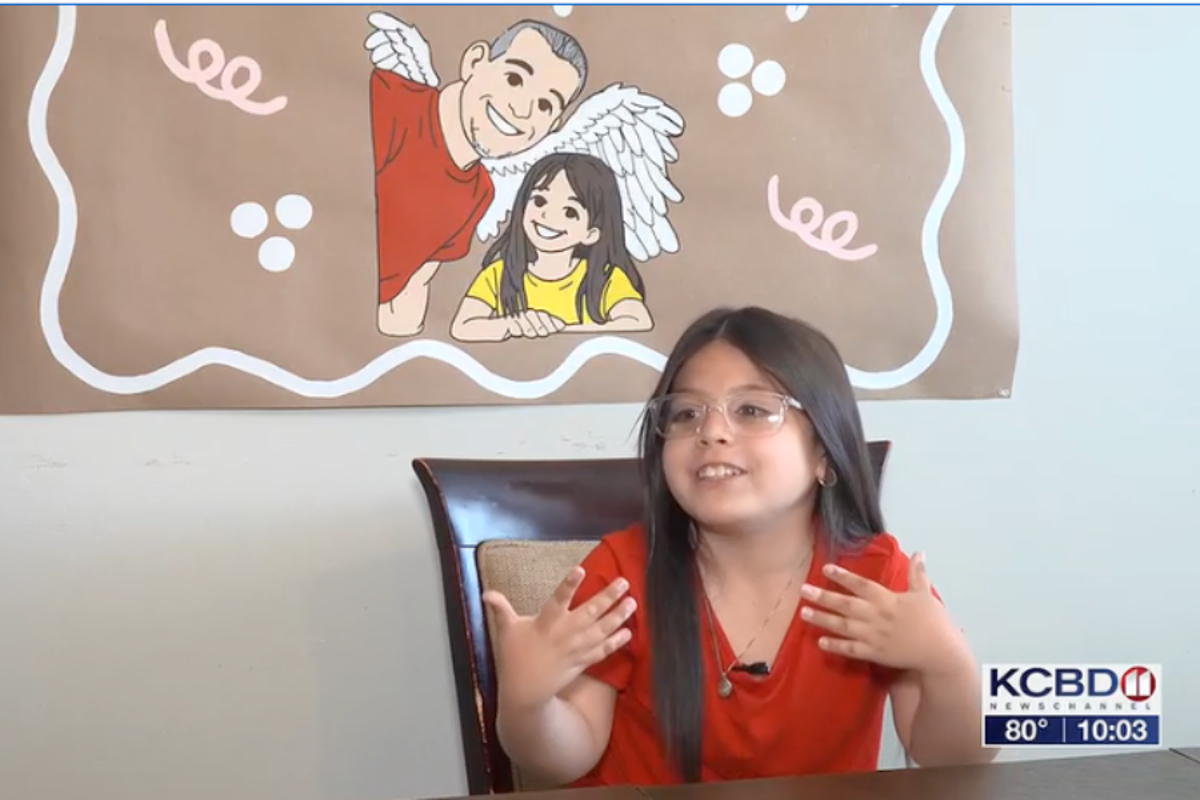
Stop applauding child labor as a heartwarming human interest story. When we see a headline about a pre-teen selling lemonade to fund a headstone for her deceased father, we shouldn't be reaching for our wallets—we should be questioning why a child is responsible for the financial logistics of death. The "lazy consensus" here is that this is a story of grit and resilience. The reality is that it’s a failure of the safety net disguised as a lesson in entrepreneurship.
We love the narrative of the "little engine that could." It makes us feel good to believe that a fifth-grader can solve adult-sized financial crises with a plastic pitcher and some sugar. But as someone who has spent years analyzing the intersections of micro-economics and social policy, I see the scars, not the spirit.
The Myth of the Level Playing Field
The feel-good media cycle feeds on these stories because they reinforce a dangerous meritocratic lie: that if you work hard enough—even as a child—you can overcome any systemic hurdle.
Imagine a scenario where a billionaire's child loses a parent. They aren't on the sidewalk selling drinks to afford a memorial. The difference isn't work ethic; it's capital. By celebrating the lemonade stand, we are implicitly accepting a world where the dignity of a deceased parent depends on their child’s ability to market a product to neighbors.
This isn't business; it's survival theater.
In the insurance industry, we talk about "final expense" coverage. It is a grim but necessary financial tool. When a story like this goes viral, it highlights a massive gap in financial literacy and accessibility. The "poverty tax" is real. Lower-income families often pay more for less coverage, or lack the liquid assets to cover the $7,000 to $12,000 average cost of a funeral and headstone.
The Psychological Cost of Early Hustle
We are obsessed with "grit." Psychologists like Angela Duckworth have popularized the idea that perseverance is the key to success. However, there is a point where grit becomes trauma.
A child grieving a parent should be processing loss, not calculating margins on lemons. When we turn a child's grief into a business model, we are teaching them that their value is tied strictly to their productivity. We are telling them that the world will not help them unless they provide a service or a compelling narrative for public consumption.
- Emotional Labor: The child isn't just selling lemonade; they are selling their story. Every customer who stops by is buying a piece of that child’s tragedy.
- The Burden of Responsibility: At eleven, the brain is still developing the capacity for long-term planning. Forcing a child to take on the "provider" role for a memorial creates an unhealthy "parentification" that can lead to burnout before they even hit high school.
The Economics of the Lemonade Stand are a Lie
Let’s talk numbers. The average glass of lemonade at a charity stand sells for $1.00 to $5.00. To buy a decent granite headstone, you need roughly $3,000 at the low end.
If she sells a glass for $2.00 with a $0.50 overhead, she needs to sell 2,000 glasses. That isn't a neighborhood project; that’s a mid-sized operation requiring significant foot traffic, supply chain management, and physical labor.
Most of these "successes" are actually fueled by pity-tips—people dropping $20 or $100 bills because they feel bad. This isn't "learning the ropes of business." It’s a decentralized GoFundMe. It’s a localized version of the "medical debt bake sale" that has become a staple of American life.
If we wanted to teach this child about business, we would teach her about compound interest, term life insurance, and social security survivors' benefits. Instead, we give her a wooden crate and a bag of lemons and tell her to "hustle."
The Failure of the Community Safety Net
Why does it take a viral story for a community to step up?
The "People Also Ask" sections of the internet often focus on "How can I help?" or "Where is the stand located?" These questions address the symptom, not the disease. The real question should be: "Why does our local cemetery or funeral home require upfront payments from a grieving family with no assets?"
In many European models, death benefits are baked into the social contract. In the United States, we’ve outsourced that contract to children on street corners.
I’ve seen families bankrupted by "unforeseen" end-of-life costs. It’s a brutal industry that preys on the vulnerable during their weakest moments. When a child enters this arena, they aren't "disrupting" anything. They are being exploited by a system that finds it easier to celebrate a "brave little girl" than to reform how we handle the costs of dying.
Stop Calling It "Inspirational"
"Inspirational" is a word used to sanitize uncomfortable truths. It’s a linguistic shield that prevents us from feeling the appropriate amount of outrage.
- It’s not inspirational that a child has to work to honor her father.
- It’s not heartwarming that the internet had to intervene to provide a basic marker for a grave.
- It’s not a success story when the solution to a systemic problem is a one-off viral event.
True business acumen involves identifying a problem and creating a scalable solution. A lemonade stand for a headstone is not scalable. It’s a tragedy with a bow on it.
The Actionable Truth
If you actually care about "entrepreneurial kids" and "resilient families," stop clicking on these stories as if they are feel-good content. Start demanding better financial education in schools and more transparent pricing in the funeral industry.
Support organizations that provide pro-bono legal and financial planning for grieving families. Don't wait for a kid to stand in the sun for eight hours before you decide their father deserves a name on his grave.
Business is about the exchange of value. Grief is about the loss of it. Mixing the two under the guise of "childhood innocence" is the ultimate corporate gaslight.
Put down the lemonade and demand a society where children can just be children, even when they are hurting.