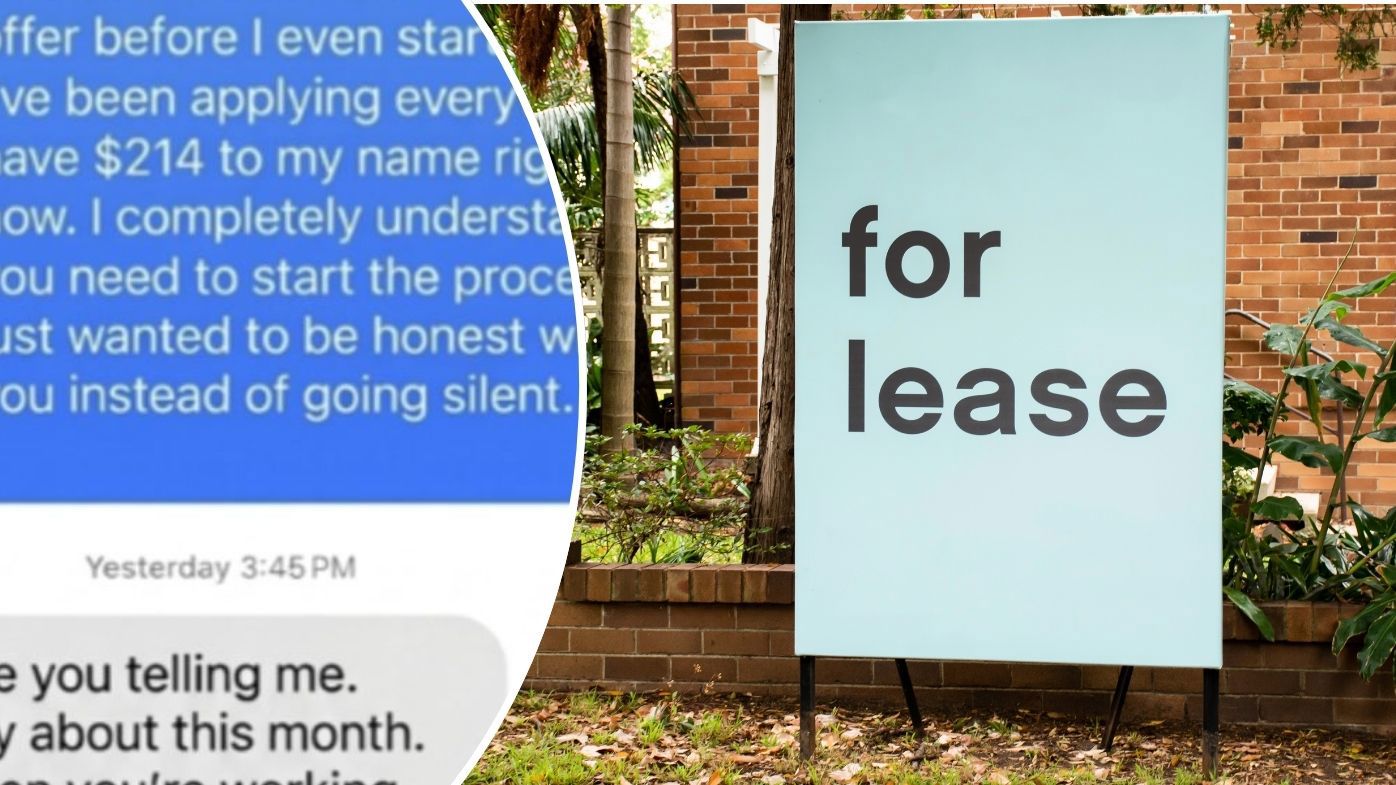
The viral story of a tenant reduced to tears by a landlord’s decision to waive rent or freeze a scheduled increase usually hits the internet like a shot of adrenaline for the soul. These narratives serve as a momentary reprieve from the relentless grind of the global housing crisis. However, when a single act of "generosity" becomes a national news headline, it exposes a terrifying reality about the fragility of our modern economic contract. We are no longer looking at a functional market. We are looking at a system so broken that basic human decency is now viewed as a statistical anomaly.
Beneath the heartwarming surface of these "generous act" stories lies a complex web of tax incentives, asset protection strategies, and a desperate attempt to maintain social stability in a volatile economy. To understand why a landlord would leave money on the table, you have to look past the emotional veneer and examine the cold, hard numbers of tenant retention versus the spiraling costs of vacancy. For another look, consider: this related article.
The Calculated Math of Keeping a Good Tenant
Maintaining a rental property is a business. Any veteran property manager will tell you that the most expensive outcome for an owner is not a slightly lower rent check, but an empty unit. When a tenant is reliable, quiet, and treats the property like their own, they become a de facto insurance policy for the landlord’s mortgage.
The cost of turnover is staggering. Once a tenant moves out, the owner faces a gauntlet of expenses. There is the "make-ready" cost—painting walls, steam-cleaning carpets, and repairing the inevitable wear and tear. Then come the marketing fees, the background check subscriptions, and the lost revenue for every day the unit sits dark. In many urban centers, a single month of vacancy can wipe out an entire year’s worth of profit from a 5% rent hike. Similar analysis on the subject has been shared by MarketWatch.
Landlords who "shock" their tenants with kindness are often making a sophisticated hedge against market volatility. By keeping a high-quality tenant in place at a below-market rate, the landlord secures a guaranteed cash flow. They avoid the risk of a new tenant who might stop paying three months into a lease, necessitating a legal battle that can take half a year to resolve. In this context, "generosity" is often just a highly effective retention strategy disguised as a gift.
The Tax Shelter Advantage
There is a technical layer to this that rarely makes it into the tabloid coverage. Many private landlords operate through LLCs or complex trust structures designed to minimize tax exposure. In certain jurisdictions, showing a "paper loss" or a lower-than-projected income can be more beneficial than maximizing every cent of gross revenue.
Depreciation is the most powerful tool in the landlord’s kit. Because the tax code allows owners to write off the value of the building over 27.5 years, they can often report a negative income to the IRS while still pocketing thousands in actual cash flow. When a landlord chooses not to raise rent, they aren't just being a "nice guy." They are often managing their tax bracket or ensuring they don't trigger a reassessment of property value that could lead to a massive spike in property taxes.
The Social Credit of the Private Landlord
The "mom and pop" landlord is a dying breed, being rapidly replaced by institutional investors and private equity firms. For the individuals who still own one or two units, the relationship with a tenant is personal. It is difficult to look a person in the eye and demand an extra $400 a month when you know their child's name or their career struggles.
This personal connection creates a "social credit" system. The landlord provides a stable price, and in exchange, the tenant provides labor. These tenants are the ones who fix a leaky faucet themselves instead of calling a plumber. They shovel the snow without being asked. They represent a reduced management burden. For an aging landlord who doesn't want to deal with a corporate property management firm, this trade-off is invaluable.
However, this reliance on individual benevolence highlights a systemic failure. Should the roof over a family's head depend on whether their landlord had a good breakfast or feels a sense of kinship with them?
The Institutional Threat to Kindness
The reason these stories feel so rare is that the housing market is being "financialized." Institutional landlords, managed by algorithms and overseen by boards of directors, do not have the capacity for shock-inducing generosity.
An algorithm does not care if a tenant lost their job or if their car broke down. The algorithm is programmed to maximize "Net Operating Income" (NOI) to satisfy shareholders. When a corporate entity owns 10,000 homes, a $50 rent increase across the board represents a $500,000 monthly gain. There is no room for the "generous act" in a spreadsheet managed by a software suite.
This shift has created a two-tier rental market. On one side, you have the corporate-run units where every interaction is a transaction. On the other, you have the shrinking pool of private rentals where human empathy still plays a role. The "shock" felt by tenants in these viral stories is actually a realization of how close they are to the edge of the corporate abyss.
The Ethics of the Rent Freeze
Is it ethical for a landlord to be praised for not raising the rent during a period of record inflation? To answer this, we have to look at the disparity between property value growth and wage growth.
In many Western cities, property values have tripled over the last two decades, while real wages have remained stagnant. A landlord who bought a property in 2010 likely has a fixed-rate mortgage that is significantly lower than current market rents. For them, "generosity" is simply refusing to participate in price gouging.
We must ask ourselves why we celebrate the absence of a burden as if it were a positive gift. If a person chooses not to punch you in the face, you do not thank them for their kindness. Yet, in the housing market, when a landlord chooses not to exercise their power to potentially bankrupt a family, we treat it as a miracle. This reveals a deep-seated Stockholm Syndrome in the modern renter class.
The Long Term Consequences of Under-Market Rents
While a rent freeze is a godsend for the current tenant, it can have unintended consequences for the broader housing ecosystem. If a landlord keeps rents artificially low for decades, they may find themselves unable to afford major capital improvements when the time comes.
Eventually, the roof will need to be replaced. The HVAC system will fail. If the income from the property hasn't kept pace with the rising costs of labor and materials, the landlord may be forced to sell the property to—you guessed it—a developer or an institutional investor.
The new owner will inevitably "renovate" the unit and raise the rent to "market rates," often displacing the very tenant who benefited from the previous owner's kindness for so long. In this sense, a landlord’s generosity can sometimes be a stay of execution rather than a permanent solution.
Navigating the Power Imbalance
The tenant who expressed "disbelief" at their landlord’s act was responding to the inherent power imbalance of the landlord-tenant relationship. The landlord holds the power of displacement. The tenant holds only the power of payment.
To bridge this gap, we need more than just individual acts of kindness. We need structural changes that incentivize long-term tenancy and discourage the predatory "churn" of the rental market. This could include tax credits for landlords who maintain stable rents or a "Right to First Refusal" for tenants when a property goes up for sale.
The reality of the situation is that for every one story of a generous landlord, there are thousands of stories of quiet evictions and priced-out families. We cannot rely on the whims of property owners to provide social stability.
The Role of the Mortgage Market
We also cannot ignore the role of the banks. Many landlords who would like to be generous are constrained by the terms of their financing. Commercial loans often require a specific Debt Service Coverage Ratio (DSCR). If the rent falls too low, the bank can declare the loan in default, even if the payments are being made on time.
[Image illustrating the relationship between rental income, mortgage debt service, and the Debt Service Coverage Ratio (DSCR)]
This means that in many cases, the landlord is just a middleman for the bank. When we see a "generous act," it often means the landlord is taking a personal financial hit or has reached a level of equity where the bank no longer has a say in their pricing.
Moving Beyond the Viral Moment
The next time you see a headline about a tenant’s disbelief at a landlord’s kindness, look at the geography. These stories almost always emerge from areas where the housing market is under extreme pressure. The "generosity" isn't just a nice gesture; it’s a symptom of a market that has become untethered from the reality of the people living within it.
If you are a tenant, the best way to secure your future is not to hope for a "nice" landlord, but to understand your local laws and build a paper trail of your reliability. If you are a landlord, recognize that a stable, long-term tenant is your most valuable asset—far more valuable than an extra $200 a month extracted from a revolving door of strangers.
We must stop viewing housing as a high-stakes poker game where the winners get to feel good about letting the losers keep a few chips. Housing is the foundation of a stable society. Until we treat it as a necessity rather than a speculative asset, these stories of individual kindness will remain what they are: outliers in a system designed to extract every possible cent from the place we call home.
Start by auditing your current lease agreement for "escalation clauses" that allow for automatic increases, and if you have a private landlord, initiate a conversation about a long-term extension before the market forces their hand.