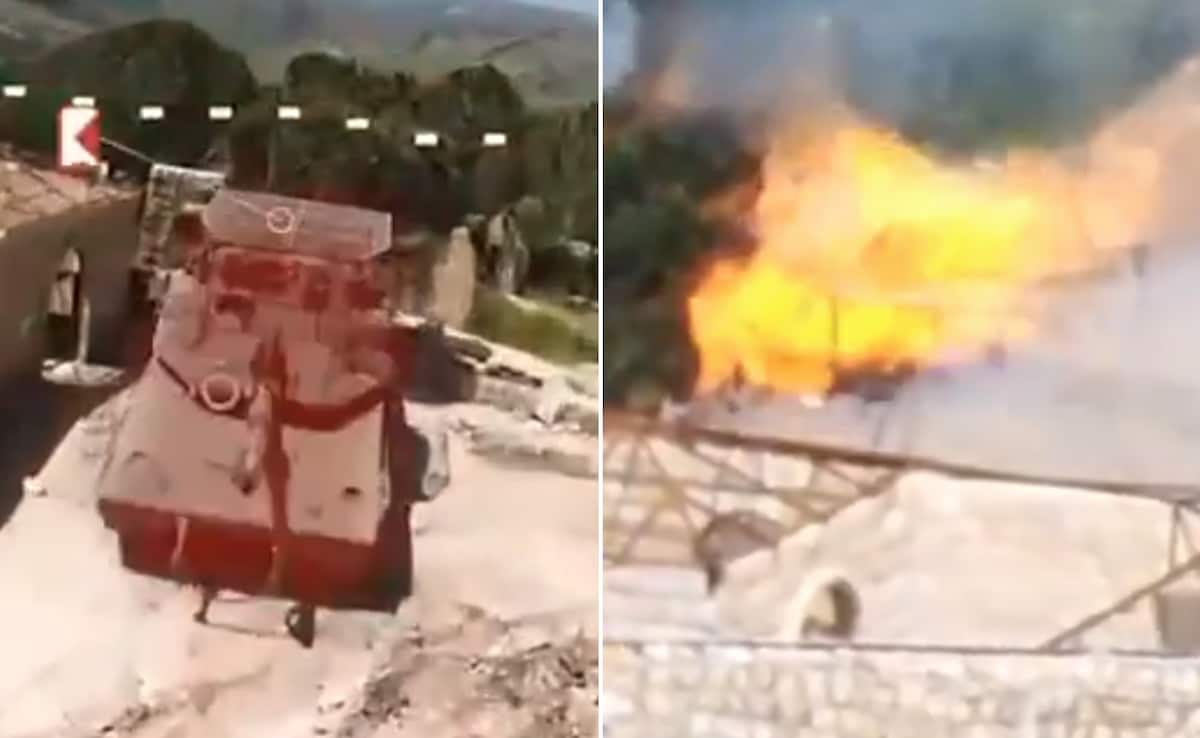
Israel has the most sophisticated air defense network on the planet. Between the Iron Dome, David’s Sling, and the Arrow system, the country is shielded by layers of high-tech sensors and interceptors that can track thousands of targets. Yet, a $2,000 plastic drone from Lebanon is currently making those billion-dollar systems look remarkably vulnerable. Hezbollah has shifted its strategy from massive rocket volleys to low-profile, high-accuracy "suicide drones," and it’s working better than anyone expected.
If you’ve been following the skirmishes across the Blue Line, you know the narrative usually focuses on the sheer number of rockets. But the real story isn't the volume. It’s the precision. Hezbollah is using the Mirsad-1, a locally modified version of the Iranian Ababil-2, to bypass radar and strike sensitive military infrastructure. They aren't just firing blindly anymore. They're hunting.
The cheap tech winning the expensive war
We used to think of electronic warfare as a contest of giants. Now, it’s a contest of who can be the most annoying with the least amount of money. The drones Hezbollah launches are basically fiberglass shells with small engines. They fly low—often hugging the valleys of the Galilee—which makes them nearly invisible to traditional radar designed to spot high-altitude jets or ballistic missiles.
Radars look for "signatures." A small drone made of composite materials has a radar cross-section roughly the size of a large bird. When you have a flock of actual birds and a drone flying at the same speed and altitude, the software often filters out the drone to prevent "false positives." Hezbollah knows this. They’re exploiting the physics of radar detection to slip through the cracks.
The cost disparity is staggering. An Iron Dome Tamir interceptor costs somewhere between $40,000 and $50,000. The drone it’s trying to hit might cost $3,000. If Hezbollah sends ten drones and Israel fires twenty interceptors, Lebanon spends $30,000 while Israel spends a million. That's a math problem that doesn't end well for the defender. It’s economic attrition disguised as a border skirmish.
Why the Iron Dome struggles with the Mirsad-1
The Iron Dome was built to stop Katyusha rockets. Those rockets follow a predictable, parabolic trajectory. Once the radar locks onto a rocket, the computer calculates the landing point in milliseconds. If it’s headed for an empty field, the system ignores it. If it’s headed for a city, it fires.
Drones don't work like that.
They can change direction. They can loiter. Most importantly, they don't have a ballistic arc. A Mirsad-1 can fly a circuitous route, coming in from the sea or behind a mountain range, hitting a target from an angle the defense systems weren't optimized to watch. We saw this recently with the strike on a military base near Binyamina. The drone simply disappeared from radar, the IDF assumed it had crashed, and minutes later it struck a mess hall.
The acoustic problem
Israeli citizens have started reporting that they hear the "lawnmower buzz" of a drone long before any sirens go off. That's a massive psychological blow. When the sirens don't trigger because the sensors haven't "confirmed" the threat, people lose trust in the tech. Hezbollah isn't just trying to kill soldiers; they're trying to prove that the "Iron Shield" is porous.
Hezbollah is learning from the Ukraine conflict
The war in Ukraine changed everything for non-state actors. We're seeing Hezbollah adopt tactics that look suspiciously like those used by Russian forces with the Shahed-136. They use "swarm" tactics, but not in the sci-fi sense. It’s simpler. They launch a few cheap rockets to "distract" the radar and keep the interceptors busy. While the Iron Dome is focused on the rockets, the drones slip underneath.
They’ve also upgraded their optics. These drones aren't just flying blind to a GPS coordinate. They have high-definition cameras that feed back real-time data until the moment of impact. This allows them to hit specific points—like a command trailer or a specific radar dish—rather than just hitting a general base area.
I’ve looked at the footage released by Hezbollah's media wing. The "Hoopoe" (Hudhud) surveillance drone missions are particularly embarrassing for air defense. They’ve flown over the port of Haifa, filming sensitive refineries and docked warships, and flew back to Lebanon without being engaged. It wasn't a suicide mission; it was a "look what we can do" mission.
The shift from quantity to quality
For decades, Hezbollah’s threat was its 150,000 rockets. That's still a problem, but it's a known problem. The new threat is the transition to a "smart" arsenal. You don't need 100,000 rockets if you have 5,000 drones that can actually hit their targets.
Hezbollah’s Secretary-General Hassan Nasrallah has been vocal about "local production." They aren't just waiting for shipments from Tehran. They’re building these things in underground facilities in the Bekaa Valley. This makes the supply chain almost impossible to cut off entirely. You can't bomb a factory that's 50 feet underground and spread across twenty different secret locations.
The defense must get cheaper to survive
Israel is currently rushing the "Iron Beam," a laser-based defense system. This is the only logical move. A laser blast costs about $2. It doesn't run out of ammunition as long as there’s power. But the Iron Beam isn't fully operational across the entire border yet. Until it is, the IDF is forced to use expensive missiles or even fighter jets to chase down plastic drones.
There's something almost absurd about watching an F-15—one of the most advanced pieces of machinery ever built—trying to shoot down a slow-moving drone with a multi-million dollar Sidewinder missile. It’s like using a sledgehammer to kill a mosquito. Sometimes the mosquito wins.
What happens when the tech scales
The scary part isn't what’s happening now. It’s what happens in twelve months. Drone tech is the only military tech that gets better and cheaper simultaneously. If Hezbollah manages to integrate AI-driven terminal guidance—where the drone recognizes the target on its own without a pilot—jamming won't even work anymore.
Currently, the most effective way to stop these is electronic jamming (spoofing GPS). But if the drone is using "visual navigation," it doesn't need GPS. It just looks at the ground and compares it to a map. That tech exists in $500 hobbyist drones today.
Reality check for border security
The residents of northern Israel aren't waiting for the government to fix the radar. They’re demanding "low-tech" solutions like more observers on hilltops with binoculars and heavy machine guns. We're essentially moving backward in time to solve a forward-thinking problem.
If you're tracking the security situation, keep your eyes on the "interception rate" of drones specifically, not just rockets. The rocket interception rate is still high, often above 90%. For drones, that number is significantly lower and much harder for the IDF to track publicly.
The game has changed. Being "accurate" used to be the luxury of the world's richest militaries. Now, accuracy is available to anyone with a 3D printer, a small engine, and some basic fiberglass. Hezbollah has figured out that you don't need to defeat the Iron Dome. You just need to fly under it.
The immediate next step for those in the region is a total rethink of civil defense. Relying on the "red color" sirens isn't enough when the threat doesn't trigger the alarm. Localized, acoustic-based detection systems are likely the only way to fill the gap until the laser systems are deployed at scale. Expect more "blind" hits until the tech catches up to the reality of cheap, plastic warfare.