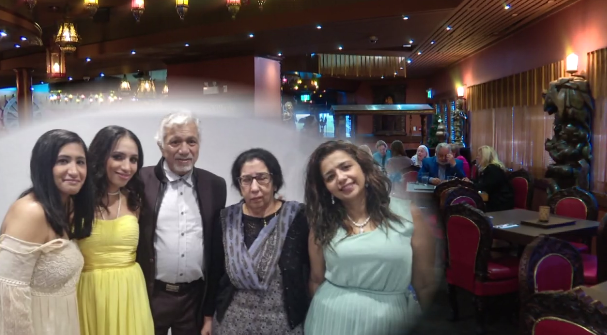
The feel-good story is a sedative. We’ve all read the profile on the New Asian Village—the 40-year milestone, the "flavour and family" narrative, the sepia-toned nostalgia of a first-generation immigrant success story. It hits every emotional beat we’ve been trained to applaud. But if you look past the warm glow of the tandoor, you’ll see the "heritage trap."
The heritage trap is what happens when a brand becomes a museum instead of a business. It’s the moment a restaurant stops competing on culinary merit and starts competing on sentimentality.
When a legacy brand like New Asian Village hits the four-decade mark, the industry celebrates. I don't. I look at the balance sheets of the restaurants that didn’t make it because they were too busy innovating to lean on a "family recipe" crutch. Longevity is not a synonym for quality. Often, it’s just a symptom of a captured market and a lack of local competition.
The Myth of the Untouchable Family Recipe
The standard narrative suggests that a recipe passed down through three generations is inherently superior. This is a logical fallacy.
In the 1980s, sourcing authentic spices in a Western market was a logistical nightmare. Chefs used what they could find. They adapted to duller palates. They compromised. To hold those same compromises sacred forty years later isn't "respecting tradition"—it's laziness.
Modern gastronomy has moved on. We understand the chemistry of Maillard reactions, the precision of sous-vide, and the molecular stability of emulsions better than any "village" cook did in 1984. When a restaurant clings to "the way grandmother did it," they are usually admitting they haven't learned anything new since the Reagan administration.
True culinary respect isn't mimicry. It's evolution. If your food tastes exactly the same as it did in the 80s, you aren't a chef; you're a curator of a time capsule.
The Staffing Lie: "We Are Family"
"Family-run" is the most abused phrase in the hospitality industry. It is frequently used as a shield against criticisms of professional inefficiency or, worse, as a justification for a lack of corporate structure.
I’ve consulted for legacy brands where "family" meant the founder’s nephew was the floor manager despite having zero hospitality training. It meant the kitchen staff were treated like relatives—which in the restaurant world often translates to "we don't need formal HR processes because we love each other."
This culture is a poison. It creates a ceiling for talented outsiders. A high-performing executive chef will never stay at a family-run institution because they know the glass ceiling is made of DNA. You cannot meritocracy your way into the inner circle.
If you want to scale—and New Asian Village certainly tried with its franchising efforts—you have to kill the family. Not the people, but the ideology. You need systems. You need Standard Operating Procedures (SOPs) that exist independently of who is standing behind the line.
The Franchise Failure: Dilution is Mandatory
The competitor article praises the expansion. Let’s talk about the reality of franchising "heritage."
You cannot scale "soul." You can only scale chemistry and logistics. When New Asian Village moved from a single, owner-operated location to a regional chain, the "family" element became a marketing slogan rather than an operational reality.
In a franchise model, the goal is consistency over excellence. You optimize for the lowest common denominator so that a 19-year-old line cook in a different city can recreate the dish. This is where the "flavour" part of the headline dies. You swap fresh, hand-ground masalas for pre-packaged base gravies. You move from small-batch cooking to industrial prep.
The result is a beige version of the original. It’s the "Applebee’s-ification" of ethnic cuisine. It’s profitable, sure, but don't tell me it's about heritage. It's about units.
Stop Asking "Is it Authentic?"
The "People Also Ask" sections of the internet are obsessed with authenticity. "Is New Asian Village authentic?"
It’s the wrong question. Authenticity is a moving target used by critics to gatekeep culture. The real question is: "Is it relevant?"
A 40-year-old menu is rarely relevant to a modern diner who values acidity, lightness, and sustainable sourcing. The heavy, cream-laden sauces of 1980s North Indian-style dining were designed for a specific era and a specific Western expectation of "luxury." Today’s diner wants to see the vegetable, not the gravy it drowned in.
The Danger of the Milestone
When a business celebrates 40 years, it’s usually a signal to the market that they’ve stopped looking forward. They are looking in the rearview mirror.
I’ve seen legacy restaurants celebrate their anniversaries right into bankruptcy. They get complacent. They assume the "regulars" will always be there. But regulars die. And their children? They want the new fusion spot that’s experimenting with fermentation and local ingredients, not the place their parents took them for Sunday buffet.
Nostalgia is a depreciating asset.
The Actionable Pivot: Kill Your Darlings
If you are running a legacy brand, or looking to invest in one, you need to perform an audit of your "sacred cows."
- Audit the Menu: If a dish is there "because it’s always been there," delete it. If it doesn't sell to under-30s, it’s dead weight.
- Professionalize the C-Suite: If your last name is the same as the sign on the door, you shouldn't be the CEO unless you’ve earned it at a firm that didn't belong to your father.
- Reinvest in Tech: Heritage doesn't mean old tech. Your POS, your inventory management, and your data analytics should be 2026, even if your recipes are 1984.
- Kill the Buffet: The buffet is where food goes to die and where brand value goes to be buried. It screams "volume over value."
The Hard Truth
New Asian Village is a success story by the metrics of the past. But in the current landscape, survival for the sake of survival isn't impressive. What’s impressive is the ability to reinvent.
Most "heritage" brands are too afraid to change because they fear alienating their base. But if you don't alienate the past, you can't own the future. You end up as a footnote in a local history book—a place people remember fondly but never actually visit.
The industry doesn't need more 40-year-old stories about family. It needs better food, tighter operations, and a ruthless commitment to the present. Everything else is just marketing fluff designed to make us feel better about eating mediocre butter chicken.
Stop celebrating the anniversary. Start questioning why the menu hasn't changed since the Berlin Wall fell.
Take the "family" off the pedestal and put the customer's changing palate there instead. That’s the only way to see year 41.