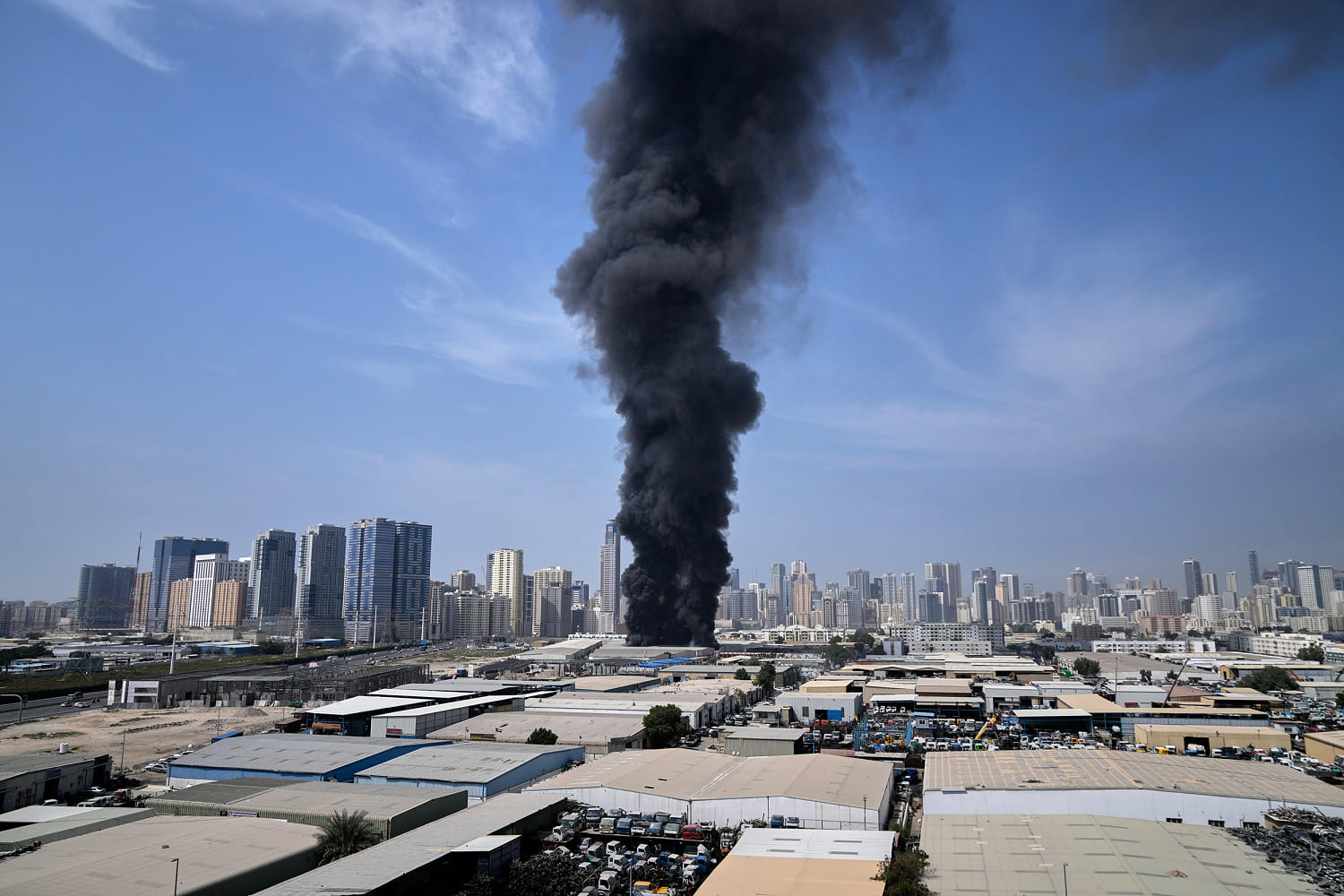
The pretense of a stable Middle East security architecture has officially evaporated. While diplomatic cables formerly focused on the "de-escalation" of the early 2020s, the recent wave of Iranian strikes has stripped away the veneer of the AlUla Accords. Gulf capitals are no longer debating whether a red line was crossed; they are grappling with the reality that those lines were drawn in sand that has already shifted. The core issue is not just a regional power struggle but a fundamental breakdown in the protection agreement that has governed energy markets and sovereign safety for half a century.
For decades, the Gulf Cooperation Council (GCC) relied on a simple trade-off: provide global energy stability in exchange for an American security umbrella. That umbrella is leaking. As Iranian missiles and drones penetrate sophisticated defense networks, Riyadh and Abu Dhabi are forced into a brutal recalculation. They are discovering that being a "strategic partner" of the West does not guarantee an interceptor for every incoming threat, especially when the manufacturer’s own stockpiles are being drained by conflicts in Europe and the Levant.
The Mirage of Total Defense
The technical failure of modern air defense is the elephant in the room. Even with the most expensive hardware money can buy, the sheer volume of low-cost attrition warfare employed by Tehran creates an unsustainable math problem. When a $20,000 drone requires a $2 million interceptor to stop it, the defender loses the war of nerves long before they lose the war of hardware.
This is the grim reality facing Saudi Aramco and ADNOC facilities. These are not just oil companies; they are the central banks of the global energy supply. A single successful strike on a stabilization tower or a desalinization plant doesn't just flicker the lights—it threatens the literal survival of the state. The Gulf states have spent hundreds of billions on "defense," but they remain structurally vulnerable to asymmetrical swarm tactics that ignore traditional borders.
The Washington Divorce
There is a palpable sense of betrayal in the royal courts. The "integrated air and missile defense" frequently touted by U.S. Central Command feels more like a marketing slogan than a physical shield when the political will in Washington remains focused on pivot-to-Asia strategies. Gulf leaders watched the U.S. response to various provocations and saw a pattern of calculated restraint that they interpret as abandonment.
This perceived vacuum is being filled by a frantic, multi-directional foreign policy. It is why we see the UAE and Saudi Arabia maintaining open channels with Moscow and Beijing while simultaneously hosting U.S. military bases. They are diversifying their security portfolios because the primary insurer is no longer seen as reliable. If the U.S. won't provide the "ironclad" guarantees they demand, the Gulf states will look for leverage elsewhere, even if those new partners come with significant strings attached.
The Economic Cost of Vulnerability
The threat of Iranian escalation carries a price tag that goes beyond physical damage. Insurance premiums for shipping through the Strait of Hormuz are skyrocketing. Foreign direct investment, the lifeblood of "Vision 2030" and other regional diversification plans, is sensitive to the smell of cordite. No global tech giant or renewable energy firm wants to build a regional headquarters in a zone where the skyline can be lit up by a ballistic missile at three in the morning.
We are seeing a quiet shift in how these states manage their wealth. Instead of just buying off-the-shelf weapons systems, there is a desperate push to localize defense manufacturing. They want the "how" as much as the "what." By attempting to build their own drones and electronic warfare suites, they hope to shorten the supply chain of survival. But indigenous military industry takes decades to mature, and the threat is immediate.
The Proxies are the Message
Iran’s strategy of using "plausible deniability" through its network of regional militias remains its most effective tool. By the time an investigation proves exactly which launch site a drone originated from, the political moment has passed. This creates a paralysis in Gulf decision-making. Do they retaliate against the proxy, which is essentially hitting a ghost, or do they strike the source and risk a total regional conflagration that would surely destroy their own infrastructure?
This dilemma is the "why" behind the recent diplomatic thaws. Riyadh’s rapprochement with Tehran wasn't born out of sudden friendship; it was born out of a realization that they cannot defend themselves against a direct Iranian onslaught without U.S. boots on the ground—boots that are not coming. They are playing a high-stakes game of "keep your enemies close" because their friends have become increasingly distant.
Internal Pressure and the Social Contract
The risk is not just external. The social contracts of the Gulf monarchies depend on the state’s ability to provide absolute security and prosperity. If a population begins to see that the state cannot protect the very industries that fund their subsidies and lifestyles, the internal friction could be more dangerous than any external missile.
Younger generations in the Gulf are being told their future lies in tourism, tech, and global trade. That promise is fragile. It relies on a perception of the region as a "safe haven" in a chaotic world. If that perception breaks, the brain drain and capital flight will be swift. The leadership knows this. Every missile that gets through is a direct hit on the legitimacy of the ruling families.
The Nuclear Shadow
The most overlooked factor in this crisis is the shortening "breakout time" for Iran’s nuclear program. As conventional strikes become more frequent and bold, the Gulf states are looking at a future where Tehran has a nuclear deterrent to back up its conventional aggression. This is the ultimate nightmare scenario for the GCC.
If Iran achieves "threshold" status, the leverage of the Gulf states drops to zero. They would be forced into a permanent state of appeasement or would have to pursue their own nuclear path—a move that would alienate the West and turn the region into a global powder keg. The window to prevent this outcome through conventional pressure is closing, and the Gulf knows it.
The Failure of Regional Alliances
The GCC has never been a monolithic entity. Tensions between Qatar, the UAE, and Saudi Arabia have historically hampered any real collective defense strategy. While there is more coordination now than during the 2017 blockade, the lack of a unified command structure makes a coordinated response to Iran nearly impossible.
Each state is cutting its own deal. Each state is looking for its own exit ramp. This fragmentation is Iran’s greatest asset. By picking off different interests—offering a trade deal here while threatening a port there—Tehran ensures that the Gulf can never present a truly united front. The "red lines" are different for Dubai than they are for Riyadh or Kuwait City.
Sovereignty in the Age of Precision
The old rules of sovereignty are being rewritten by GPS-guided munitions. In the past, a border was a clear line. Today, a border is whatever your radar can see and your interceptors can hit. The Gulf states are finding that their massive sovereign wealth and glittering cities are liabilities in a conflict where the aggressor has nothing to lose and a sophisticated arsenal of cheap, precision-guided weapons.
They are stuck in a strategic middle ground. They are too wealthy to be ignored and too vulnerable to be truly independent. The coming months will not be defined by "responses" or "statements," but by the quiet, desperate scramble to find a new security guarantor—or the realization that in the new Middle East, you are ultimately on your own.
The move toward a more "independent" foreign policy is not a choice; it is a survival mechanism. As the U.S. focus remains split and Iranian aggression becomes more brazen, the Gulf states will continue to hedge, pivot, and pay whatever price is necessary to keep the missiles from falling. But the cost of that survival is rising every day, and the currency they are paying in is their own long-term autonomy.
The next time the sirens go off in Abu Dhabi or Dhahran, the question won't be which red line was crossed. The question will be whether there are any lines left at all. The transition from a protected enclave to a front-line state is complete, and the bill for that transition is finally coming due. Strategies that worked in the 1990s are worse than useless today; they are dangerous illusions that provide a false sense of security while the reality of 21st-century warfare closes in from all sides.
Stop looking for a "return to normalcy." This is the new normal. The Gulf is no longer an observer of regional instability; it is the primary target, and the tools of the past are insufficient for the threats of tonight. The strategic depth these states once thought they had has vanished, replaced by a 360-degree theater of operations where every refinery, palace, and port is a potential casualty of a war that is already being fought in the shadows.