The saltwater still stings the same way it did thirty years ago, but the view from the deck has changed. If you stand on the pier at Aberdeen, you can smell the diesel and the sea spray, a scent that defines Hong Kong’s DNA. To your left, a row of sleek, white superyachts sits in silence. They are engineering marvels, multi-million dollar monuments to success. To your right, the old sampans bob rhythmically, their wooden ribs creaking.
Between these two worlds lies a massive, invisible gap.
For years, the conversation about Hong Kong’s "yacht economy" has been trapped in a cycle of concrete and steel. The logic was simple: build more berths, expand the marinas, and the money will follow. We treated the ocean like a parking lot. But a parking lot is not a culture. A berth is not an industry.
If Hong Kong wants to actually lead the maritime world rather than just host its hardware, we have to stop talking about infrastructure and start talking about the soul of the water.
The Mechanic and the Multi-Millionaire
Consider a hypothetical but very real scenario. A French-built 40-meter yacht sails into Hong Kong waters. The owner is ready to spend. He needs a specific teak repair, a specialized engine calibration, and a crew that knows the subtle currents of the South China Sea.
Currently, that owner might find a place to park, but he’ll struggle to find the ecosystem.
The "yacht economy" isn’t just about the person holding the champagne glass on the flybridge. It’s about the person holding the wrench in the engine room. It’s about the specialist who understands the chemical composition of marine paint. In places like Monaco or Fort Lauderdale, the maritime industry is a ladder. A teenager starts by scrubbing decks and ends up managing a fleet or engineering stabilized hull systems.
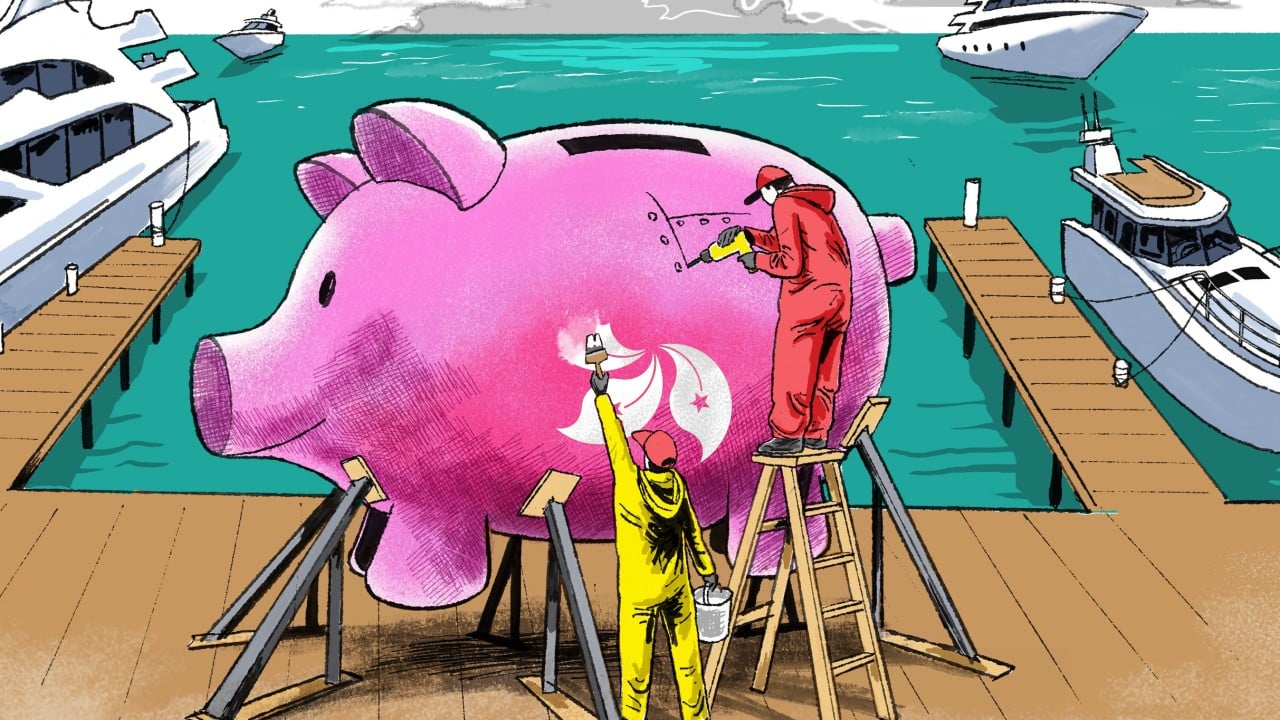
Hong Kong has the wealth, but it has neglected the craftsmanship. We have focused on the "buy" and forgotten the "build" and the "maintain." To transform this, we need a radical shift in how we view maritime careers. We need vocational prestige.
When we treat marine engineering as a secondary trade rather than a high-tech career path, we bleed talent to Singapore or Australia. The stakes are invisible until they are terminal. Without a local workforce of elite technicians, Hong Kong remains a temporary stopover—a glamorous gas station—rather than a global home port.
The Border that Functions Like a Wall
The ocean is supposed to represent freedom. It is the one place where the horizon is the only limit. Yet, for a yacht owner in Hong Kong, the water often feels like a series of boxes.
If you own a yacht in the Mediterranean, you can breakfast in Cannes and have dinner in San Remo. The borders are fluid; the regulations are harmonized. Now, look at the Greater Bay Area. We have one of the most vibrant clusters of coastal cities on the planet—Macau, Zhuhai, Shenzhen, Guangzhou—all within a day’s sail.
But the red tape is thicker than the hull.
Navigating the different maritime jurisdictions between Hong Kong and the mainland is currently an exercise in bureaucratic endurance. There are different licensing requirements, different safety standards, and a mountain of paperwork for every mile gained. It creates a "glass ceiling" for the industry. Why buy a boat that can cross oceans if you are legally tethered to a few bays in Sai Kung?
True growth requires a "Maritime Travel Bubble." Imagine a unified cruising permit for the Greater Bay Area. It sounds like a dry policy point. In reality, it is the difference between a stagnant local hobby and a regional powerhouse. It allows for a flow of tourism, maintenance, and exploration that doesn’t exist today.
We need to stop seeing the maritime border as a security fence and start seeing it as a transit corridor. The ocean doesn't care about jurisdictions. Neither should the economy that sits on top of it.
The Myth of the Exclusive Club
There is a persistent, damaging idea that yachting is only for the 0.1%. This perception is the anchor dragging down the entire industry.
When a sector is viewed as an exclusive playground for the ultra-wealthy, it loses public support. It becomes a target for taxes and restrictions rather than an engine for growth. The reality is that a healthy yacht economy is a pyramid. At the top are the superyachts, yes. but the base should be the middle class.
In Sydney or Auckland, the water is democratic. You see families on 20-foot dayboats, teenagers learning to sail on dinghies, and retirees on modest cruisers. This "boating for all" mentality creates a massive, stable market for insurance, parts, fuel, and club memberships.
Hong Kong’s geography is perfect for this, yet we’ve made it unnecessarily difficult. Marina memberships are astronomical. Public landing steps are often crowded or poorly maintained. We have plenty of "Gold Memberships" but not enough "Day Passes."
To fix this, we have to integrate the water into the city’s daily life. This means more than just a waterfront promenade for walking dogs. It means public-access boat ramps. It means simplifying the licensing process so it isn't more intimidating than a law degree. It means encouraging "boating sharing" platforms and charter services that allow a young professional to rent a boat for a Saturday without needing a billionaire's bank account.
When more people are on the water, the water becomes a priority. The economy stops being about luxury and starts being about lifestyle.
The Weight of the Water
Money flows where it is easiest to move. Right now, Hong Kong is making it hard. We are competing with regions that understand that a yacht is not just a boat; it’s a floating business.
Every time a yacht chooses to winter in Phuket or Singapore instead of Hong Kong, we don't just lose the mooring fee. We lose the provisioning at local markets, the hotel stays for the crew, the thousands of dollars in technical servicing, and the legal fees for registration. We lose the gravity that keeps Hong Kong relevant as a global hub.
The invisible stake is our identity. We are a city built on the harbor. Our fortune came from the sea. If we relegate our maritime culture to a few private docks and some forgotten shipyards, we lose a piece of who we are.
We need to stop staring at the blueprints for new piers. Those will come. Instead, we need to look at the people on the shore and the people in the engine rooms. We need to bridge the gap between the man on the sampan and the woman on the superyacht.
The water is waiting. It has always been there, restless and full of potential. We just have to decide if we are going to keep watching from the shore or if we are finally going to learn how to sail.
A city that forgets its harbor is a city that has lost its way. Hong Kong hasn't forgotten yet, but the tide is going out, and it’s time to move.