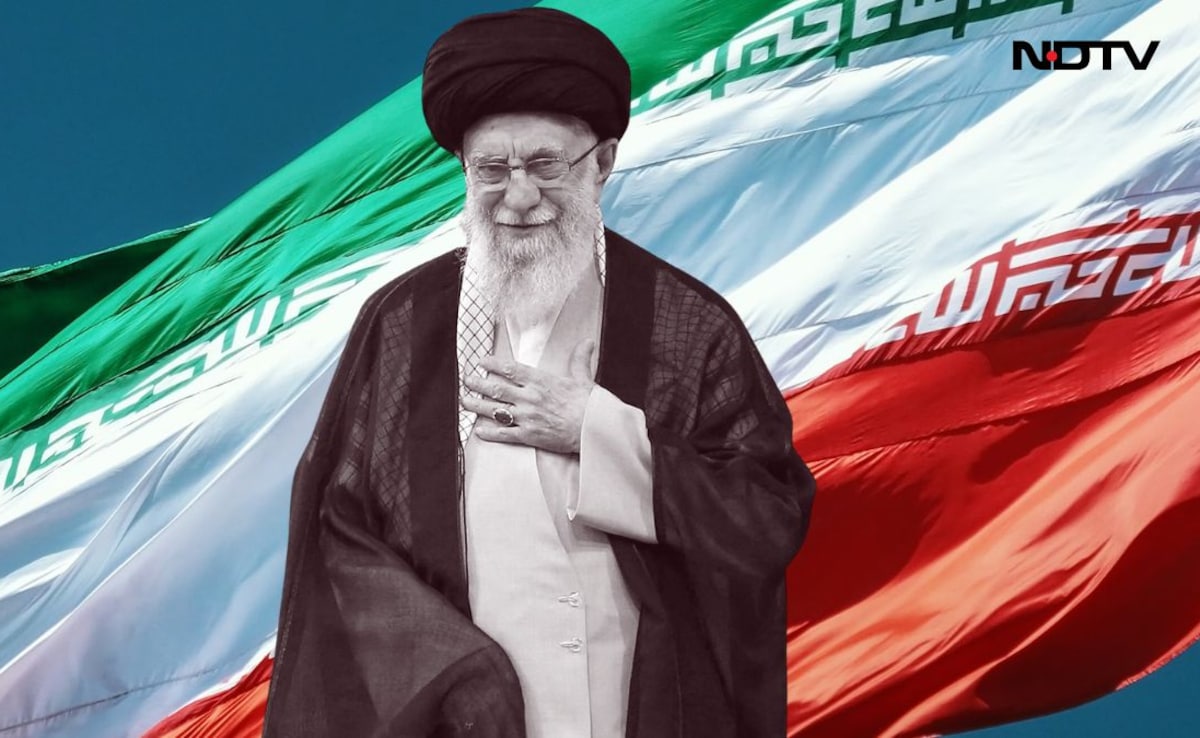
The Western media is currently obsessed with a single, flawed question: "Why hasn’t India condemned the death of Ali Khamenei?" This premise is born from a cocktail of historical amnesia and a fundamental misunderstanding of how New Delhi operates. To the armchair analysts in D.C. and London, India’s silence looks like cowardice or a betrayal of democratic values. To anyone actually watching the gears of the Indo-Pacific turn, it looks like the only rational move on the board.
The lazy consensus suggests that India is "sitting on the fence." I’ve spent two decades watching these diplomatic maneuvers, and let me be clear: India isn't on the fence. It built the fence, and it’s currently charging admission to both sides. New Delhi does not view foreign policy through the lens of a Saturday morning cartoon where "good" democracies must vanquish "evil" autocracies. It views the world through the lens of Strategic Autonomy—a term frequently used but rarely understood by those outside the South Block.
The Energy Trap and the Chabahar Gambit
Stop looking for a moral statement and start looking at a map. For India, Iran isn't just another country in the Middle East; it is the gateway to Central Asia and a vital bypass to a hostile Pakistan. The North-South Transport Corridor (INSTC) is the lifeline India needs to reach Russia and Europe without asking for permission from Islamabad.
When the West screams about human rights in Tehran, they conveniently forget that India just signed a 10-year contract to operate the Chabahar Port. You don't dump a decade-long strategic investment because a leader dies and the BBC wants you to tweet a condemnation.
I have seen diplomats spend years threading the needle between U.S. sanctions and Iranian oil. To expect India to incinerate that effort for the sake of "global optics" is not just naive; it’s insulting. India remembers the 1990s, when the West was happy to lecture New Delhi on nuclear ethics while providing a "major non-NATO ally" status to the very neighbors who were exporting terror across the Indian border.
Dismantling the Democracy Fetish
There is a persistent myth that shared democratic values should dictate foreign policy. If that were true, the United States wouldn't have spent the last half-century propping up monarchies in the Gulf.
India’s refusal to condemn the passing of an Iranian leader—regardless of the circumstances—is a feature of its foreign policy, not a bug. It follows the "non-interference" doctrine. In the halls of the Ministry of External Affairs, the internal politics of Tehran are viewed as exactly that: internal.
People also ask: "Is India moving away from the West?"
The question itself is flawed. It assumes India was ever "with" the West in a subservient capacity. India is a pole in a multipolar world. It doesn't move toward or away; it expands its own gravity. When New Delhi ignores Western pressure to condemn Iran, or continues to buy S-400 missile systems from Russia, it isn't being stubborn. It is declaring that its national interests are not up for debate in a subcommittee in Washington.
The Shia Factor and Domestic Stability
Foreign policy is always a reflection of domestic reality. India is home to one of the largest Shia Muslim populations outside of Iran. While the West views Khamenei as a geopolitical antagonist, a significant segment of India’s 200 million Muslims views the office of the Supreme Leader with religious or cultural reverence.
Political leaders in New Delhi are not interested in triggering domestic unrest to satisfy a Western news cycle. The risk-reward ratio is absurd.
- Risk: Domestic protests, alienated voting blocs, and a breakdown in local intelligence networks.
- Reward: A pat on the head from a State Department official who will likely be out of a job after the next election.
I've seen analysts try to quantify "soft power" by counting "condemnation statements." It's a loser's metric. Real power is being the only nation that can talk to the Israelis, the Americans, the Russians, and the Iranians in the same afternoon without any of them hanging up the phone.
The Brutal Reality of "Middle Way" Diplomacy
The truth that nobody admits is that the West actually needs India to stay silent. India serves as a backchannel. When the formal avenues of communication between Washington and Tehran are choked with rhetoric and sanctions, New Delhi remains a conduit.
If India joins the Western chorus of condemnation, it loses its utility as a mediator. It becomes just another voice in the echo chamber. By staying "neutral," India preserves a level of access that is invaluable during a crisis.
However, there is a downside to this contrarian approach: it creates a perception of "transactionalism." Critics argue that India has no soul, only a balance sheet. To some extent, they are right. India is practicing Realpolitik in its purest, most ruthless form. It is the realization that in a world of shifting alliances, "values" are the currency of the weak, while "interests" are the currency of the strong.
Why the "Condemn" Pressure is a Form of Colonialism
Let’s call this what it is: "Diplomatic Colonialism." The expectation that a sovereign nation must align its public mourning or condemnation with the specific moral calendar of the West is a relic of a bygone era.
India’s economy is on track to be the third-largest in the world. It is a nuclear power. It is a space-faring nation. The days of New Delhi taking notes on how to behave from former colonial masters are over.
When you ask why India hasn't condemned Khamenei, you are asking the wrong question. The real question is: Why does the West still think its approval is the benchmark for Indian success?
The Failure of Sanctions as a Moral Compass
We are told that silence equals complicity. But let's look at the data. Decades of Western sanctions and rhetorical condemnations have failed to change the regime in Iran. Instead, they have pushed Iran closer to China.
India’s engagement offers a different path. By maintaining economic ties, India ensures that Tehran isn't entirely dependent on Beijing. If India pulls out of Iran today, China fills the vacuum tomorrow. Is that what the West wants? A Persian Gulf that is effectively a Chinese lake?
If you want to understand India’s stance, stop reading the op-eds and start reading the trade ledgers. Look at the energy security requirements. Look at the geography of the Eurasian landmass.
New Delhi isn't being "difficult." It’s being a superpower. And superpowers don't take orders. They take opportunities.
Stop waiting for a statement that isn't coming. The silence isn't a lapse in judgment; it’s the sound of a nation that has finally realized it doesn't need to explain itself to you.