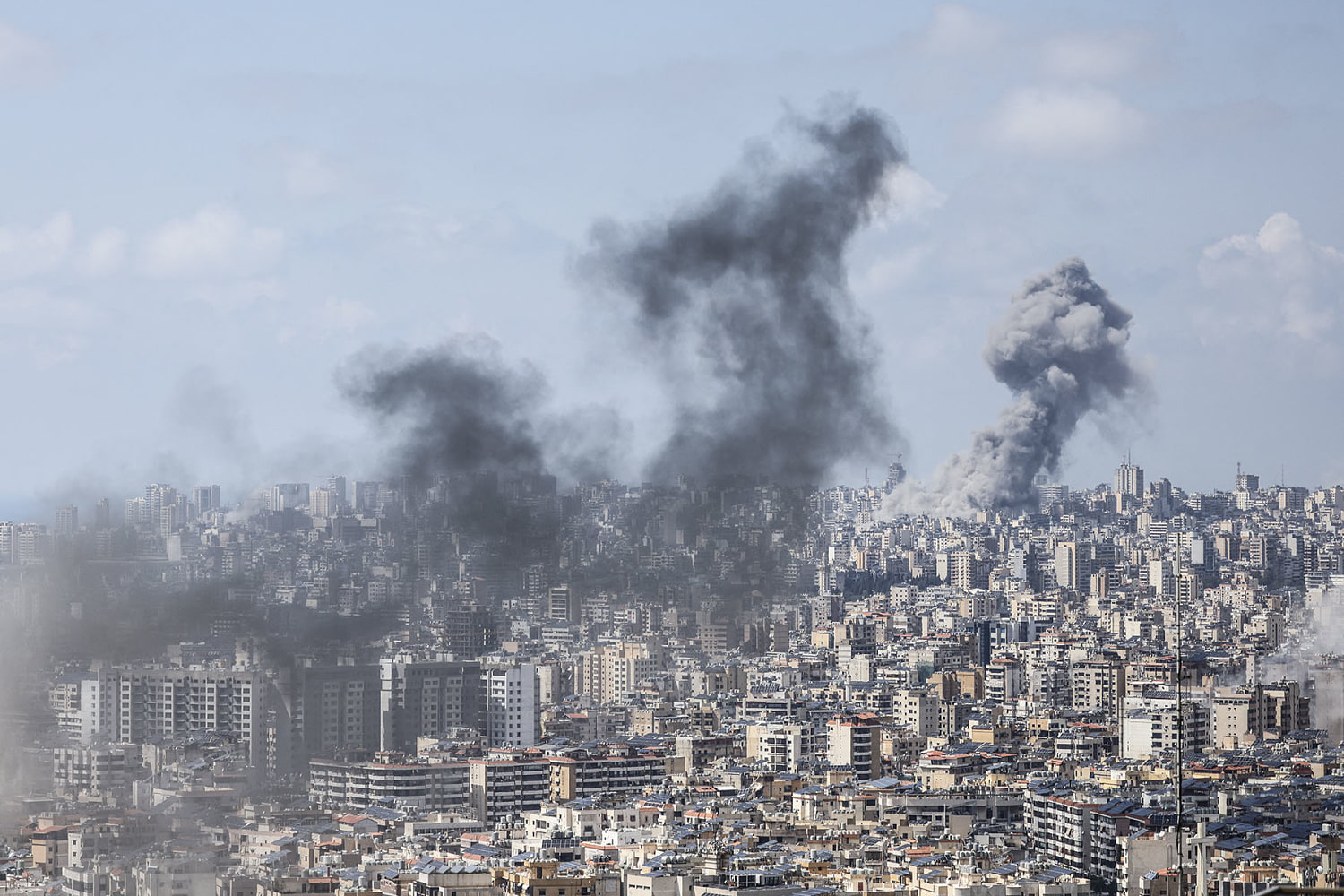
The Middle East stands at a precipice that few saw coming this quickly. While the world watched the friction between Israel and Hezbollah intensify, the sudden shift toward high-level peace talks represents a calculated risk by two governments pushed to their absolute limits. Simultaneously, in Washington, the abrupt resignation of Representative Eric Swalwell from Congress has sent shockwaves through the Democratic establishment, stripping a high-profile voice from the House Judiciary Committee and forcing an immediate scramble for power in California’s 14th district. These are not isolated tremors. They are the sound of a tectonic shift in both international diplomacy and domestic power structures.
The motivation for Israel and Lebanon to sit at a table is not born of newfound friendship. It is born of exhaustion and the cold math of survival. For Israel, the prolonged multi-front engagement has strained the reservist system and the national treasury to a degree the public is only beginning to grasp. For Lebanon, a state already teetering on the edge of total economic collapse, the prospect of an expanded war is a death sentence.
The Lebanon Accord and the Buffer Zone Reality
For decades, the border between Israel and Lebanon has been defined by the "Blue Line," a fragile demarcation that has seen more skirmishes than stability. The current talks revolve around a permanent maritime and land border agreement that would, in theory, push Hezbollah forces north of the Litani River.
This is the central sticking point. Israel demands a verifiable, armed enforcement mechanism that does not rely solely on the Lebanese Armed Forces or the existing UNIFIL mission, both of which Jerusalem views as ineffective. The "how" of this enforcement remains the primary hurdle. If the talks succeed, it will likely be because of an unprecedented security guarantee backed by a coalition of Mediterranean powers, rather than a simple handshake between the two neighbors.
The economic incentive is the hidden engine here. Both nations are sitting on massive undersea natural gas deposits. Without a settled border, international energy firms are hesitant to deploy the billions required for extraction. Peace, in this specific instance, is being bought with the promise of energy independence and a desperate need for hard currency.
The Swalwell Resignation and the Democratic Vacuum
Back in the United States, the departure of Eric Swalwell is a blow to the aggressive, media-savvy wing of the Democratic Party. Swalwell, a fixture on cable news and a relentless critic of the Republican leadership, cited "personal reasons and a desire to return to private life," but the timing suggests a deeper fatigue or a looming shift in the political weather.
His exit leaves a gaping hole on the House Judiciary and Intelligence Committees. These are not just administrative seats; they are the front lines of the investigative wars that define modern Washington. Swalwell was a primary architect of the party’s messaging on executive oversight. Without his sharp, often polarizing presence, the committee loses its most vocal attack dog.
The Special Election Scramble
California’s 14th district is a deep-blue stronghold, but the vacancy triggers a special election that will serve as a laboratory for the party's future. We are already seeing a divide between the progressive grassroots and the institutional moderates.
- Financial Impact: Swalwell was a prolific fundraiser. His successor will need to rebuild that donor network from scratch in a very short window.
- Seniority Loss: When a veteran member leaves, the district loses years of accumulated "soft power" and committee seniority that translates into federal funding for local infrastructure.
- National Narrative: Republicans are already framing the resignation as a sign of a "sinking ship," while Democrats are scrambling to maintain a unified front.
The ripple effects extend to the 2026 midterm preparations. Swalwell was frequently mentioned as a candidate for higher statewide office in California. His removal from the board changes the calculus for every other ambitious politician in the state, from the Attorney General’s office to the Governor’s mansion.
Intelligence Security and the Shadow of the Past
We must address the persistent questions regarding Swalwell’s past interactions with suspected foreign intelligence assets. While he was cleared of wrongdoing by the House Ethics Committee years ago, the shadow of those allegations remained a favorite cudgel for his political opponents. In his resignation, he avoids the inevitable subpoenas that would have come if the House majority shifted further or if new investigative threads were pulled.
This isn't just about one man. It’s about the vulnerability of the modern legislator. As foreign entities increasingly target mid-career politicians with high growth potential, the Swalwell case serves as a permanent warning. His departure might be an attempt to close a chapter that has been used to distract from his legislative goals for nearly a decade.
A New Map for the Eastern Mediterranean
Returning to the border, the "Why" behind the timing of the Israel-Lebanon talks cannot be separated from the internal pressure on Israeli Prime Minister Benjamin Netanyahu. His coalition is a brittle alliance of convenience. A diplomatic win in the north would provide him with the political capital necessary to navigate the ongoing crisis in the south and the growing domestic protests over the judicial system.
However, the risk of failure is massive. If the talks collapse, the move from the boardroom to the battlefield will be instantaneous. Lebanon’s caretaker government is under immense pressure from Hezbollah not to "sell out" to Israeli security demands. Hezbollah, while a political party in Lebanon, remains an Iranian-backed militia with an arsenal that could overwhelm Israel's Iron Dome by sheer volume.
The talks are a race against time. Every day a deal isn't signed is a day a stray rocket or a panicked commander could trigger a regional conflagration. The diplomatic heavy lifting is being done by back-channel negotiators who understand that this isn't about "peace" in the poetic sense; it's about a cold, functional cessation of hostilities that allows both sides to breathe.
The Institutional Drain in Washington
The departure of high-profile members of Congress like Swalwell points to a broader trend of "institutional drain." When the job becomes more about defending one's character on social media than drafting policy in a sub-committee, the most capable practitioners often look for the exit. This creates a vacuum filled by ideologues who are more interested in the "performance" of politics than the "process" of governing.
The House is becoming a place where seniority is a burden rather than a badge of honor. Swalwell’s exit is the latest data point in a graph that shows the average tenure of effective lawmakers is shrinking. This has real-world consequences for how laws are written and how the government functions during a crisis.
The intersection of these two stories—peace talks in the Levant and a resignation in DC—reveals a world in a state of nervous transition. Leaders are making moves to cut their losses and shore up their positions before the next wave of instability hits. Whether it's a border agreement in the Middle East or a seat change in California, the status quo is being dismantled in real-time.
Watch the special election in California for the first sign of where the national mood is heading. Watch the Litani River for the first sign of whether the diplomacy has actual teeth. The next six months will determine if these moves were the beginning of a stabilized era or merely the last attempt to manage an unmanageable decline.