The global stability index shifted significantly over the weekend of May 9-10, 2026, driven by three distinct systemic shocks: the escalation of denaturalization as a domestic policy lever, the militarization of maritime trade routes in the Gulf of Oman, and the emergence of "Agentic AI" as the primary metric for corporate valuation. While traditional news outlets frame these as isolated incidents, a structural analysis reveals they are interconnected by a singular mechanism: the aggressive re-bordering of physical and digital assets.
The Denaturalization Framework and Labor Market Volatility
The Department of Justice’s filing to revoke the citizenship of 12 naturalized individuals on May 9 represents a shift from judicial exception to administrative routine. This is not merely a legal maneuver; it serves as a functional signal to the global labor market.
The Uncertainty Premium in High-Skill Migration
When citizenship status is redefined as a revocable privilege rather than a permanent legal state, the cost-benefit analysis for high-skill immigrants changes.
- Asset Liquidation Incentives: If legal residency is perceived as volatile, individuals are less likely to lock capital into long-term domestic assets (e.g., real estate, 401ks) and more likely to maintain liquid, portable assets.
- Talent Arbitrage: Competitor nations (Australia, Canada, and EU blocks) utilize these policy shifts to lower their own acquisition costs for technical talent.
The mechanism here is the "Insecurity Multiplier." For every high-profile denaturalization case, a secondary effect occurs across the broader naturalized population, leading to reduced consumer spending and a "wait-and-see" approach to entrepreneurship.
Maritime Blockades and the Seizure of Sovereign Assets
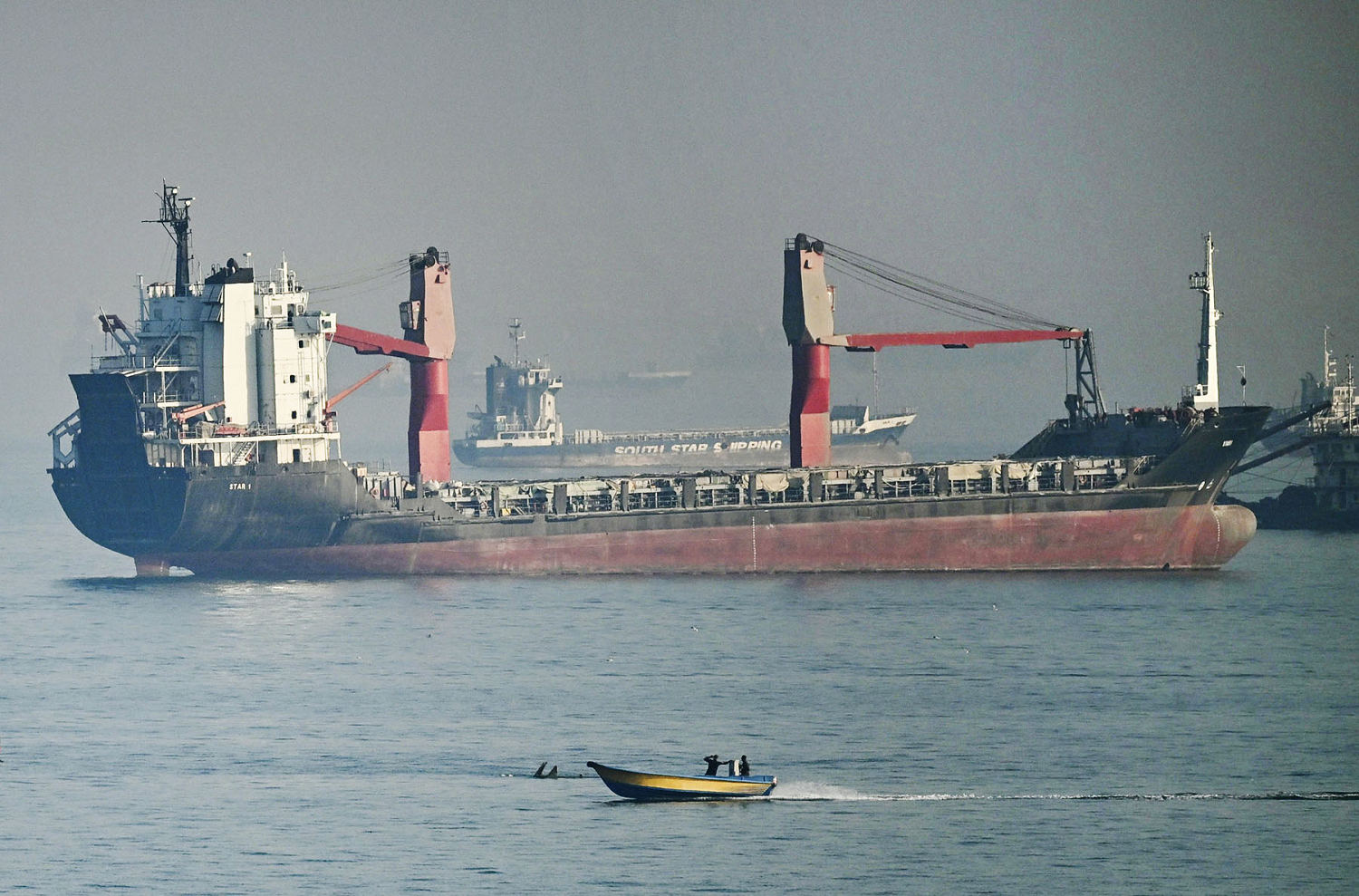
The interception and seizure of the Iranian-flagged cargo vessel TOUSKA by the USS Spruance in the Gulf of Oman establishes a new precedent for the enforcement of naval blockades. This action moves beyond economic sanctions into the realm of direct kinetic intervention in global trade.
The Commodity Chokepoint Mechanics
The seizure reflects a transition from "Passive Interdiction" (denying port access) to "Active Seizure" (physical custody of assets). This creates a direct upward pressure on the Geopolitical Risk Premium for shipping insurance.
- Insurance Escalation: Underwriters calculate premiums based on the probability of seizure. As the probability of state-sponsored interception rises, the "Total Cost of Transit" for energy products increases, regardless of the underlying oil price.
- The Rerouting Bottleneck: If the Gulf of Oman is deemed a high-risk zone for state-flagged vessels, the volume shifts to secondary routes. However, these routes lack the infrastructure to handle the throughput, creating a structural delay in global energy delivery.
The cause-and-effect relationship missed by general reporting is the impact on "Just-in-Time" (JIT) logistics. The seizure of one vessel acts as a signal to the entire fleet to decelerate, effectively reducing global supply chain velocity by several percentage points overnight.
The Agentic AI Shift: From Tool to Autonomous Actor
As of May 11, 2026, the corporate focus has pivoted from "Generative AI" (content creation) to "Agentic AI" (autonomous task execution). The distinction is critical: Generative AI produces an output that requires human verification; Agentic AI executes a series of actions to achieve a goal.
The Displacement of the Middle Management Layer
The "Three Pillars of Agentic Integration" now dictate quarterly earnings expectations for the Fortune 500:
- Accountability Mapping: Defining who is legally liable when an autonomous agent makes a procurement error or a financial misstep.
- Resource Redistribution: Shifting budgets from human-operated service centers to agentic orchestration layers.
- Sovereign Data Moats: The realization that AI agents are only as effective as the proprietary data they can access, leading to a new wave of corporate isolationism.
The bottleneck for 2026 is no longer compute power, but the "Trust Gap." Organizations are finding that while agentic systems can handle supply chain analytics or customer service with 98% efficiency, the remaining 2% of errors are catastrophic, requiring a new form of "Human-in-the-Loop" (HITL) insurance that most firms have yet to price.
The Convergence of Resource Scarcity and Tech Standards
The ongoing competition over rare earth minerals remains the silent engine behind these weekend developments. On May 10, data indicated that China’s export controls continue to force a reconfiguration of Western defense systems.
The Critical Mineral Function
The relationship between rare earth access and technological sovereignty is a zero-sum game.
- Supply Chain Decoupling: The United States and its allies are moving toward "Friend-Shoring," favoring mineral deals with Australia over cheaper, more volatile markets.
- Hardware Inflation: As supply chains lengthen to accommodate geopolitical preferences, the cost of high-end electronics is decoupled from Moore’s Law and re-coupled to the cost of mineral extraction and refined processing.
The strategic play for the remainder of Q2 2026 is the "Resilience Pivot." Organizations must move away from optimizing for the lowest cost and toward optimizing for the lowest "Geopolitical Interference Frequency." This requires a shift from globalized lean operations to regionalized, high-redundancy systems.
The immediate operational mandate for decision-makers:
- De-risk the Workforce: Audit talent pipelines for vulnerability to shifting immigration policies.
- Harden Supply Routes: Shift from spot-market shipping to long-term bilateral contracts that bypass contested maritime zones.
- Transition to Agentic Models: Move beyond "chatbots" and begin the structural work of integrating autonomous agents into core procurement and logistics functions to maintain competitive velocity.