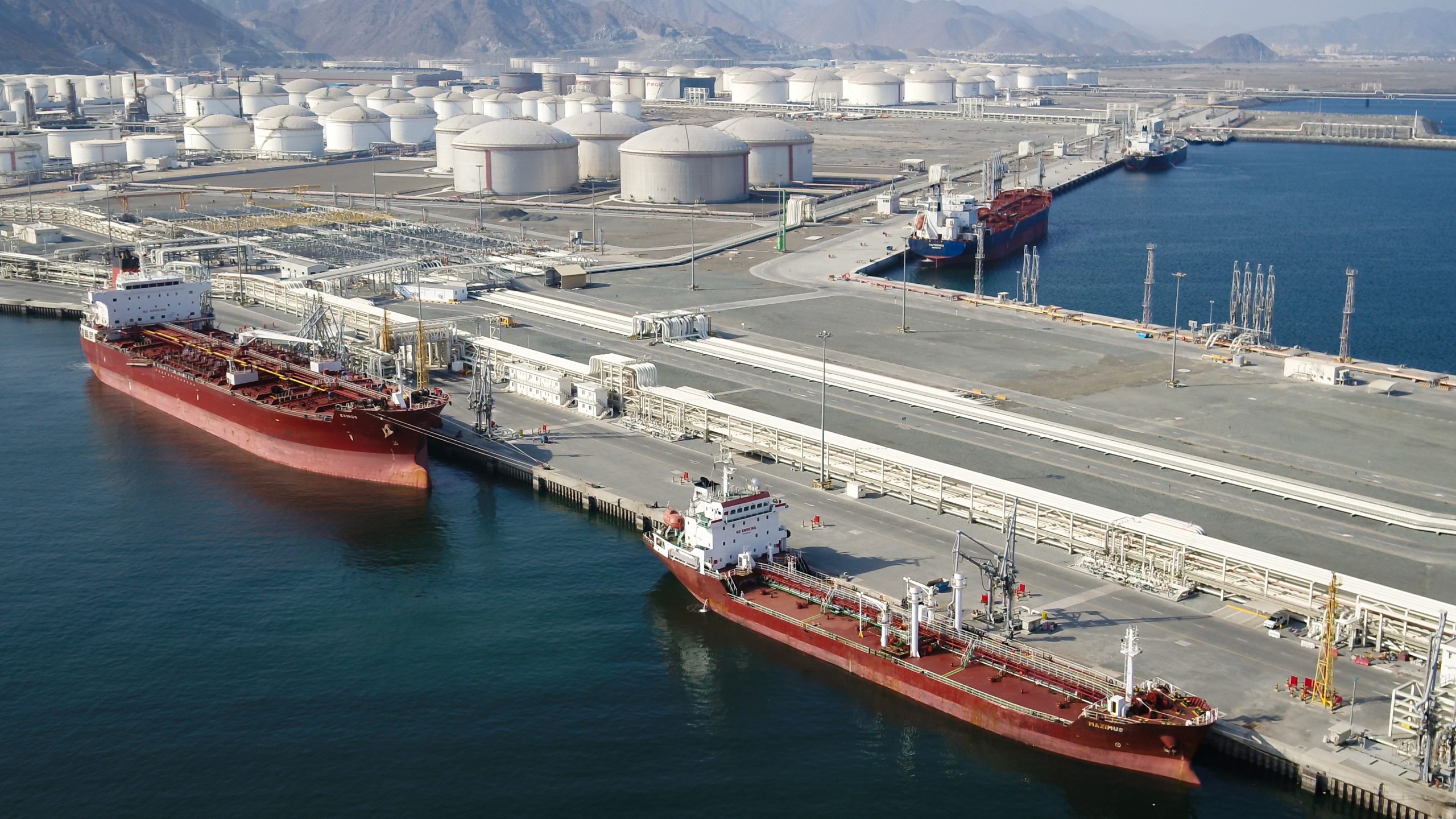
The resumption of oil loading operations at Fujairah following a disruption is not a mere return to the status quo; it is a stress test of the world’s third-largest bunkering hub and its role in the global energy supply chain. When a critical node in the Strait of Hormuz bypass ecosystem falters, the resulting backlog triggers a nonlinear escalation in maritime logistics costs and global supply premiums. Understanding the recovery phase requires a dissection of the port’s structural throughput capacity, the physics of hydrocarbon logistics, and the geopolitical risk premium embedded in every barrel of Murban crude.
The Three Pillars of Fujairah Operational Resilience
Fujairah’s strategic value is predicated on three distinct operational functions. A failure in any one of these pillars during a disruption creates a unique set of economic externalities.
- The Bypass Mechanism: The Abu Dhabi Crude Oil Pipeline (ADCOP) allows 1.5 million barrels per day to reach the Gulf of Oman without traversing the Strait of Hormuz. When loading operations pause, the pipeline’s terminal storage reaches capacity rapidly, forcing production curtailment upstream at the Bab field or the redirection of tankers into the volatile Persian Gulf.
- The Bunkering Ecosystem: As a primary refueling station, Fujairah dictates the "spread" between different grades of Very Low Sulfur Fuel Oil (VLSFO). Any operational delay forces vessels to deviate to Singapore or Algeciras, increasing "days on water" and tightening the global supply of available tonnage.
- The Strategic Reserve Function: With over 70 million barrels of independent storage capacity, Fujairah acts as a shock absorber for the global market. A resumption of loading signals a decompression of this storage, which often leads to a localized softening of spot prices as "trapped" inventory enters the market.
The Cost Function of Maritime Downtime
Logistics providers calculate the impact of a Fujairah shutdown through a multi-variable cost function. While media reports focus on the "resumption," the financial damage is dictated by the duration of the bottleneck.
The economic friction is measured by:
- Demurrage Penalties: Charterers face daily charges—often exceeding $50,000 to $100,000 for Very Large Crude Carriers (VLCCs)—when loading windows are missed.
- Boil-off and Fuel Consumption: Idle tankers continue to consume fuel to maintain internal systems and cargo temperatures.
- Opportunity Cost of Tonnage: Every day a ship sits outside Fujairah is a day it is removed from the global spot market, artificially inflating freight rates in unrelated routes like the US Gulf Coast or the North Sea.
When operations resume, the port enters a "Hyper-Throughput Phase." This is not a linear return to work. It is an attempt to process 150% of nominal capacity to clear the queue. This phase introduces heightened mechanical risk to loading arms, pumping stations, and subsea pipelines, as the system is pushed to its physical limits to mitigate contractual late fees.
Structural Bottlenecks in the Recovery Sequence
The restart of oil loading follows a rigid technical hierarchy. One cannot simply "turn on" a global energy hub. The sequence typically follows this path:
Hydrographic and Infrastructure Validation
Before the first VLCC berths, port authorities must conduct sonar sweeps of the approaches to ensure no debris or shifts in the seabed occurred during the downtime (particularly if the disruption was weather-related). Pumping stations must be re-primed, and the integrity of the Matrix of manifolds—the complex "switchboard" that directs oil from specific tanks to specific berths—must be electronically and physically verified.
The Loading Window Hierarchy
Priority is rarely first-come, first-served. It is governed by:
- Long-term Contractual Obligations (Term Buyers): National oil companies like ADNOC prioritize their primary off-takers over spot-market speculators.
- Vessel Class: Suezmax and VLCC vessels take precedence due to their impact on clearing storage volumes quickly.
- Product Volatility: Refined products with shorter shelf lives or specific temperature requirements (like certain grades of bitumen or chemicals) may be moved ahead of crude oil.
The Labor and Tugboat Constraint
The physical limiting factor in the resumption of operations is often the availability of pilots and tugboats. Moving a 300,000-deadweight-ton tanker into position requires precision and human capital. If crews have been on standby or diverted during the shutdown, the "fatigue factor" becomes a significant safety risk during the 24-hour surge that follows a restart.
Geopolitical Signaling and Market Sentiment
The resumption of loading at Fujairah serves as a critical data point for algorithmic trading models. Oil markets often exhibit "backwardation"—where current prices are higher than future prices—during supply disruptions. The news of a restart at a major hub like Fujairah forces a rapid "narrowing of the spread."
However, a restart does not eliminate the "Risk Premium." Traders analyze the cause of the disruption to determine if it was a "Black Swan" event (unpredictable) or a "Grey Rhino" (a known, neglected threat). If the disruption was due to regional instability, the premium remains "sticky," as the market now price-ins the probability of a repeat event. If it was technical or weather-induced, the market typically reverts to fundamental supply-demand metrics within 48 to 72 hours of the first successful loading.
Tactical Realities of the Fujairah-Singapore Arbitrage
Fujairah’s operational status directly influences the arbitrage window between the Middle East and Asia. When Fujairah is offline, the "delivered price" of fuel in Singapore spikes. Sophisticated traders utilize this window to move product from alternative hubs.
The resumption of loading effectively closes this arbitrage window. For commodity traders, the "alpha" (excess return) is found in the 12-hour gap between the local news of a restart and the global market’s adjustment of freight-on-board (FOB) prices. Those who monitor satellite imagery of tanker drafts and tugboat activity at the Fujairah anchorage gain a 4 to 6-hour lead over traditional media reports.
The Technological Frontier: Digital Twins in Port Recovery
Modern port management at Fujairah is increasingly reliant on Digital Twin technology—virtual replicas of the physical port infrastructure. These systems allow operators to run "What If" simulations during a shutdown.
By modeling the resumption of operations in a virtual environment, port authorities can:
- Identify which manifold configurations will clear the most storage in the shortest time.
- Predict potential pressure surges in the pipelines before they occur.
- Allocate tugboat resources with 95% efficiency.
The transition from manual recovery to data-driven orchestration is what allows Fujairah to maintain its status despite the high-risk environment of the Gulf region.
The Strategy of Diversification
For energy consumers and national governments, the lesson of a Fujairah disruption is the necessity of redundancy. Reliance on a single exit point for energy exports is a structural vulnerability. This is why the development of the Duqm port in Oman and the expansion of the East-West Pipeline in Saudi Arabia are being accelerated. These projects are not "competitors" to Fujairah in the traditional sense; they are essential components of a decentralized energy grid designed to survive the failure of any single node.
Institutional investors should view the Fujairah restart through the lens of Mean Reversion. The spike in local insurance premiums (War Risk Surcharges) and the dip in localized storage availability are temporary. The long-term trajectory depends on the port's ability to integrate Hydrogen and Ammonia bunkering into its existing infrastructure, ensuring it remains relevant in a post-carbon economy.
The immediate tactical move for stakeholders is to audit their "force majeure" clauses in shipping contracts. Most legal frameworks surrounding port disruptions are designed for total failure, not the complex "partial resumption" phases currently being witnessed. Ensuring that contracts define "operational resumption" based on specific throughput metrics—rather than media announcements—is the only way to hedge against the hidden costs of a slow restart.
Monitor the "Vessel Count at Anchorage" via AIS data over the next 72 hours. If the count does not drop by at least 15% per day, the port is facing a secondary bottleneck in customs or inspections that the market has not yet priced in. This lag represents a short-term shorting opportunity for regional bunker fuel derivatives.



