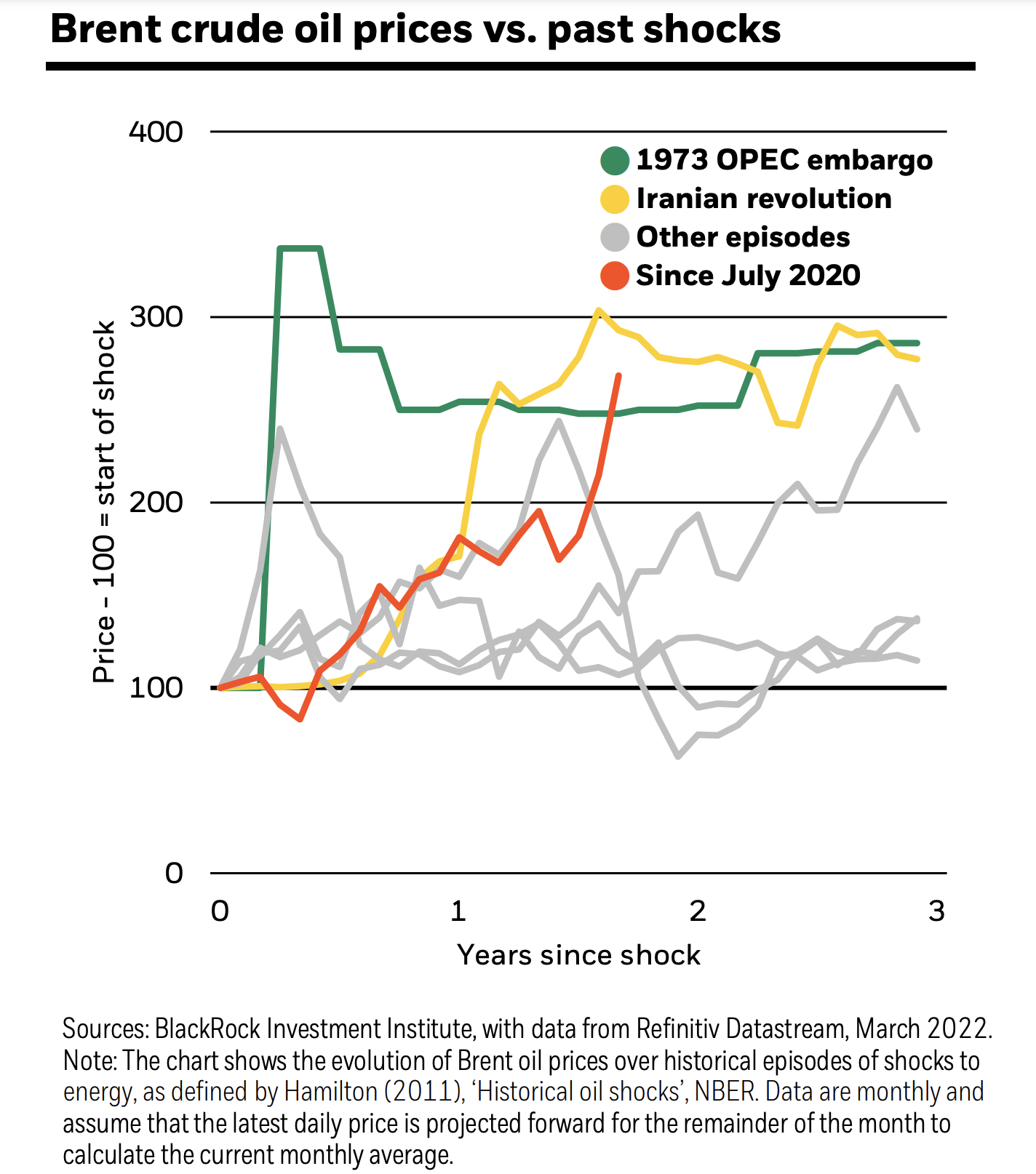
The $4.00 per gallon threshold serves as a psychological and economic tripwire that fundamentally alters household balance sheets. While mainstream reporting focuses on the immediate "pain at the pump," a rigorous analysis reveals that fuel price spikes function as an undifferentiated tax on mobility, triggering a predictable sequence of consumption shifts and capital reallocation. When gasoline crosses this price point, the impact is not linear; it is a structural disruption to the velocity of money within local economies.
The Mechanistic Breakdown of Fuel Expenditures
To understand the current economic friction, we must view fuel costs through the lens of a Fixed-Variable Cost Hybrid. For the average commuter, fuel is a non-discretionary fixed expense in the short term, as infrastructure and employment locations are rigid. If you found value in this article, you might want to check out: this related article.
The economic burden is calculated via the Fuel Intensity Ratio:
$$(Total Miles Driven / Vehicle MPG) \times Fuel Price = Monthly Mobility Tax$$
When the price component of this equation increases by 25% (shifting from $3.20 to $4.00), and the mileage and efficiency remain constant, the delta must be extracted directly from the "Discretionary Residual"—the portion of income remaining after housing, debt service, and utilities. Because the bottom three quintiles of earners spend a disproportionate percentage of their gross income on commuting, a $0.80 increase in fuel isn't just a nuisance; it represents a forced liquidation of their recreational and savings capacity. For another perspective on this story, see the latest update from Financial Times.
The Three Pillars of Consumer Retrenchment
The shift in driver behavior following a price spike follows a hierarchical logic of necessity. Consumers do not stop driving immediately; they optimize in stages.
1. The Consolidation of Trip Utility
The first response is the "Efficiency Pivot." Drivers begin calculating the Utility per Mile. Errands that were previously handled in discrete, spontaneous trips are consolidated into singular, multi-stop circuits. This reduces the cold-start cycles of the engine—which are less fuel-efficient—and minimizes total distance traveled. The immediate victim of this consolidation is the "spontaneous luxury" sector: coffee shops, impulse retail, and quick-service restaurants located outside the primary commute path.
2. Velocity Reduction and Optimization
Technical efficiency becomes a priority. Drivers subconsciously or consciously alter their driving physics. Aerodynamic drag increases quadratically with speed, meaning the energy required to overcome air resistance at 80 mph is significantly higher than at 65 mph. We observe a systemic reduction in average highway speeds during $4.00+ cycles as drivers attempt to manually improve their vehicle's Effective MPG. This behavioral shift extends the time-cost of transit, creating a secondary economic drag by reducing the "time-surplus" available for household productivity or consumption.
3. Substitution and Modality Shifts
The final pillar is the abandonment of the primary vehicle for high-efficiency alternatives. This manifests in increased utilization of public transit, carpooling, or the "secondary vehicle" (often a smaller, more efficient sedan that sits idle when fuel is cheap). The friction of this shift is high; it requires coordination and lifestyle adjustment. However, once the $4.00 ceiling is breached for more than 45 days, the "Sunk Cost of Convenience" is outweighed by the "Cash Flow Deficit," making these shifts permanent for the duration of the price cycle.
The Cost Function of Retail Displacement
Retailers operate on thin margins that are highly sensitive to foot traffic. When gasoline prices rise, the Customer Acquisition Cost (CAC) for physical retail locations increases. The consumer now views the 10-mile drive to a shopping center as a $1.50 to $2.00 surcharge on their purchase.
- Service Area Contraction: Businesses with a 20-mile radius of attraction see their effective market shrink. Only "destination" retailers with high-value propositions survive, while commodity retailers see a migration toward e-commerce.
- The Walmart Effect in Reverse: Low-cost leaders often see a temporary boost as consumers "trade down" from premium grocers to save on the basket price to offset fuel costs. However, even these gains are capped by the total reduction in trips.
- Inventory Carry Costs: High fuel prices increase the cost of goods sold (COGS) through logistical surcharges. Retailers face a double-edged sword: their operational costs rise just as their customers’ purchasing power declines.
Structural Vulnerabilities in Geographic Arbitrage
The "Drive 'til you Qualify" model of suburban development—where workers accept long commutes in exchange for affordable housing—is predicated on cheap energy. A sustained $4.00/gallon environment renders this arbitrage mathematically insolvent.
Consider a worker with a 40-mile round-trip commute in a vehicle getting 20 MPG. At $3.00/gallon, the monthly fuel cost is roughly $126. At $4.50/gallon, that cost jumps to $189. Over a year, this $756 difference is equivalent to a 1-2% pay cut for a median earner. This creates a Commuter Debt Trap, where the cost of reaching the workplace begins to cannibalize the profit of the labor itself.
In this environment, we see a cooling of the "Exurban" real estate market. The value of proximity to job centers (The Density Premium) rises, while the valuation of distant suburbs stagnates. This is not a matter of preference but a matter of the Net Present Value (NPV) of the location's total cost of occupation.
Shortcomings of Standard Economic Metrics
Standard inflation reporting (CPI) often masks the true impact of fuel volatility by weighting it against a broad basket of goods. This is a flaw in institutional analysis. Gasoline has a High Frequency of Salience. Unlike a rent increase (which happens once a year) or a medical bill (which is intermittent), gas prices are broadcast on every street corner and paid weekly.
The psychological impact of this constant reinforcement creates a "sentiment overhang." Even if a consumer can afford the extra $60 a month, the visual reminder of inflation at every intersection triggers a defensive fiscal posture. They "feel" poorer than the data suggests, leading to a disproportionate contraction in "confidence-based" spending, such as home renovations or big-ticket electronics.
The Inventory Bullwhip and Energy Lag
Energy markets are famously inelastic in the short term. Production cannot be throttled up instantly to meet demand or down to accommodate a recession. This creates a "Lagged Response" in the economy.
- Phase 1 (Shock): Prices rise; consumers maintain habits but deplete savings.
- Phase 2 (Adjustment): Habits change; retail spending drops; inventories build up as goods sit on shelves.
- Phase 3 (Correction): Retailers slash orders; manufacturing slows; energy demand finally drops due to reduced economic activity.
The current $4.00 environment is currently in Phase 2. The risk is that the "Adjustment" phase lasts long enough to trigger a self-fulfilling recessionary cycle, where the reduction in consumer spending leads to layoffs in the service and retail sectors.
The Logistics Surcharge Loop
Fuel is not just a consumer problem; it is the lifeblood of the supply chain. Most commercial freight is moved via Class 8 trucks, which average 6.5 MPG.
$$(Distance / 6.5) \times Diesel Price + Driver Wage + Maintenance = Freight Rate$$
When diesel prices track with gasoline spikes, every item on a grocery shelf carries a "hidden fuel tax." This creates a feedback loop. The driver spends more to get to the store, only to find that the bread and milk at the store are also more expensive because the truck that delivered them also paid more for fuel. This Compounded Inflationary Pressure is what eventually breaks the consumer’s back. It is a pincer movement on the household budget: higher costs of movement and higher costs of sustenance.
Strategic Realignment for the High-Cost Environment
Businesses and individuals must move beyond "coping" and toward "structural optimization." The era of "Cheap Proximity" is ending.
To hedge against sustained fuel volatility, the focus must shift to Calibrating the Mobility Footprint. For corporations, this means aggressive decentralization of the workforce to eliminate the "Commuter Tax" and preserve the effective purchasing power of employee wages without direct salary increases. For the retail sector, it requires a transition to "Micro-fulfillment" centers that minimize the last-mile delivery cost, which is the most fuel-intensive portion of the supply chain.
The final strategic play is the transition from Fuel-Dependent Assets to Efficiency-Hedged Assets. This involves accelerating the retirement of low-MPG fleet vehicles and shifting capital toward electric or hybrid infrastructure where the "Cost per Mile" is decoupled from the volatility of global Brent Crude markets. The $4.00 gallon is not a temporary hurdle; it is a signal that the current geographic and logistical model of the American economy is over-leveraged on a single, volatile commodity.