The static comes first. It is a thin, dry sound, like dead leaves skittering across a paved road. To a man sitting in a damp trench in 1944, that sound is the only bridge to a world that hasn't been blasted into gray dust. He adjusts the dial of a heavy, olive-drab radio set. His fingers are numb. His boots have been wet for three weeks. Somewhere in the distance, the low thump of artillery provides a rhythmic bassline to the high-pitched whistle of the airwaves. Then, through the white noise, a voice emerges. It is calm. It is authoritative. It sounds like home.
This was the birth of Radio Luxembourg—or rather, the ghost of it.
While the history books often focus on the grand movements of divisions and the thunder of D-Day, the most effective weapon of the European theater didn't fire a single bullet. It was a phantom. It was a lie told so perfectly that hundreds of thousands of German soldiers believed it more than they believed their own commanders.
The Architecture of a Ghost
Imagine you are a corporal in the Wehrmacht. You haven’t seen a newspaper in a month. Your officers tell you that London is a pile of ash and the American economy has collapsed. But then you tune in to Soldatensender West.
The station plays the latest jazz. It gives accurate sports scores. It reports on the exact weather patterns over your specific sector of the front. It even broadcasts the names of German soldiers who have been captured, letting their families know they are safe. It sounds like a legitimate German military station. It feels official. It feels honest.
In reality, it was a studio in Bedfordshire, England.
The British didn't just broadcast propaganda; they practiced what they called "black" propaganda. This wasn't the clumsy, shouting rhetoric of a political rally. It was a sophisticated psychological surgery. The goal wasn't to tell the enemy they were evil. The goal was to tell the enemy they were losing in a way that felt like a secret they were lucky to find out.
The genius of the operation lay in its creator, Sefton Delmer. He understood a fundamental human truth: people are far more likely to believe a lie if it is wrapped in a dozen uncomfortable truths. Delmer’s team would report on real corruption within the Nazi party—actual scandals, real names, verified dates. They would talk about the lavish dinners party officials were eating while the soldiers on the front lines were chewing on sawdust bread.
Once the listener trusted the station to tell the truth about the corruption, they would trust it when it started talking about the inevitability of defeat.
The Sound of Breaking Will
Psychological warfare is often treated as a secondary concern, a "soft" science compared to the "hard" reality of tanks and steel. That is a mistake. A tank can be destroyed, but a seed of doubt, once planted in a tired mind, is nearly impossible to uproot.
Consider a hypothetical soldier we will call Hans. Hans isn't a fanatic. He’s a tailor from Munich who wants to go back to his shop. He’s cold. He’s hungry. When Soldatensender West tells him that his commanding officer has already evacuated his own family to Switzerland, Hans doesn't just get angry. He gets lonely. The radio creates a vacuum where his loyalty used to be.
The British took this a step further with the "Passierschein," or the safe-conduct pass. They would drop leaflets from the sky that looked like official documents. But the radio station was the engine that gave those pieces of paper value. The broadcasts would explain exactly how to use the pass, what to shout when approaching Allied lines, and the specific rights guaranteed to them under the Geneva Convention.
They weren't just asking Hans to surrender. They were giving him a professional out. They were framing surrender not as an act of cowardice, but as a rational, almost bureaucratic decision to survive a war that had already been lost by the "corrupt" elites.
The Scale of the Silence
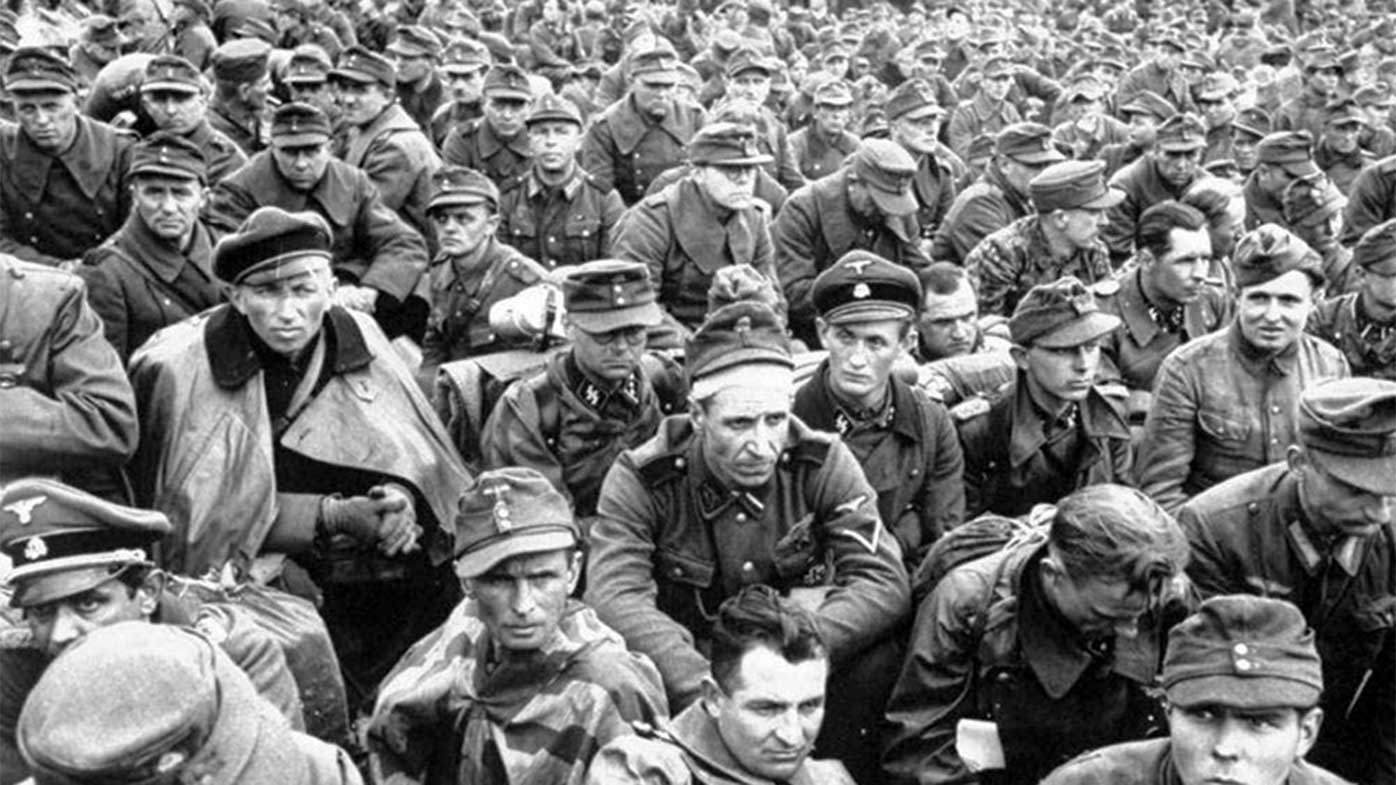
The numbers are staggering. By the end of the war, it was estimated that over 340,000 German soldiers had surrendered, many of them citing the information they heard on the "German" radio stations as a primary factor in their decision.
To put that in perspective, that is the equivalent of an entire army group simply deciding to stop. No shots fired. No blood spilled. Just a collective turning of the dial and a realization that the story they were being told by their own government no longer matched the reality they were hearing through the static.
This wasn't a fluke. It was the first time in human history that the mass-communication power of technology was leveraged to disassemble the psyche of a nation’s military. The British weren't fighting the German soldiers; they were fighting the German soldiers' perception of the world.
The stakes were invisible, but they were absolute. Every soldier who walked across the line with his hands behind his head was one less man to fire a machine gun at a nineteen-year-old from Iowa. The radio waves were saving lives on both sides of the wire by providing a path through the fog of war.
The Anatomy of the Lie
How do you trick a quarter of a million people? You do it by being more "German" than the Germans.
Delmer’s team used German defectors and refugees to ensure the slang was perfect. They knew the specific grievances of the rank-and-file. They knew that a soldier in the 12th SS Panzer Division cared more about the quality of his boots than the grand strategy of the High Command.
They focused on the "little" truths.
- They mentioned specific bars in Berlin that had been bombed.
- They named specific mid-level officers who were known for being cruel.
- They played music that was banned by the Nazi censors but loved by the youth.
By the time the German high command realized what was happening, it was too late. Goebbels, the mastermind of Nazi propaganda, was furious. He tried to jam the frequencies. He threatened execution for anyone caught listening. But you cannot execute a feeling. You cannot jam a doubt once it has been heard.
The more the Nazi government tried to suppress the "traitorous" radio, the more legitimate the radio seemed. If the government was so afraid of these broadcasts, the soldiers reasoned, then the broadcasts must be true.
The Weight of the Dial
We live in an era where we think we are immune to this kind of manipulation. We have the internet. We have instant fact-checking. We have a million different sources.
But the core of the Radio Luxembourg trick wasn't about a lack of information. It was about the emotional resonance of the information provided. The British didn't win because they had better facts; they won because they had a better understanding of the human heart under pressure.
They knew that a man who has been lied to by his leaders for a decade is starving for a different kind of truth, even if that truth is being served to him by his enemy. They knew that at the end of the day, a soldier is just a person who wants to believe that their life has meaning—and if that meaning has been stripped away by a failing cause, they will look for any hand reaching out through the dark.
The war ended not just because the Allies had more bombs, but because the German soldier eventually found himself in a world where he could no longer tell which voice was his own and which voice was the ghost in the machine.
He stood in the mud, the heavy radio set humming against his chest. He heard the jazz. He heard the weather report. He heard the names of the lucky ones who had already quit. He looked at the white slip of paper in his pocket. Then, he stepped out of the trench.
The static faded. The silence that followed was the sound of a war ending, one frequency at a time.