The ceasefire meant to silence the border between Israel and Lebanon just hit its first major breaking point. Less than a week after the diplomatic ink dried, Israeli jets targeted and killed a Hezbollah commander in the heart of Beirut. This was not a random skirmish or a stray shell. It was a calculated message sent at supersonic speeds. The strike signals that the "red lines" established during the negotiations are far more porous than the international community hoped.
For those watching the region for decades, this move is a return to a grim status quo. Israel is signaling that it will not wait for diplomatic committees to verify threats. If they see a high-value target moving pieces on the board, they will strike, regardless of the political fallout or the fragile truce currently hanging by a thread. The commander in question, identified as a key operative in Hezbollah’s precision missile program, represented a capability Israel refuses to tolerate within striking distance of its northern Galilee region.
The Strategy of Proactive Enforcement
Diplomacy often operates on the assumption of good faith. Military intelligence operates on the assumption of imminent betrayal. Israel’s justification for the strike rests on the "right to act" against immediate threats—a clause they fought to include in the ceasefire framework. By hitting a target in the Lebanese capital, the Israeli Defense Forces (IDF) are testing the boundaries of what the United States and France will tolerate as "enforcement."
This is a high-stakes gamble. If Israel strikes and the international community remains silent, they have effectively expanded their operational freedom. If the strike triggers a massive retaliatory barrage from Hezbollah, the ceasefire dies in its infancy. For now, the calculus in Jerusalem appears to be that a weakened Hezbollah, still reeling from the loss of its senior leadership and communication infrastructure, is in no position to reignite a full-scale war over a single targeted assassination.
Mapping the Command Vacuum
The elimination of this specific commander is part of a broader "decapitation" strategy that defined the months leading up to the truce. Hezbollah is currently a fractured organization. Their internal security has been compromised to a degree that was unthinkable three years ago. The fact that Israel could locate, track, and hit a target in Beirut so soon after the cessation of hostilities suggests that their intelligence network inside Lebanon remains fully operational and deeply embedded.
For Hezbollah, the challenge is no longer just about firing rockets. It is about survival. Every time they try to move a high-ranking official or relocate sensitive equipment, they find a drone or a missile waiting for them. This creates a paralysis within the rank and file. Commanders who are too afraid to communicate or move cannot effectively lead a resistance.
The Lebanese State of Confusion
Beirut is a city that has seen too many "final" wars. The mood on the ground is a mixture of exhaustion and cynical expectation. The Lebanese government, which is largely a spectator in its own security affairs, finds itself in an impossible position. They are tasked with deploying the Lebanese Armed Forces (LAF) to the south to act as a buffer, yet they have no power to stop Israeli overflights or Hezbollah’s underground activities.
The LAF is underfunded and outgunned. Expecting them to disarm Hezbollah is a fantasy that Western diplomats frequently entertain but never actually fund. When Israel strikes Beirut, it undermines the Lebanese government’s claim to sovereignty, making it easier for Hezbollah to argue that they are the only force capable of defending the country—even if their presence is exactly what draws the fire in the first place.
The Washington Factor
The White House has been quick to call for restraint, but their leverage is slipping. The current administration spent months brokering this deal as a centerpiece of their Middle East policy. A collapse now would be a significant blow to their credibility. However, the U.S. also understands the Israeli security cabinet's internal pressure. Prime Minister Netanyahu is facing a domestic audience that is tired of "half-measures" and wants the threat from the north permanently neutralized before they return to their homes in the border towns.
The U.S. envoy’s role has shifted from architect to janitor. They are now cleaning up the diplomatic mess, trying to convince Hezbollah that this was an isolated incident and convincing Israel that further strikes will lead to a regional escalation that no one can control. It is a tiring cycle of crisis management that ignores the underlying reality: neither side believes the other will honor the deal in the long term.
Tactical Shifts on the Ground
Observers should look closely at the weaponry used in the Beirut strike. Unlike the massive bunker-busters used to level entire blocks in the southern suburbs during the peak of the conflict, this was a surgical strike. It was designed to kill one man and minimize "collateral" damage. This shift in tactics is an attempt by Israel to stay within the "gray zone" of the ceasefire.
By keeping the damage localized, they provide Hezbollah and the Lebanese government with an "out." It allows them to complain to the UN without necessarily being forced into a total military response. It is a brutal form of communication where the volume is turned down, but the lethality remains the same.
The Precision Missile Problem
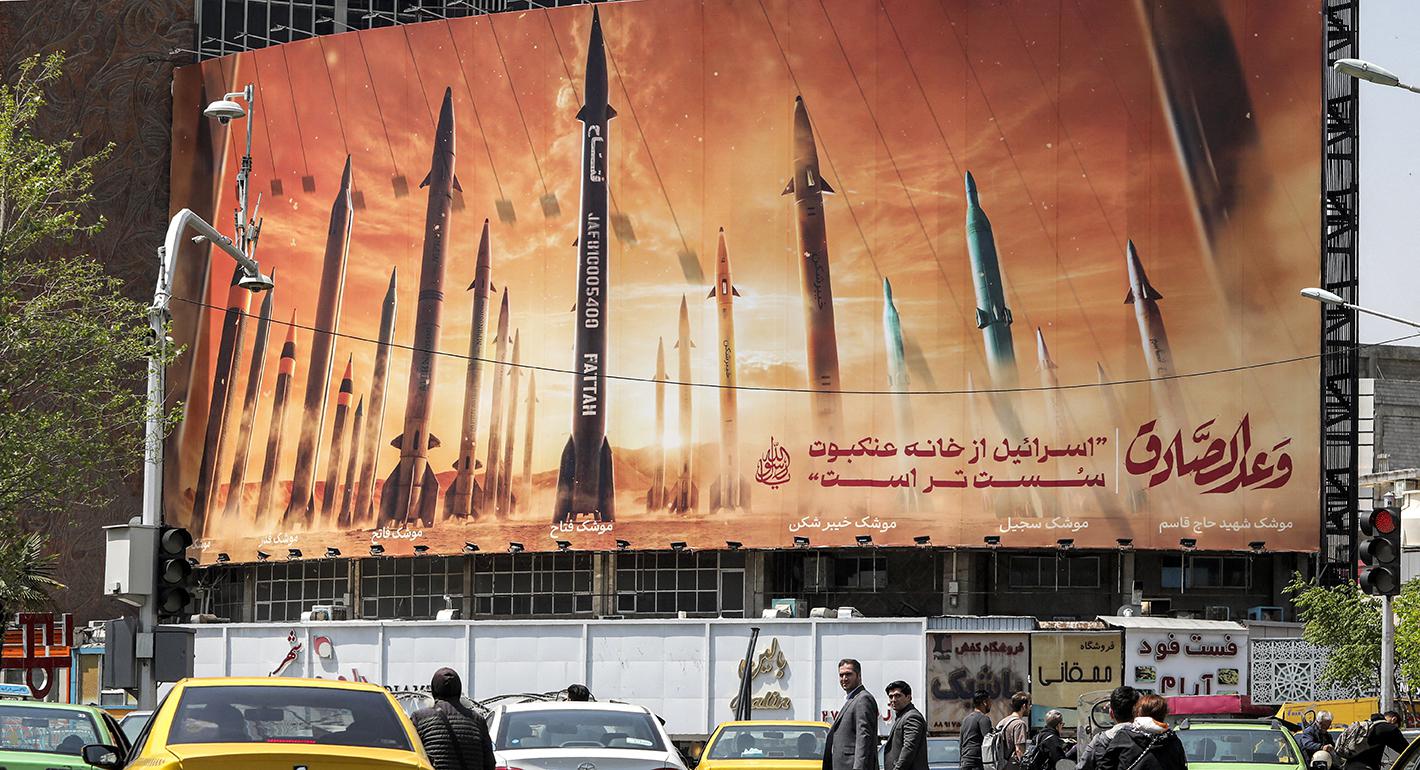
The core of the dispute remains Hezbollah’s arsenal of Iranian-made precision-guided munitions (PGMs). These are not the "dumb" Katyusha rockets of the 1990s. These are missiles capable of hitting specific floors of buildings in Tel Aviv or knocking out the electrical grid. Israel has made it clear that the presence of PGMs in Lebanon is a casus belli.
The ceasefire agreement includes provisions for the Lebanese army and UNIFIL to prevent the smuggling of these weapons. But the border with Syria is vast and porous. History shows that Hezbollah is a master of the "long game," slowly rebuilding what was lost while the world is looking elsewhere. Israel’s strike in Beirut was an attempt to interrupt that rebuilding process before it could even begin.
The Economic Burden of Insecurity
Lebanon’s economy cannot survive another round of "limited" strikes. The tourism industry, which was starting to see a faint glimmer of hope after the ceasefire announcement, has been plunged back into uncertainty. Airlines are once again re-evaluating their routes to Beirut. Investors who were considering returning are now putting their money back into safer harbors.
The cost of this instability is not just measured in lives but in the slow death of a nation’s infrastructure. When the capital is a target, nowhere is safe. This economic pressure is a silent weapon that Israel uses to turn the Lebanese populace against Hezbollah, but it often has the opposite effect, driving people toward the only group providing social services and a sense of "resistance" against foreign aggression.
The Intelligence Gap
The speed of this strike suggests that Israel never stopped its surveillance. They didn't "restart" their engines when the ceasefire was signed; they just idled them. The level of penetration into Hezbollah’s inner circle is unprecedented. It raises questions about who is talking and what else the Israelis know.
For an organization built on secrecy, this is an existential crisis. Hezbollah is currently conducting internal purges, looking for the "moles" that allowed their commanders to be picked off with such ease. This internal friction is exactly what Israeli intelligence wants. A paranoid enemy is an ineffective enemy. They spend more time looking over their shoulders than they do planning operations.
The Limits of UNIFIL
The United Nations Interim Force in Lebanon (UNIFIL) has been the subject of much criticism. They are often described as "observers of their own irrelevance." With a mandate that prevents them from using force except in self-defense, they are powerless to stop Israeli jets or Hezbollah rocket teams.
If the ceasefire is to hold, the international community needs to rethink what peacekeeping looks like in the 21st century. Monitoring cameras and paper reports are useless against a target-rich environment and a military determined to exploit it. The strike in Beirut proves that the "blue line" is a suggestion, not a border.
The Regional Context
This strike doesn't happen in a vacuum. It is connected to the ongoing "shadow war" between Israel and Iran. Hezbollah is Tehran’s most potent proxy, and every blow against the group is a blow against Iranian influence in the Levant. As long as Iran views Lebanon as its forward operating base, Israel will view Beirut as a legitimate battlefield.
The ceasefire was a tactical pause, not a strategic shift. Both sides are using this time to rearm, re-evaluate, and reposition. The killing of a commander in Beirut is simply the first move in the next phase of this confrontation. It confirms that the war hasn't ended; it has merely changed its tempo.
The reality of the Middle East is that peace is often just the period required to reload. By striking Beirut, Israel has declared that the rules of engagement have not changed, despite the signatures on the ceasefire document. They have chosen to prioritize the removal of an immediate threat over the preservation of a fragile diplomatic victory. This decision forces Hezbollah into a corner: respond and risk a renewed war they are ill-prepared for, or stay silent and admit that their "deterrence" is a thing of the past. There is no middle ground in a conflict where the survival of one side is predicated on the total containment of the other. The Beirut strike wasn't an accident of war; it was the definitive end of the honeymoon period for a ceasefire that was never meant to last.