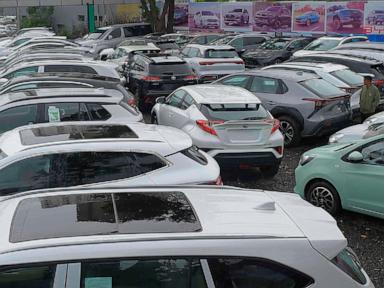
Ethiopia is currently the only nation on earth to have banned the import of internal combustion engine vehicles for personal use. While the rest of the world debates carbon taxes and 2035 deadlines, Addis Ababa has effectively pulled the plug on the gas pump overnight. This isn't a luxury choice driven by environmental idealism. It is a brutal, pragmatic response to a foreign currency crisis that threatened to bankrupt the state. By forcing a transition to electric vehicles (EVs), the government aims to stop the bleeding of billions of dollars spent annually on fuel imports while utilizing its massive investment in hydroelectric power.
The logic is simple. The execution is anything but. Also making news in this space: Stop Trying to Save Pakistan’s Wheat Procurement System (Let It Die).
For decades, the Ethiopian economy has been strangled by a recurring nightmare: the lack of US dollars. Every liter of gasoline burned in an Addis Ababa taxi represents hard currency leaving the country. In 2023, the fuel bill topped $4 billion. By banning gasoline cars, the Ministry of Transport and Logistics isn't just trying to clear the air; they are trying to save the treasury. They are betting everything on the Grand Ethiopian Renaissance Dam (GERD), a massive infrastructure project that promises to make the country an energy-exporting titan.
The Foreign Exchange Trap
To understand why a developing nation would take such a radical step, you have to look at the balance sheet. Ethiopia does not produce its own oil. It must buy it on the global market using foreign reserves that are already stretched thin by debt payments and the need for essential medicine and food. Further information into this topic are detailed by The Wall Street Journal.
When the global price of crude spikes, the Ethiopian economy doesn't just slow down. It stalls. Long lines at gas stations become a permanent fixture of life, stretching for kilometers and paralyzing commerce. The government realized that subsidizing this volatility was a dead end. Instead of fighting for a share of the world's oil, they decided to pivot to the one resource they have in abundance: water.
The GERD is designed to produce over 5,000 megawatts of electricity. If the country can shift its transport needs to this domestic grid, the $4 billion previously sent to foreign oil companies stays home. It is a masterclass in economic nationalism, but it ignores the massive logistical hurdles standing in the way of a functional EV ecosystem.
A Grid Under Pressure
Having the capacity to generate power is not the same as having the infrastructure to deliver it to a car's battery. Ethiopia’s national grid is notoriously unreliable. Rolling blackouts are common, and the distribution network in rural areas is either non-existent or fragile.
Critics argue that the government has put the cart before the horse. Importing thousands of EVs—mostly used units from China—is the easy part. Building the high-speed charging stations required to keep them moving is a monumental task. Currently, most EV owners in Addis Ababa rely on home charging. This works for the wealthy elite with private garages and stable connections, but it is a non-starter for the blue-collar workforce or the long-haul trucking industry that forms the backbone of the economy.
If the grid fails to keep pace with the influx of vehicles, the country risks trading one form of paralysis for another. Instead of waiting in line for gas, drivers will be waiting for the lights to come back on.
The Chinese Connection
The sudden shift has created a gold rush for Chinese automakers. Brands like BYD and various smaller manufacturers are flooding the market with affordable electric models. Because the government has slashed customs duties on EVs to near zero while maintaining astronomical taxes on gas cars, an electric SUV is often cheaper than a ten-year-old Toyota Corolla.
This price inversion is a powerful incentive. However, it comes with a hidden cost. Ethiopia is becoming a testing ground for various Chinese EV platforms, many of which lack established service centers or spare parts supply chains in East Africa. If a battery pack fails or a proprietary software glitch bricks a car, the owner is often left with a very expensive paperweight. There is no "neighborhood mechanic" for a 2024 electric drivetrain.
The Human Cost of Rapid Transition
The ban on gas car imports has sent shockwaves through the informal economy. For decades, used Toyotas were seen as a stable store of value, a "bank on wheels" for Ethiopian families looking to protect their savings from inflation. By devaluing the internal combustion engine through legislation, the government has essentially wiped out the net worth of thousands of small-scale car dealers and mechanics.
Garage owners who spent thirty years learning the intricacies of fuel injectors now face obsolescence. There is no national retraining program. There is no transition fund for the specialized labor force that kept the country moving for half a century. The shift is fast, cold, and indifferent to those who cannot adapt to the high-tech requirements of lithium-ion systems.
Furthermore, the "ban" mostly affects private passenger vehicles. Heavy trucks and public buses, the largest consumers of diesel, are still largely reliant on fossil fuels because electric equivalents are either too expensive or lack the range for Ethiopia’s mountainous terrain. This creates a two-tier system where the poor are still subjected to the inflationary pressure of high fuel prices while the middle class is forced into an electric experiment they may not be ready for.
Environmental Savior or Economic Necessity
While international observers praise Ethiopia for its "green" leadership, the environmental benefits are a secondary concern for the administration. The motive is purely fiscal. However, the environmental impact of disposing of thousands of high-capacity batteries in a country without a single lithium recycling facility is a looming disaster that no one is talking about.
Lithium-ion batteries have a shelf life. In five to seven years, the first wave of imported Chinese EVs will hit the end of their battery cycles. Without a clear plan for hazardous waste management, the "green" revolution could end up poisoning the very soil the country depends on for its agricultural exports.
The Logistics of the Long Haul
Ethiopia is a landlocked nation. Its primary lifeline is the road corridor to the Port of Djibouti. Moving freight across this route requires massive energy expenditure. While electric passenger cars can survive on overnight home charging, a 40-ton freighter cannot.
To truly de-dollarize its energy needs, Ethiopia must electrify its heavy transport. The Ethio-Djibouti railway is a start, as it is fully electric and powered by the national grid. But the railway only covers a single corridor. The thousands of trucks that fan out from the capital to the rest of the provinces remain tethered to diesel.
The government’s plan involves a massive rollout of public charging hubs along major highways, but the capital investment required is staggering. They are looking for private partners to shoulder this burden, but many investors are wary of the political instability in the region and the state’s tight control over the telecommunications and banking sectors, which are essential for managing a modern charging network.
The Blueprint for the Global South
What happens in Ethiopia over the next five years will serve as a roadmap—or a warning—for the rest of Africa. Other nations like Kenya and Rwanda are watching closely. They too suffer from foreign exchange shortages and high energy costs. If Ethiopia succeeds in decoupling its transport sector from global oil prices, it will provide a radical new template for development.
But success requires more than just a ban on imports. It requires a fundamental rebuilding of the national identity around technology and reliability. It requires a government that can maintain a stable grid and a legal framework that encourages the development of a local battery industry.
The strategy is high-risk. By burning the bridges to the internal combustion era, Ethiopia has left itself no way back. The country is now sprinting toward an all-electric horizon, fueled by the waters of the Nile and the desperation of a depleted treasury. If the lights stay on, they might just make it. If they don't, the nation risks a total transport collapse that no amount of hydroelectric power can fix.
The world sees a green pioneer. The Ethiopian driver sees a gamble that could leave them stranded on the side of a mountain with a dead battery and nowhere to plug in.
Investment must now shift from the generation of power to the resilience of the local circuit. Without a neighborhood-level upgrade of transformers and wiring, the dream of an electric Addis Ababa will remain a top-down mandate that fails at the bottom. The government has won the first battle by changing the law, but the war for a functional electric society will be won or lost in the dirt and the grease of the local charging stalls.