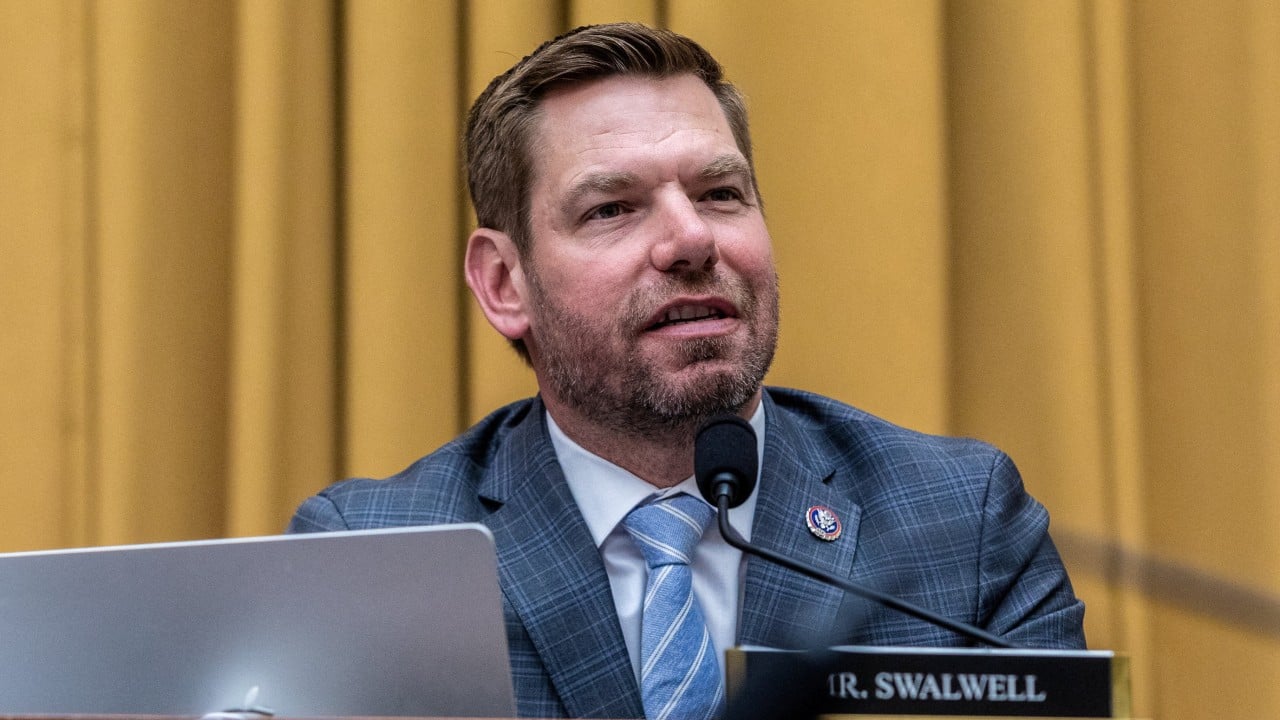
The trajectory of Eric Swalwell’s political career, once a steady climb toward the California governorship, has hit a wall of devastating gravity. What began as whispers on social media has crystallized into a formal investigation by the Manhattan District Attorney’s Office into allegations of sexual assault and rape. For a candidate who built his brand on the image of a fearless "fighter" against corruption, the shift from prosecutor to the subject of a criminal probe is more than a campaign hurdle. It is a terminal event for his 2026 ambitions.
The core of the crisis lies in a dual-timeline accusation from a former staffer who alleges Swalwell assaulted her in 2019 and again in April 2024. The latter incident reportedly occurred in a New York City hotel room while the woman was inebriated—a detail that has prompted New York authorities to step in. Unlike the vague rumors that often circulate in the high-friction environment of Sacramento politics, these claims are backed by a trail of text messages and corroborating accounts from those the accuser confided in at the time.
The Power Vacuum in Sacramento
The speed at which the Democratic establishment has distanced itself from Swalwell is a testament to the severity of the charges. Within forty-eight hours of the San Francisco Chronicle and CNN reports, the infrastructure of his campaign essentially vanished. His campaign chair, Representative Jimmy Gomez, and co-chair Adam Gray resigned immediately, citing a total breach of trust.
This isn't just a loss of personnel; it is a total evaporation of the institutional support required to run a state as complex as California. When figures like Hakeem Jeffries, Nancy Pelosi, and Adam Schiff—the very architects of the modern Democratic party—publicly call for a candidate to step down, the path to victory is effectively sealed shut. The political math in California does not allow for a candidate to survive without the backing of the major labor unions, and the California Teachers Association and SEIU have already pulled their endorsements.
A Pattern of Conduct Under Scrutiny
While the assault allegations are the most legally perilous, they are part of a broader, more troubling narrative involving three other women who have come forward with claims of sexual misconduct. These accounts describe a predatory pattern: unsolicited explicit messages, the use of disappearing-message apps like Snapchat to bypass oversight, and the blurring of professional lines.
Swalwell’s defense has remained rigid. He has dismissed the claims as "flat false" and "politically motivated," suggesting that his status as a frontrunner made him a target for a coordinated hit. However, this defense is complicated by his own legal team's tactics. Before the stories broke, Swalwell’s attorneys reportedly sent cease-and-desist letters to several women and at least one social media influencer who was discussing the rumors. In the world of crisis management, using heavy-handed legal threats to silence accusers often signals panic rather than innocence.
The Manhattan Connection
The involvement of the Manhattan District Attorney’s Special Victims Division elevates this from a political scandal to a high-stakes criminal matter. The 2024 allegation is particularly dangerous because of its timing and location. By allegedly occurring in a New York hotel room during a period when Swalwell was actively campaigning, the incident falls under the jurisdiction of a district attorney’s office that has shown little hesitation in pursuing high-profile figures.
The Special Victims Division has already made a public call for anyone with knowledge of these events to come forward. This indicates that investigators are not just looking at a single isolated incident, but are searching for a broader history of behavior. For Swalwell, the primary concern is no longer the June primary or the November general election. It is a grand jury.
The End of the Fighter Era
For years, Swalwell positioned himself as the ultimate defender of Democratic values, a frequent presence on cable news who was never afraid to take a swing at the opposition. That "fighter" persona now looks like a liability. His rivals in the gubernatorial race—including Katie Porter, Tom Steyer, and Antonio Villaraigosa—have wasted no time in calling for his exit. Even Governor Gavin Newsom, who has largely stayed out of the primary fray, described the allegations as "deeply troubling".
The collapse of the Swalwell campaign leaves a massive opening in the California gubernatorial field. Millions of dollars in "dark money" and PAC support, including the influential "Californians for a Fighter" group, have suspended operations. The donors who once saw Swalwell as a safe bet for the establishment are now scrambling to find a new vessel for their interests.
Swalwell has retreated to spend time with his family, promising an update "very soon". But in politics, silence is rarely a sign of strength. The walls are closing in, and the questions are no longer about whether he can win, but how he will manage the legal fallout. The "fighter" has run out of rounds.