A single steel hatch clangs shut in the humidity of the Persian Gulf, a sound that should be drowned out by the roar of global commerce but instead echoes all the way to a boardroom in Beijing.
For decades, the relationship between China and the Middle East was defined by a rhythmic, industrial heartbeat. Oil moved east; consumer goods moved west. It was a mechanical certainty. But lately, that heart is skipping beats. The Strait of Hormuz, a narrow throat of water through which the world’s energy breath passes, is tightening. It isn't just about ships or insurance premiums anymore. It is about the breaking of a silent promise that fueled the greatest economic expansion in human history.
The Captain and the Spreadsheet
Consider a man named Zhang. He doesn't exist as a single person, but he represents thousands of logistics managers currently staring at glowing monitors in Shanghai. In his world, a "disruption" isn't a headline. It is a series of cascading failures.
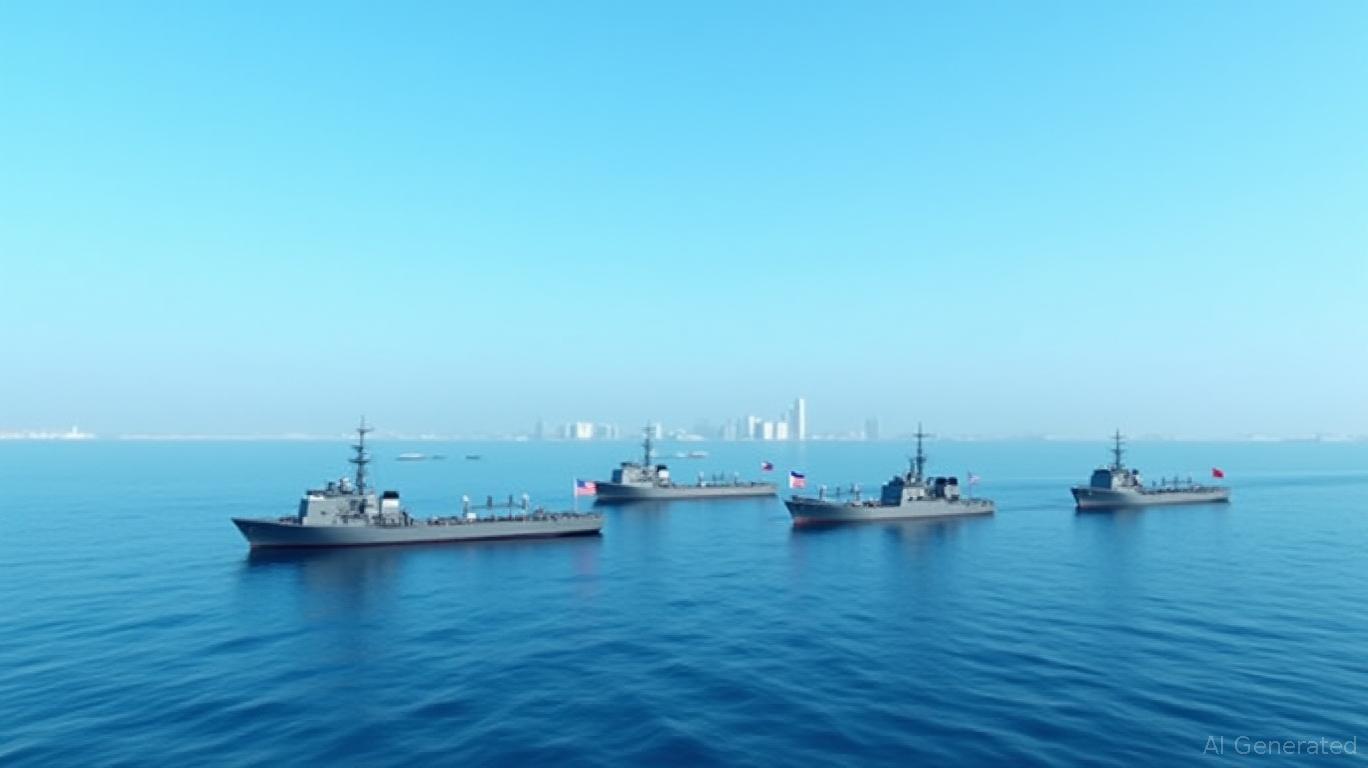
Zhang looks at a map of the Bab al-Mandab and the Strait of Hormuz. These are the world’s jugular veins. When a drone strikes a tanker or a frigate enters a restricted zone, the math changes instantly. The cost of shipping a single container doesn't just rise; it mutates. War risk premiums—the "tax" paid for moving cargo through a potential combat zone—have surged. For a Chinese economy that operates on razor-thin margins and massive volume, these cents per barrel add up to a billion-dollar headache.
China’s trade with Iran and the Gulf states is plunging. Not because the desire for oil has vanished, but because the risk of moving it has become unmanageable. The numbers are stark. Recent data shows a double-digit slide in trade volume. This is the friction of reality meeting the smoothness of globalization.
A Desert Without a Mirror
The Gulf states—Saudi Arabia, the UAE, Kuwait—have long looked at China as their guaranteed future. They saw a mirror of their own ambitions: rapid modernization, towering skylines, and a hunger for the 21st century. But that mirror is cracking.
When the flow of energy slows, the flow of capital follows. China’s "Belt and Road" dreams in the region were predicated on a stable maritime environment. Now, the Strait of Hormuz is a theater of shadows. Iran, long China’s strategic partner and a primary source of discounted crude, finds itself increasingly isolated by the physical impossibility of the route.
The tankers are idling. Some are engaging in "dark" transfers—turning off transponders to hide their locations—but you cannot hide a slump this large forever. This isn't a temporary glitch. It is a structural shift. The "Silver Sea" of the Gulf is becoming a No-Go zone for the risk-averse.
The Invisible Toll on the Factory Floor
We often talk about geopolitics as if it happens in the clouds, among kings and presidents. It doesn't. It happens in a plastic toy factory in Ningbo or a refinery in Shandong.
When the energy flow from the Gulf constricts, the price of power in China flickers. The cost of raw materials for everything from polyester to smartphone casings creeps upward. The Chinese consumer, already wary of a cooling property market, feels the ghost of the Hormuz crisis in the rising price of a delivery meal or a cross-country train ticket.
The stakes are deeply personal. For a small business owner in Tehran, the "China-Iran Strategic Partnership" feels like a cruel joke when the ships stop coming. He has warehouses full of saffron or bitumen that have no path to the East. He is watching his livelihood evaporate into the salt air of the Gulf because the world’s most important waterway has become a gauntlet.
The Pivot of Necessity
China is pragmatic. It does not wait for storms to pass; it builds new shelters.
As the maritime routes through the Gulf become more treacherous and expensive, Beijing is forced into a frantic diversification. This means more pipelines through Central Asia. It means a deeper, more desperate reliance on Russian energy. It means accelerating a green energy transition not just out of environmental concern, but out of a cold, hard fear of being choked off at sea.
Every solar panel installed on a roof in Inner Mongolia is a tiny act of defiance against the instability of the Strait of Hormuz.
But pipelines take years to build. Solar grids take decades to mature. In the immediate "now," the crisis is a vacuum. The trade data reflects a chilling reality: when the world’s largest buyer and the world’s largest sellers cannot safely reach one another, the silence is deafening.
The Sound of an Empty Port
If you stood on the docks of a major Gulf port today, the wind would tell the story. The frantic clatter of cranes is missing its usual intensity. The giant vessels, those floating cathedrals of steel that carry the lifeblood of the global economy, are weighing their options.
Some choose the long way around Africa, adding weeks to the journey and burning millions in extra fuel. Others simply wait.
This is the hidden cost of the crisis. It is the cost of time. It is the cost of uncertainty. In the modern world, uncertainty is the only commodity that no one wants to buy, yet everyone is forced to hold.
The "plunge" in trade isn't just a line on a graph pointing down. It is the story of a world realizing that its connections are more fragile than it ever dared to admit. We imagined a world of seamless flow, a planet where geography was dead and only demand mattered. The Strait of Hormuz has proven that geography is very much alive, and it has a long, cold memory.
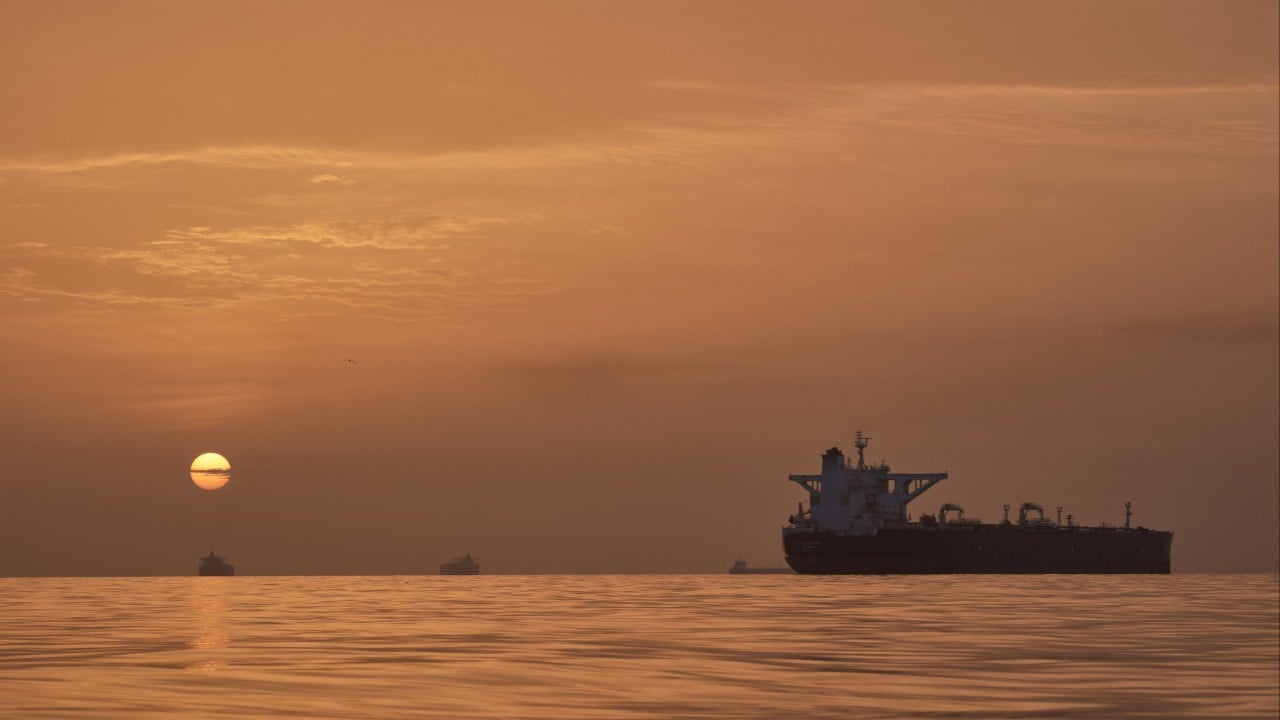
The tankers are still there, drifting in the heat haze, waiting for a signal that the throat of the world has opened again. Until then, the silence between the East and the Middle East will continue to grow, one empty container at a time.