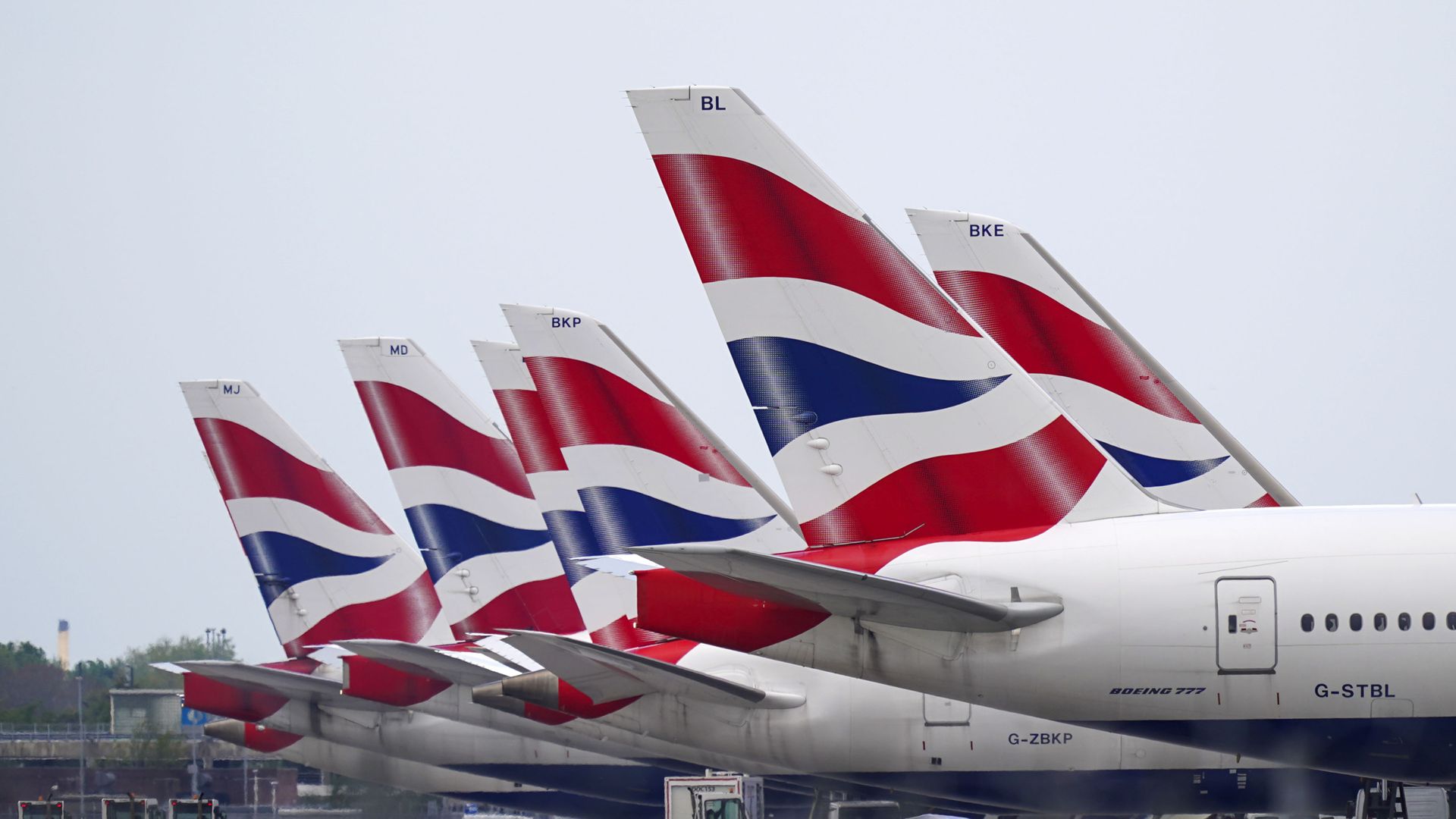
The kerosene smell at Terminal 5 used to signal a beginning. It was the scent of a long-delayed family reunion in Mumbai, a desperate weekend of escapism in Mallorca, or a career-defining handshake in New York. But lately, that familiar Heathrow aroma feels a little more like a warning.
British Airways recently broke the silence. Their message was stripped of the usual corporate fluff: fuel costs are rising, and the price of your ticket is going up with them. It sounds like a standard economic adjustment. A line item on a spreadsheet. A minor annoyance for the frequent flyer.
It isn't.
When an airline like BA signals a price hike, they aren't just adjusting for the price of Brent Crude. They are rewriting the social contract of the modern age. We have spent thirty years believing that the world is getting smaller, that distance is a problem we solved with a credit card and a passport. Now, the geography we thought we’d conquered is pushing back.
The Mathematics of the Wing
A Boeing 777-300ER doesn't just fly; it consumes. On a standard long-haul route, that aircraft is essentially a massive, airborne fuel tank with a few rows of seats attached to the top. When the price of jet fuel jumps, the math inside the cockpit changes instantly.
Consider a hypothetical traveler named Sarah. She isn’t a high-flying executive with an expense account that swallows inflation without a burp. She’s a freelance designer in London who hasn’t seen her parents in Perth since before the world turned upside down. She has a "flight fund" tucked away in a high-interest savings account. Last month, that fund covered a return ticket with enough left over for a nice dinner at the Swan River. This morning, after the latest industry warnings, that same fund doesn't even get her past the checkout screen.
This is the "fuel surcharge" in human terms. It is the distance between a grandmother and a newborn. It is the difference between a small business expanding into a new market and one that stays local because the overhead of a face-to-face meeting became a luxury.
Fuel typically accounts for about 25% to 30% of an airline's operating costs. When those costs spike, an airline has two choices: they can bleed cash until they collapse, or they can pass the bill to the person in seat 14B. British Airways is choosing survival.
The Invisible Weight of the Carbon Crisis
The problem isn't just the price of the oil coming out of the ground. It’s the cost of trying to put the genie back in the bottle.
Airlines are caught in a pincer movement. On one side, you have the raw volatility of global oil markets—geopolitical tensions that turn a pipeline closure in one hemisphere into a price spike at a check-in desk in another. On the other side, you have the mandatory shift toward Sustainable Aviation Fuel (SAF).
SAF is the industry's great hope. It’s made from waste oils, green hydrogen, and captured carbon. It’s clever. It’s necessary. It’s also incredibly expensive. Currently, SAF can cost three to five times more than traditional fossil-based jet fuel. While the UK government and international regulators push for higher percentages of "green" fuel in every tank, the infrastructure to produce it at scale simply doesn't exist yet.
We are living through the expensive puberty of a new energy era. The transition is awkward, painful, and priced at a premium.
Why Hedging Isn't a Magic Wand
You might wonder why these massive corporations don't just buy their fuel in advance when it's cheap. They do. It’s called hedging. It’s a sophisticated form of gambling where an airline bets on future prices to lock in a degree of certainty.
But hedging is a shield, not a suit of armor.
When fuel prices stay high for an extended period, those cheap contracts expire. Eventually, every airline has to step out into the rain and pay the market rate. BA’s warning suggests that the umbrella is folding. The protections that kept ticket prices artificially low during the post-pandemic travel surge are thinning out.
The industry is facing a "new normal" where the budget airline model—the one that convinced us a flight to Italy should cost less than a taxi to the airport—is looking more like a historical fluke than a sustainable business plan.
The Delta Between Desire and Reality
There is a specific kind of tension in the air at the boarding gate these days. It’s a mix of frantic "revenge travel" and a creeping realization that the golden age of cheap movement is flickering.
Think about the ripple effect. If BA raises prices, Virgin Atlantic follows. Then the European carriers. Then the low-cost subsidiaries. Suddenly, the "quick hop" to Dublin or Paris requires a budget meeting at the kitchen table.
This isn't just about the aviation industry's bottom line. It’s about our collective mobility. We have built our lives on the assumption that we can be anywhere in twenty-four hours. We have long-distance relationships, international supply chains, and a globalized sense of identity.
When the cost of fuel rises, the world physically expands. The 3,500 miles between London and New York start to feel like 3,500 miles again, rather than just a seven-hour movie marathon in a pressurized tube.
The Quiet Return of the Luxury Era
There was a time, mid-century, when flying was an Event. You dressed up. You ate off china. You paid a month's salary for the privilege of crossing an ocean. We are not heading back to the days of smoking in the aisles, but we are drifting toward a reality where flying returns to being a deliberate, weighed decision rather than a whim.
The data supports this shift. Premium cabins—First and Business—are seeing record demand. For the wealthy, a £200 increase in a ticket price is a rounding error. But for the family of four trying to visit relatives, that same £200 per person is the difference between "Go" and "Stay."
The aviation industry is inadvertently becoming a filter. It is separating those who need to travel from those who want to travel, and then further separating those who can afford the "green" future from those who will be left watching the contrails from the ground.
The Logistics of the Sky
To understand the scale of the challenge, look at the weight. Every extra kilogram on a plane requires more fuel to lift. Every drop of fuel required to lift that kilogram also has its own weight, requiring more fuel to lift the fuel.
It is a demanding, unforgiving physics problem.
Airlines are desperate. they are stripping out heavy magazines, switching to lighter seats, and using AI to calculate the most fuel-efficient flight paths down to the meter. They are doing everything possible to avoid passing costs to the consumer because they know that demand is a fragile thing. But efficiency has its limits. You can only make a seat so thin before the customer rebels. You can only optimize a route so much before you hit the hard wall of atmospheric drag.
The core truth is that we have reached the end of the "easy" era of flight.
What We Are Really Paying For
When you see that "Fuel Surcharge" or a general price hike on your next booking, you aren't just paying for the liquid in the wings.
You are paying for the geopolitical instability that makes oil a weapon.
You are paying for the R&D of engines that haven't been built yet.
You are paying for the carbon credits that offset the guilt of movement.
But most of all, you are paying for the privilege of defying gravity.
We forgot that flying is a miracle. We treated it like a bus service that happens to go through the clouds. We demanded it be fast, safe, and nearly free. We got two out of three for a long time, but the bill for the third has finally arrived.
The next time you’re standing in that Terminal 5 security line, complaining about the price of the ticket, look out the window at the tarmac. Look at the sheer, brute-force engineering required to hurl 300 tons of metal into the stratosphere.
The era of the cheap sky is closing. The world is getting bigger again. The question isn't whether we can afford the fuel—it's whether we can afford to let the distances between us grow back to what they used to be.
Sarah might still make it to Perth. But she’ll have to give up something else to get there. Maybe it’s a new car, maybe it’s a renovation, or maybe it’s just the ease of mind that used to come with booking a holiday.
We are all Sarah now, standing at the edge of a map that suddenly feels much wider than it did yesterday. The horizon is still there, but for the first time in a generation, it feels like we’ll have to fight a little harder—and pay a lot more—to reach it.