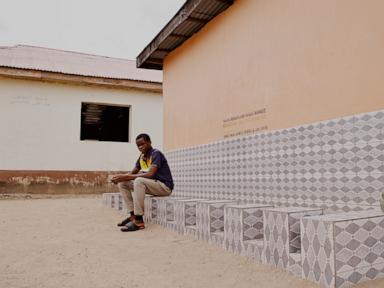
The morning bell never rang.
In its place came the sound of tearing metal and the frantic, heavy thud of combat boots on dry earth. It was just past dawn when the dust cloud appeared on the horizon of the village, a plume of yellow grit kicked up by a dozen unmarked motorcycles. Within minutes, the fragile sanctuary of the classroom was shattered.
Books were dropped. Chalk dust mingled with the rising smoke. When the engines finally roared away into the dense scrubland of northern Nigeria, they left behind a silence far heavier than the gunfire.
More than 80 children were gone.
To read the official statements issued in the capital is to encounter a world of sterile mathematics. Bureaucrats release updates detailing "mass abductions," "coordinated security responses," and "ongoing tracking efforts." But numbers are a shield. They protect us from the agonizing reality of what those digits actually represent. Eighty is not a statistic. Eighty is eighty distinct heartbeats. It is eighty unwashed breakfast bowls sitting on concrete floors. It is eighty unique voices that, just yesterday, were reciting times tables and arguing over soccer matches in the courtyard.
When a child is taken from a school, the theft extends far beyond the physical body. It is an assault on the very idea of a future.
The Mathematics of Terror
To understand why education has become a battlefield, we must look at the grim economics of the region. Kidnapping in Nigeria has transitioned from a sporadic political statement into a highly organized, terrifyingly lucrative industry. Bandit groups operating out of the vast, ungoverned forests of the northwest have realized that the most valuable currency the country possesses is its youth.
Consider how a typical raid unfolds. These are not random acts of desperation; they are military-style operations executed with chilling precision.
The targets are chosen deliberately. Rural boarding schools are often isolated, lacking fortified walls, armed security, or reliable communication networks. They are soft targets. The bandits strike at dawn or late at night, exploiting the darkness and the slow response times of distant security forces.
For the perpetrators, the children are leverage. They are human shields against military airstrikes and bargaining chips for millions of nairas in ransom. But for the families left behind, the cost cannot be calculated in currency.
Let us step into the shoes of a mother we will call Amina. She is not a statistic. She is a woman who spent years scraping together enough money from selling millet to buy her uniform-clad daughter a single pair of sturdy shoes. Now, she sits on a woven mat outside her home, staring at the dirt track that leads toward the forest.
Every time the wind picks up, her heart stops. She thinks she hears her daughter’s laugh. Then she remembers the reality of the forest—the cold nights, the forced marches through thorny brush, the terror of a child who does not know if she will ever see her mother's face again.
Amina’s grief is magnified by a crushing sense of betrayal. The school was supposed to be a promise. It was the one place where the chaos of the world was not supposed to reach.
The Invisible Toll on the Mind
The damage of these raids ripples outward, destroying communities long after the immediate crisis fades from the international headlines. The psychological trauma creates a secondary wave of devastation that threatens to permanently alter the region's trajectory.
When a school is attacked, every classroom within a fifty-mile radius empties. Fear is highly contagious. Parents look at their surviving children and face an impossible, heartbreaking choice: do they risk their lives for an education, or do they keep them home in safety, condemned to a life of illiteracy and poverty?
The numbers tell a devastating story of systemic collapse. Across northern Nigeria, thousands of schools have been forced to shut down indefinitely because local authorities simply cannot guarantee the safety of the pupils.
- The Loss of Safe Havens: Schools that once provided free meals, basic healthcare, and stability are now abandoned shells.
- The Gender Gap Explodes: Young girls are disproportionately affected. When schools close, the risk of forced early marriage and exploitation skyrockets.
- The Cycle of Poverty Deepens: Without basic literacy and numeracy, the next generation is locked out of the modern economy, creating a fertile breeding ground for future radicalization.
It is a self-fulfilling prophecy of decay. The bandits do not just steal children; they steal the entire infrastructure of human progress.
The Friction of Response
Why is this allowed to happen? The question hangs in the humid air of every community meeting and protest. The answer is a complex web of logistical failures, historical neglect, and a security apparatus stretched to its absolute breaking point.
Nigeria’s military is fighting a multi-front war. In the northeast, they confront the remnants of long-standing insurgencies. In the south, they battle oil theft and piracy. In the middle belt and northwest, they are deployed to quell communal clashes and banditry. The result is a thin green line, easily bypassed by highly mobile criminal gangs who know the terrain better than the soldiers sent to hunt them.
The geography itself acts as an accomplice. The Rugu forest, which straddles several northern states, spans thousands of square kilometers of dense canopy and rugged terrain. It is a black hole where cellular signals die and heavy military vehicles cannot penetrate. Once the kidnappers cross that tree line, the advantage shifts entirely in their favor.
Helicopters can patrol from above, but the dense foliage hides campfires and makeshift tents. Ground troops must move cautiously, knowing that any reckless assault could result in the crossfire killing the very hostages they are trying to save.
It is a agonizing stalemate played out in the shadows of the trees.
The True Meaning of Safe Schools
Years ago, the government launched the Safe Schools Initiative, a well-funded program designed to build fences, install security cameras, and train local communities in emergency drills. On paper, it looked flawless. In practice, the resources rarely reached the places that needed them most.
True security cannot be bought with imported surveillance equipment that breaks down the moment the generator runs out of fuel. It requires something far more profound: a fundamental rebuilding of trust between the state and the citizen.
When villagers feel abandoned by the police and the army, they stop sharing intelligence. They stop reporting suspicious movements on the outskirts of town. They turn inward, relying on poorly equipped local vigilante groups armed with nothing more than Dane guns and courage. These militias stand no chance against bandits carrying factory-new assault rifles.
The solution requires moving beyond the immediate panic of crisis management. It means treating the security of a rural classroom with the exact same urgency as the security of a government villa in Abuja.
The Weight of the Silence
Sunset brings a terrifying stillness to the village. In the past, this was the hour of noise. Children would be playing in the dust, shouting over chores, finishing their homework by the flickering light of kerosene lamps.
Now, there is only the sound of adults talking in hushed, urgent tones, and the occasional sob breaking through the dark.
We must refuse to let our eyes glaze over when the next headline appears. We must resist the urge to view this as a localized tragedy happening in a faraway place to people we will never meet. The fight for education in northern Nigeria is the fight for the core principle of our shared humanity: the right of a child to learn without fearing for their life.
In a courtyard near the edge of the village, a small notebook lies half-buried in the dirt, its pages curled by the heat. On the cover, written in a painstaking, youthful cursive, is a name. Inside, the last entry is a half-finished sentence about the history of the continent.
The pen stopped mid-word. The line trails off into a jagged streak of ink, a silent scream frozen on paper, waiting for someone to finish the story.