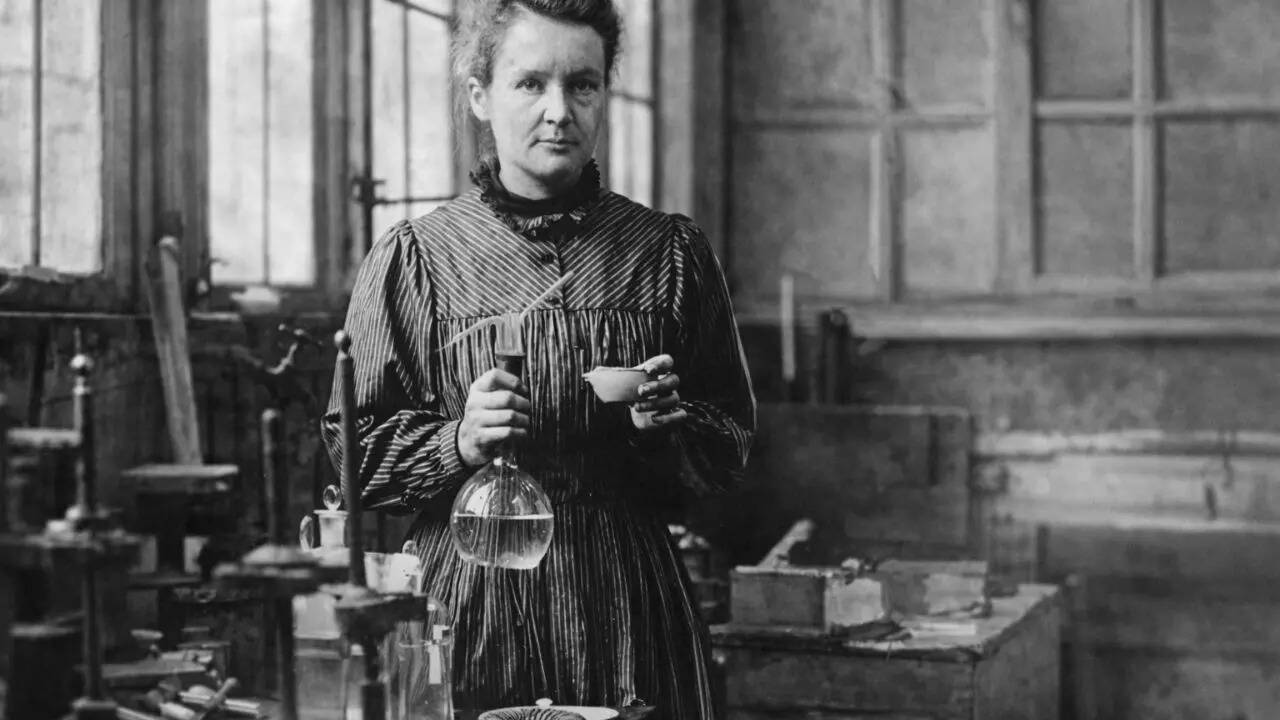
Marie Curie’s decision to forgo patenting the radium isolation process was not a lapse in judgment or a simple act of charity; it was a strategic intervention in the nascent market of radiochemistry that prioritized global scalability over private equity. By refusing to restrict the Intellectual Property (IP) of her discovery, Curie effectively collateralized her potential personal wealth to ensure the rapid, unencumbered development of radiotherapy and nuclear physics. This decision created a "Science Commons" that bypassed the standard friction of licensing fees and litigation, accelerating the deployment of radium in medical settings by decades.
The mechanism behind this decision rests on three distinct pillars: the preservation of scientific purity, the prevention of market monopolies in healthcare, and the optimization of global research velocity.
The Structural Framework of the Radium Decision
To understand why Curie’s choice "stuns" modern observers, one must first quantify the hypothetical value of the radium market in the early 20th century. Radium was the most expensive substance on earth, valued at approximately $120,000 per gram in 1921 (roughly $2.2 million in 2026 inflation-adjusted currency). The Curies held a functional monopoly on the extraction methodology—a multi-stage process of fractional crystallization from pitchblende.
1. The Disruption of the Rent-Seeking Model
Had Marie and Pierre Curie patented the process, they would have established a rent-seeking position in every laboratory and hospital globally. Under a standard patent regime, any researcher attempting to refine the element or any physician attempting to treat a tumor would have owed a royalty.
Curie identified a fundamental conflict:
- The Patent Barrier: Licensing creates a "pay-to-play" environment that filters out underfunded but high-potential research entities.
- The Velocity Factor: Open-sourcing the method allowed for concurrent engineering. Instead of a single lab (The Radium Institute) iterating on the technology, dozens of global labs could innovate simultaneously.
2. The Cost Function of Medical Accessibility
The primary beneficiary of the open-source model was the field of oncology. Early radium therapy (Brachytherapy) required physical proximity to the radioactive source. If the Curies had controlled the supply through patent law, the "Capital Expenditure" (CAPEX) for hospitals would have been prohibitive.
The absence of patent royalties lowered the entry barrier for medical facilities. This created a decentralized supply chain where different nations could develop their own extraction plants—using the Curies' published blueprints—without legal repercussions. This is an early example of "Technology Transfer" occurring through public documentation rather than private contract.
The Technical Risks of Open-Source Radiochemistry
While the decision accelerated progress, it introduced a significant negative externality: the lack of standardized safety protocols. In a proprietary model, the patent holder often dictates usage guidelines and safety standards to protect the brand and minimize liability. By releasing the process to the public, Curie lost the ability to regulate how radium was handled.
This led to the "Radium Craze" of the 1920s, where the element was incorporated into consumer goods—watches, cosmetics, and even drinking water. The lack of a central regulatory body (which a patent holder often mimics through licensing restrictions) allowed for the industrial negligence seen in the Radium Girls' case. The Curies prioritized the availability of the tool over the control of the tool, a trade-off that is frequently debated in modern open-source software and biotechnology.
Quantifying the Opportunity Cost
The "fortune" Curie gave away is often cited but rarely calculated. Based on the production yields of the era and the market price of $100,000+ per gram, the Curie estate could have reasonably captured a significant percentage of the global market cap for radioactive isotopes, which peaked during the mid-war period.
However, the "Social Return on Investment" (SROI) outweighed the private gain. The logic follows a clear causal chain:
- Zero-Cost Licensing led to an immediate surge in pitchblende processing facilities in the US and Europe.
- Market Competition (uninhibited by patents) forced extraction techniques to become more efficient, eventually driving down the price of radium for clinical use.
- Cross-Disciplinary Innovation occurred because chemists, physicists, and biologists could work on the same material without navigating a legal minefield.
The "shocking" nature of this choice to contemporary observers reveals more about modern IP philosophy than it does about Curie’s supposed "naivety." Curie viewed radium not as a product, but as an element of nature. To her, patenting an element was an ontological error; one cannot "own" a fundamental building block of the universe.
The Long-Term Strategic Impact on Global Science
The legacy of this decision is the established precedent for "Big Science." When Jonas Salk later refused to patent the polio vaccine, or when CERN released the World Wide Web protocols into the public domain, they were following the "Curie Framework."
This framework suggests that for certain "Platform Technologies"—technologies upon which an entire industry or field of knowledge must be built—the optimal strategy for the advancement of the species is the total removal of IP friction.
Critical Limitations of the Curie Model
It is necessary to acknowledge that the Curie model is difficult to replicate in the modern venture-capital-backed era.
- R&D Funding: The Curies relied on government grants and personal sacrifices that are often unsustainable for modern startups requiring billions in clinical trials.
- Regulatory Compliance: Today, the "process" is often less valuable than the "regulatory approval." Even if a drug's formula is public, the cost of proving it safe to the FDA creates a de facto monopoly.
- Scaling Complexity: Industrializing radium extraction today would involve environmental protections and waste management costs that did not exist in 1900, requiring significant capital that usually demands an IP-backed return.
Strategic Execution for Modern Research Entities
For organizations operating at the intersection of deep tech and social impact, the Curie Framework offers a tactical alternative to traditional IP hoarding. Instead of seeking a broad patent that covers all applications, firms can adopt a "Layered IP Strategy":
- Open-Source the Foundation: Release the core discovery or "elemental" process to stimulate the market and establish a global standard.
- Patent the Implementation: Seek protection for specific, high-value applications or proprietary hardware used to execute the process.
- Monetize the Expertise: Shift from a "toll-booth" model (licensing) to a "service-and-optimization" model, where revenue is derived from being the most proficient executor of the open-sourced technology.
This approach mimics Curie's actual career trajectory. While she did not own the "radium process," she remained the world's foremost authority on its application, ensuring that the Radium Institute remained the center of gravity for the field. She traded the fleeting wealth of a patent for the permanent, compounding "Brand Equity" of being the primary architect of a new scientific era.
The move was not an abandonment of value, but a sophisticated transition from capturing value through restriction to capturing value through influence. Organizations looking to dominate an emerging sector should evaluate whether their IP is a bridge to the future or a wall that will eventually be bypassed by more agile, open competitors.
Adopt a policy of "Strategic Transparency." Identify the components of your technology that, if shared, would expand the total addressable market (TAM) more than a monopoly would allow you to capture. Release those components to the public domain to force industry-wide adoption, then compete on the complexity of execution and the depth of your specialized data.