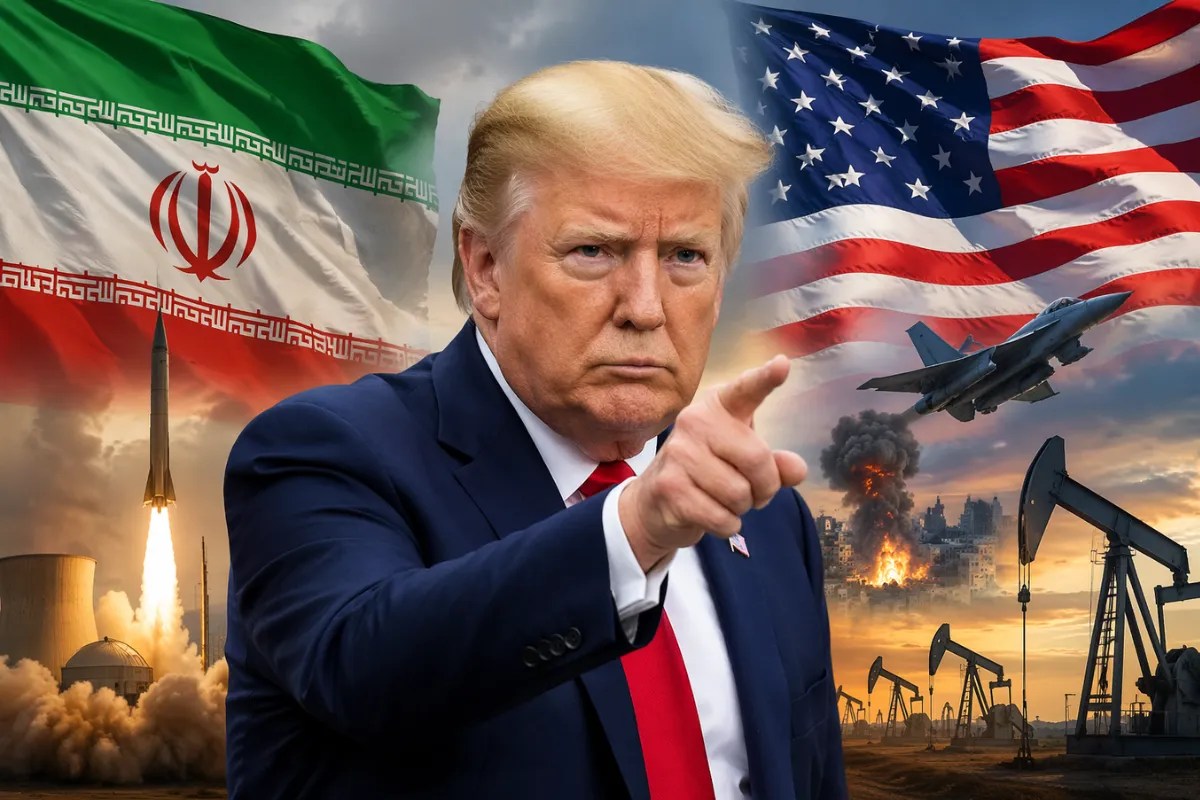
Donald Trump is betting the entire stability of the Middle East on a single, uncompromising ultimatum. His message to Tehran is stripped of diplomatic nuance: if Iran attempts to cross the nuclear threshold, any hope of a grand bargain, sanctions relief, or economic normalization vanishes instantly. This is not just campaign rhetoric; it is a calculated return to the "Maximum Pressure" doctrine, updated for a global economy currently reeling from high energy costs and shifting geopolitical alliances. Trump frames this hardline stance as the only gateway to lowering domestic fuel prices, arguing that by crushing Iranian nuclear ambitions and loosening the shackles on American oil production, he can force a global market correction that brings cheap gasoline back to the American pump.
The Nuclear Red Line as Economic Leverage
Foreign policy experts often separate nuclear non-proliferation from domestic gas prices, but in the Trump playbook, they are two sides of the same coin. The strategy assumes that Iran’s current leadership is vulnerable to a specific type of economic strangulation that only the United States can execute. By threatening to permanently close the door on a "deal," Trump is targeting the Iranian regime's long-term survival strategy. Tehran needs a way out of the current sanctions regime to fund its proxy networks and stabilize its internal economy. Trump is removing that exit ramp.
This is a high-stakes gamble. The core of the argument is that a nuclear-armed Iran creates a permanent "risk premium" on global oil prices. If the Strait of Hormuz is under the shadow of a nuclear-capable Islamic Revolutionary Guard Corps, insurance rates for tankers skyrocket and supply chains become brittle. By aggressively blocking the nuclear path, Trump claims he is removing the long-term volatility that keeps oil prices artificially high.
Why Previous Sanctions Did Not Finish the Job
The standard critique of the first Maximum Pressure campaign was that it crippled the Iranian middle class without toppling the regime or stopping the centrifuges. However, an investigative look at the enforcement data shows that the "leakage" in the sanctions regime occurred primarily through "ghost fleets" and back-channel sales to Chinese independent refineries.
For a new ultimatum to work, the enforcement mechanism must shift. It requires a direct confrontation with the buyers of Iranian crude. Trump’s strategy involves a secondary sanctions offensive that forces Beijing to choose between cheap Iranian oil and access to the U.S. financial system. It is a blunt instrument. It ignores the diplomatic niceties of the JCPOA era in favor of a binary choice.
The Gasoline Math and the Drill Baby Drill Revival
Voters care about the price at the local Shell station more than the enrichment levels at Natanz. Trump understands this political reality. He has linked his Iran policy to a promise of immediate energy deregulation within the United States. The logic follows a simple trajectory.
- Aggressive Sanctions: Remove Iranian influence from the market to reduce regional "war anxiety" prices.
- Domestic Surge: Open federal lands and simplify the permitting process for American energy companies.
- Refinery Optimization: Incentivize the processing of heavy crudes that American infrastructure was originally built to handle.
He claims this combination will drive prices down to a level not seen since the early months of the pandemic. While economists argue that the global oil market is too complex for one man to dictate prices, Trump leans on the psychological impact of American supply. When the U.S. signals a massive increase in production, it forces OPEC+ to reconsider its own production cuts. No one wants to lose market share to a surging American energy sector.
The Problem of Global Demand
The flaw in the "cheap gas" promise often lies in factors outside of the Oval Office. Global demand, particularly from a recovering Chinese industrial sector, can swallow up increased American production before it ever reaches the consumer. Additionally, American oil companies answer to shareholders, not the government. After years of being told to pivot toward green energy, these companies are now prioritizing "capital discipline"—meaning they would rather pay out dividends than spend billions on new drilling rigs that might become "stranded assets" if policy shifts again in four years.
Trump's plan relies on convincing these CEOs that the regulatory environment will remain favorable for decades, not just one term. He has to kill the "regulatory whiplash" that has characterized the last decade of American energy policy.
Reconstructing the Art of the Deal for 2026
If Iran ignores the ultimatum, the consequences move from the ledger to the battlefield. This is the "hidden" part of the policy. An ultimatum without a credible threat of force is just a suggestion. Trump’s inner circle has frequently discussed "kinetic options" against enrichment facilities if diplomacy fails.
Unlike the 2015 deal, which focused on a "breakout time" of one year, the new approach demands a total cessation of enrichment activities. There is no middle ground. There is no sunset clause. This is a demand for a permanent change in the Iranian state's behavior.
The Regional Players and the Abraham Accords
Any serious analysis of this ultimatum must include the role of Saudi Arabia and the UAE. These nations are no longer passive observers. They are actively hedging their bets. If Trump can deliver a security guarantee that actually neutralizes the Iranian nuclear threat, the regional shift would be seismic. It would accelerate the integration of the Middle East economy, potentially creating a new trade bloc that rivals the EU in energy dominance.
The "deal" Trump speaks of isn't just a nuclear pact; it is a regional reorganization. He is offering Iran a choice: become a "normal" nation and join the regional economic boom, or remain an outcast and face total economic collapse.
The Risks of a Cornered Regime
History shows that regimes under extreme pressure do not always fold. Sometimes they lash out. An Iranian leadership that believes it has nothing left to lose might accelerate its nuclear program to reach a "fait accompli" before the sanctions can take full effect. This is the nightmare scenario for global markets. A conflict in the Persian Gulf would send oil prices to $150 a barrel overnight, obliterating the promise of cheap gas.
Trump’s gamble relies on the belief that the Iranian leadership is fundamentally rational and self-preserving. He bets that they value their survival over their ideology.
The mechanism for lowering fuel prices is not a magic wand. It is a brutal application of economic power designed to bend the global supply curve to the will of Washington. If the oil starts flowing from American fields and the Iranian threat is neutralized, the cost of living drops. If the ultimatum triggers a regional war, the economic fallout will be felt in every household in the West.
There is no room for error when the stakes are this high. The strategy demands a level of execution that leaves no gaps for the ghost fleets or the black-market brokers. It is an all-or-nothing play for energy dominance and nuclear containment. The world is watching to see if the pressure is enough to crack the regime or if the pot simply boils over.
Stop looking for a middle path. In this version of geopolitics, the middle path is just a place where you get hit from both sides.