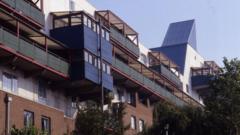
Residents across modern housing developments are being told their energy bills are frozen, a headline that sounds like a victory in an era of volatile utility markets. But the reality under the surface is far more complex and significantly more predatory. While standard consumer protection laws shield most households from the worst excesses of the energy sector, thousands of families living on "heat networks" or district heating schemes are finding themselves trapped in a regulatory blind spot. They aren't buying gas from a competitive market; they are buying heat from a monopoly.
The promise of a price freeze is often a PR maneuver designed to mask the lack of consumer choice. In a traditional home, if your provider hikes prices, you switch. In these modern estates, the infrastructure is owned by a single entity. You cannot change your pipes. You cannot change your provider. You are locked into a decades-long contract where "frozen" prices often sit at a baseline significantly higher than the national average. For a different view, see: this related article.
The Hidden Architecture of Energy Monopolies
To understand why these residents are struggling, you have to look at the physical layout of the buildings. District heating systems utilize a centralized boiler room that pumps hot water through a network of insulated pipes directly into individual apartments or houses. On paper, it is efficient. It reduces the carbon footprint of the development and removes the need for individual gas boilers in every unit.
The problem is the business model. Most of these networks are operated by private energy services companies (ESCos) under long-term commercial contracts with developers or social landlords. Because the heat is delivered as a service rather than a raw utility, these residents frequently fall outside the jurisdiction of national energy caps. When a provider "freezes" a price, they are essentially setting their own ceiling. Related insight on this matter has been shared by Reuters Business.
The Commercial Contract Loophole
The primary driver of this crisis is the classification of energy. If you burn gas in your own boiler, you are a domestic consumer. If you receive heat from a central plant, you are often technically classified as a commercial customer of the ESCo. This distinction is catastrophic for the resident's wallet.
Commercial energy contracts do not enjoy the same price protections as domestic ones. During the recent global energy spikes, many ESCos saw their wholesale costs quadruple. While the government scrambled to provide relief to standard households, those on heat networks were left to the mercy of their providers. A price freeze in this context is rarely an act of corporate charity. It is usually a calculated move to prevent a total default by residents who simply cannot pay.
Infrastructure Debt and Maintenance Costs
The bill you see on your mat isn't just the cost of the fuel. It includes the "standing charge," which in district heating schemes can be double or triple what a standard UK or European household pays. This charge covers:
- Capital recovery: The cost of building the energy center is often clawed back from residents over 25 to 40 years.
- Maintenance of the primary network: If a pipe bursts under the street, the residents pay for the repair, not the utility company.
- Heat loss: Large amounts of energy are lost as water travels from the central plant to the home. Residents are often billed for the energy generated at the source, not just the energy consumed at their meter.
Efficiency is the Great Myth
We are told these systems are the future of green urban living. They are not. In practice, many of these systems are poorly insulated and over-engineered. It is common for corridors in apartment blocks with district heating to be sweltering year-round because the internal pipes are leaking heat before they even reach the front door. This is wasted energy. This is wasted money.
The resident pays for this waste. Unlike a standard electrical grid where the provider absorbs certain transmission losses, the closed-loop nature of estate heating often passes these inefficiencies directly to the leaseholder. When a provider announces a "freeze," they are often freezing a rate that already accounts for a 20% to 30% system loss. It is a high-margin safety net for the provider, disguised as a shield for the consumer.
The Lack of Regulatory Teeth
In most jurisdictions, the watchdog for the energy market has no power to intervene in heat network pricing. If your electricity provider overcharges you, there is a clear path for redress. If your district heating provider doubles your standing charge, your only real option is a lengthy, expensive civil court battle against a multi-million dollar corporation.
This regulatory vacuum has allowed developers to sign "sweetheart deals" with energy providers. The developer gets the heating infrastructure installed for free or at a discount, and in exchange, the ESCo gets a 30-year monopoly over the residents. The residents, who were never party to the original contract, are the ones who end up subsidizing the developer’s savings through their monthly bills.
The Illusion of the Price Freeze
Let’s look at the mechanics of a freeze. Typically, an ESCo will buy their gas or electricity in bulk through "forward hedging." They purchase the energy years in advance. If they bought well, their costs are stable. Freezing the price for the resident doesn't cost the company anything; it simply maintains the status quo of their profit margin.
If wholesale prices drop, the "frozen" residents are stuck. They stay at the high, frozen rate while the rest of the country sees their bills fall. This is the sting in the tail. A freeze is a floor just as much as it is a ceiling. It prevents the resident from ever benefiting from a favorable market.
The Social Cost of Energy Isolation
For those in social housing or "affordable" units within these estates, the impact is devastating. They are often the most vulnerable to price fluctuations, yet they are tied to the most inflexible energy systems in the country. We are seeing a rise in "self-disconnection," where residents simply turn off their heating entirely because they cannot afford the standing charges, let alone the usage.
Because these systems are centralized, you cannot simply "opt-out." You cannot install your own boiler. You cannot put solar panels on your roof to offset the heating costs. You are physically and legally bound to the network. This is energy serfdom.
Engineering a Way Out
Fixing this requires more than just temporary price freezes. It requires a fundamental shift in how heat is governed.
- Mandatory Domestic Classification: All heat network customers must be legally classified as domestic consumers, granting them immediate access to price caps and ombudsman services.
- Transparency in Standing Charges: Providers must be forced to unbundle their bills. Residents should see exactly how much of their money is going toward "maintenance" versus the actual cost of fuel.
- Right to Manage: Leaseholders should have a legal pathway to take over the management of their energy centers if the provider fails to offer competitive rates or maintain efficiency.
The current model relies on the apathy of the public and the ignorance of the homebuyer. Most people don't ask about the heating system when they are looking at a new apartment. They check the kitchen finish and the view from the balcony. By the time the first winter bill arrives, it is too late.
The Hard Reality for Homeowners
If you are currently looking at a property served by a heat network, you need to demand the last three years of energy data for that specific unit. Do not accept "average estate costs." Demand the contract between the freeholder and the ESCo. Look for the "indexation clause." This clause dictates how much the provider can raise prices every year, often tied to inflation metrics that have nothing to do with the actual cost of energy.
The "frozen bill" narrative is a sedative. It is designed to keep residents quiet while the underlying structural issues of the heat network market remain unaddressed. True energy security does not come from a temporary freeze granted by a monopoly. It comes from competition, regulation, and the right to choose. Until those factors are present in the district heating market, residents are not being protected; they are being managed.
Check the fine print of your lease agreement today. Identify the "end date" of the heat supply contract. If it’s 2055, you aren't a customer; you're an asset on a balance sheet.