Numbers are the ultimate anesthetic. When news outlets blast a headline claiming 700,000 people are displaced in Lebanon, they aren't informing you. They are oversimplifying a structural collapse into a math problem.
The "700,000" figure is a lazy consensus. It treats human beings like units of liquid being poured from one container to another. It implies that if the "attacks" stop, the liquid simply flows back. That is a fantasy. I have watched geopolitical analysts and NGO directors lean on these figures for decades because numbers are easy to put in a pitch deck for funding. Reality is much messier. For an alternative look, consider: this related article.
The displacement in Lebanon isn't just about people moving away from a border. It is the final, violent audit of a failed state.
The Logistics of a Ghost Nation
Most reporting focuses on the "where" and the "how many." They rarely look at the "what next." Further coverage on this matter has been published by BBC News.
In a functional country, displacement is a temporary state of being. In Lebanon, displacement is an identity. We are seeing the total erasure of the southern demographic crust, not because of a temporary tactical shift, but because the infrastructure of the Lebanese state has been a hollowed-out shell since 2019.
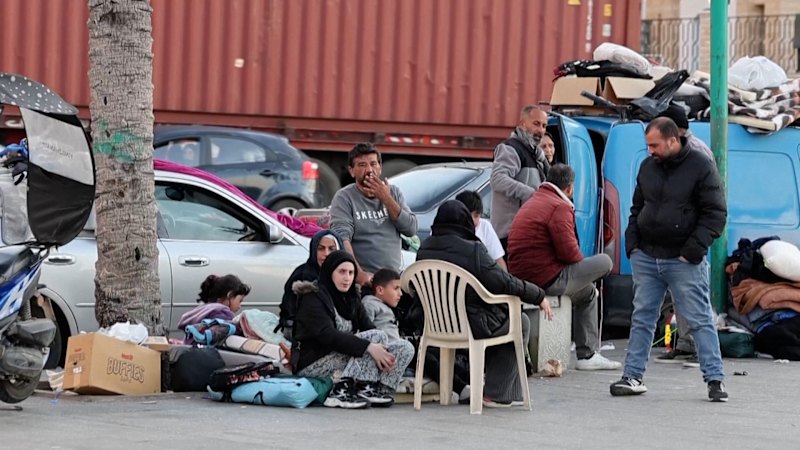
When a family leaves a village in the south, they aren't just moving to a school-turned-shelter in Beirut. They are exiting a feudal economic system that no longer exists. The "700,000" aren't waiting for a ceasefire; they are facing the fact that their homes were the only collateral they had in a country where the banks already stole their cash.
If you want to understand the crisis, stop looking at the maps of strikes. Look at the ledger of the Central Bank.
The Fallacy of the Temporary Refugee
The media loves the word "displaced" because it sounds fixable. It suggests a temporary deviation from the norm.
Here is the brutal truth: a significant portion of these people will never go back. Not because they don't want to, but because the economic gravity of the south has been severed.
- The Agricultural Death Spiral: The south relies on tobacco and olives. You can't harvest a field that has been seeded with white phosphorus or unexploded ordnance for six months. When the harvest dies, the debt to the local "middlemen" remains.
- The Urban Trap: Once a family moves to a suburb of Beirut or Tripoli, they enter the informal economy. They find ways to survive that don't involve a plot of land. They become part of the urban poor. History shows us that once an agrarian population hits the city under duress, they stay there.
- The Brain Drain Bypass: Those among the 700,000 with any remaining capital aren't looking for a shelter in the mountains. They are looking for a way to Cyprus, Turkey, or the Gulf.
The competitor's focus on "displaced people" misses the displacement of capital and talent which is the actual killing blow to the nation.
Why the NGO Data is Wrong
I have seen how these numbers are cooked. An NGO enters a school, sees 100 people, and records 100 people. Then, those same 100 move to a different facility or stay with relatives, and they are counted again. Or, conversely, the thousands staying in expensive apartments or with extended family aren't counted at all because they don't "look" like refugees.
The 700,000 figure is a floor, not a ceiling, but it’s also a distraction. By focusing on the sheer volume of bodies, the international community avoids the harder conversation: who is going to pay for the reconstruction of a country that was already bankrupt?
Imagine a scenario where a ceasefire is signed tomorrow. The 700,000 "displaced" try to return. What do they find? No electricity (which was already gone), no water, and a banking system that won't give them a loan to buy a single cinderblock.
The displacement isn't the tragedy. The lack of a destination is.
The Weaponization of Chaos
There is a tactical reason why the displacement is allowed to reach these staggering levels.
For the Lebanese government—if we can even call it that—the displacement is a bargaining chip. It is a way to demand international aid that inevitably gets filtered through the same sectarian pipelines that caused the 2020 port explosion and the 2019 currency crash.
For the combatants, these 700,000 people are human shields or human obstacles, depending on which way the wind blows.
When you read a headline about "700,000 displaced," you should be asking: Who profits from this movement? * Landlords in "Safe" Zones: Rents in parts of Beirut and Mount Lebanon have tripled.
- Sectarian Leaders: They get to play the hero by opening "party-affiliated" shelters, reinforcing the idea that the state is useless and the tribe is everything.
- International Agencies: High numbers justify massive budgets that often get eaten up by "administrative costs" before a single blanket reaches a kid in Sidon.
The Middle Class Erasure
The most dangerous part of this displacement isn't the people in the tents. It’s the quiet disappearance of the middle class.
The people who had $10,000 tucked under a mattress for an emergency. This was the emergency. That money is gone. They are spending it on three months of rent in a basement in Jounieh. When that money runs out, they don't become "displaced"—they become destitute.
The competitor article treats the displacement as a byproduct of war. It isn't. It is the intentional deconstruction of the Lebanese social fabric. By forcing these populations to mix and compete for dwindling resources, the internal tensions of the country are pushed to a breaking point.
We aren't seeing a humanitarian crisis; we are seeing a controlled demolition.
Stop Asking "When Can They Go Home?"
The question is a trap. It assumes "home" still exists as a functional concept.
Instead, ask this: What happens when 20% of a population is permanently relocated into the territory of their historical rivals during a total economic collapse?
That is the question the news won't touch because the answer is too dark for a 30-second segment. It leads to civil strife. It leads to a permanent change in the map that no UN resolution can fix.
The displacement in Lebanon is the sound of a country's spine snapping. The 700,000 aren't just moving; they are falling through the cracks of a world that stopped caring about the "Paris of the Middle East" years ago.
Don't look at the number. Look at the void it leaves behind.
If you're still waiting for a "return to normalcy," you haven't been paying attention. Lebanon doesn't have a "normal" to go back to. The displacement is the new permanent.
Accept it or stop pretending to care.
Would you like me to analyze the specific economic impact of the 2026 Lebanese currency fluctuations on these displaced populations?