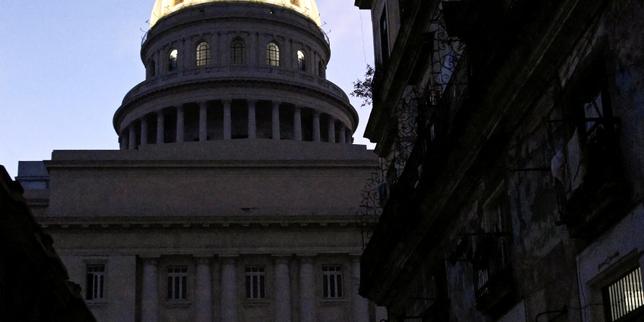
Cuba's government is finally admitting something it spent decades trying to ignore. It needs its people back. Specifically, it needs their money. A new decree is making waves because it creates a special migratory status for Cubans living abroad who want to put capital into the island. For a long time, the relationship between Havana and the diaspora was defined by suspicion and red tape. Now, it's defined by a desperate need for foreign currency.
The law basically says that if you're a Cuban living in Miami, Madrid, or Mexico City and you want to open a business or invest in a local project, the state will stop treating you like a standard tourist or a political exile. You get a foothold. It's a calculated move to fix an economy that's been in a tailspin since the pandemic.
Why this shift in migratory policy actually matters
For years, the Cuban government treated the diaspora as "the others." But the economic reality on the ground is grim. Food shortages, power outages, and a lack of basic goods have forced the leadership to look for lifelines. They've realized that the millions of Cubans living abroad represent a massive, untapped pool of investment. We're talking about people who already have emotional ties to the country and don't need a map to find Havana.
The new "Special Resident" status is the centerpiece here. It isn't just a fancy title. It's designed to bypass the usual bureaucratic nightmare that foreign investors face. Usually, if you aren't a massive multinational, investing in Cuba is a marathon of paperwork. This new status tries to shorten that track for the diaspora. It gives them a legal framework to operate within the country without losing their residency abroad. It's a "have your cake and eat it too" scenario for the business-minded exile.
You've probably heard about the growth of small and medium-sized enterprises—known locally as MSMEs or mypimes. This is where the real action is. Since 2021, the private sector has exploded. There are now thousands of these private businesses. However, many of them are struggling because they can't get enough hard currency to import goods. That's where the diaspora comes in. They have the dollars and euros that the internal market lacks.
The mechanics of the new investor status
Don't expect this to be a free-for-all. The government still wants to keep a tight grip on who enters the room. To get this special status, you have to prove you're actually putting money into the system. It's not for someone just sending fifty bucks to their grandmother. This is for the person looking to set up a supply chain, a construction firm, or a tech startup.
The process involves the Ministry of the Interior and the Ministry of Foreign Trade and Investment. You'll likely need to show a concrete project. The government is prioritizing sectors like food production and renewable energy. They're tired of spending billions importing food that could be grown in their own soil. If you have a plan to modernize a farm or set up solar panels, you're at the front of the line.
One of the biggest hurdles has always been the "repatriation" requirement. In the past, if you wanted to do business as a local, you often had to officially move back. That's a huge ask for someone with a life and a mortgage in another country. This new special status removes that barrier. You can stay a resident of your current country while holding this special Cuban status. It's a pragmatic bridge.
Real risks and the trust gap
Let's be honest. Trust is the biggest problem. Many in the diaspora remember when the government seized assets in the 60s. They remember the harsh rhetoric of the 80s and 90s. Asking people to bring their hard-earned capital back to an island with a history of shifting legal sands is a tough sell. The government knows this. That's why they're wrapping this in the language of "national reconciliation" and "economic modernization."
There's also the issue of the U.S. embargo. If you're a Cuban-American investor, you're walking a tightrope. You have to navigate both Havana's new rules and Washington's long-standing restrictions. The U.S. has recently moved to allow Cuban private entrepreneurs to open U.S. bank accounts, which helps, but it’s still a legal minefield. You don't want to get hit with a fine from the Treasury Department while trying to help a cousin open a bakery in Camagüey.
Inflation is another beast. The Cuban peso has lost its value at a terrifying rate. If you invest in a business that earns pesos but you need to buy supplies in dollars, your margins can vanish overnight. Savvy investors are looking for ways to sell products or services that earn foreign currency directly.
What this means for the average Cuban
On the streets of Havana, this isn't just about high finance. It’s about whether the local shop has milk. The hope is that by letting the diaspora invest, the supply of goods will finally increase. When the state had a monopoly on all imports, things moved at the speed of a glacier. Private investors are faster. They find shortcuts. They negotiate better prices.
We're seeing a weird sort of "limbo economy" emerge. It’s a mix of old-school socialist planning and a frantic, gold-rush style private sector. The special migratory status is an admission that the state can't do it alone. It needs the people it once pushed away.
If you're looking at this from a business perspective, the first step isn't just reading the decree. You need to find a local partner you trust. Even with special status, the "who you know" factor in Cuba is massive. Most successful diaspora investments so far have started as family ventures that scaled up.
Steps to take if you are considering this
Don't just fly to Havana and start handing out cash. That's a recipe for disaster.
- Check your legal standing. Make sure your current residency or citizenship doesn't have specific bans on the type of investment you're planning.
- Verify the sector. Cuba isn't open for everything. Focus on food, logistics, and tech. Those are the areas where the government is most likely to leave you alone and let you work.
- Get a local lawyer. Not just any lawyer, but one who specializes in the new MSME laws. The rules change fast. What was true six months ago might not be true today.
- Secure your supply chain. The biggest failure for new businesses in Cuba isn't a lack of customers. It’s a lack of stuff to sell. If you can't guarantee how your raw materials get onto the island, don't start.
The government's move is a start, but it's not a finish line. They've opened the door a crack. It’s up to the investors to decide if the house is stable enough to enter. This isn't charity. It’s business. And in Cuba, business is always complicated.
The new rules are a clear sign that the old ways are dead. The island is desperate for a reboot. This special migratory status might be the most significant olive branch the diaspora has seen in decades. Whether it leads to a genuine economic shift or just another round of disappointment depends on how much control the state is truly willing to give up. For now, the ball is in the court of the exiles. They have the capital, the expertise, and the connection. Havana is just hoping they still have the heart.
Check the official Gazette for the full text of Decree-Law 88 and the associated resolutions. That's where the fine print lives. Read it twice. Then read it again. The devil isn't just in the details; he's in the definitions of what constitutes "lawful capital." Make sure your paperwork is bulletproof before you commit a single cent. This is a high-risk, high-reward environment. Treat it that way.