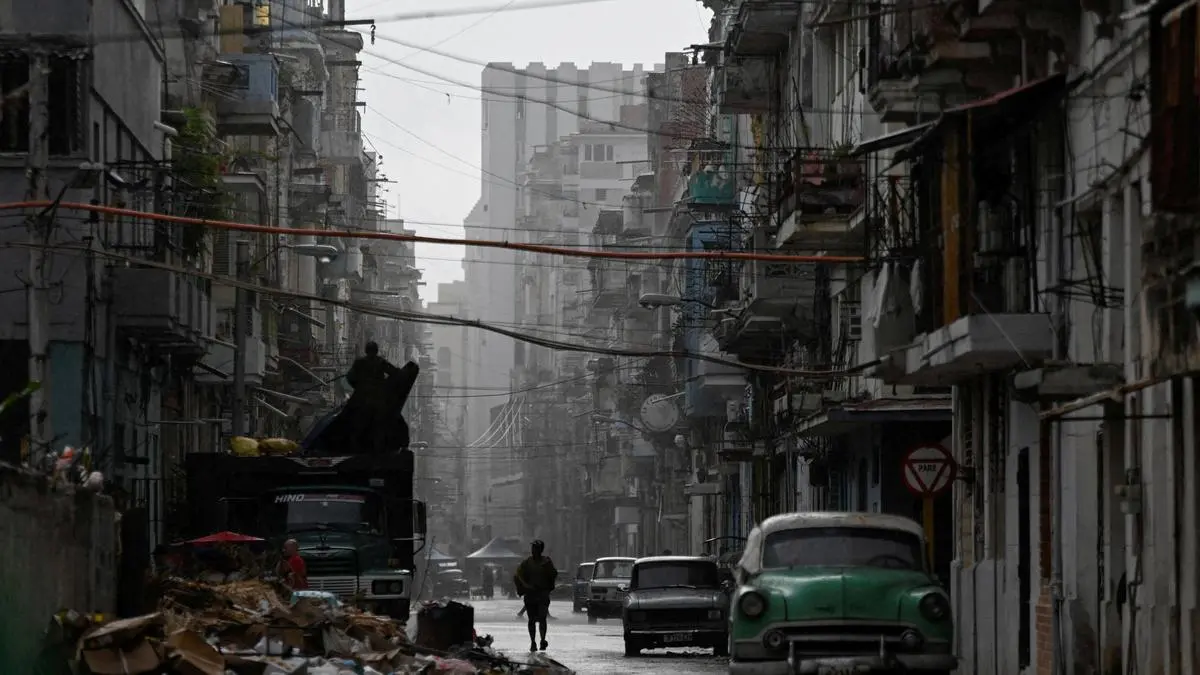
If you walk through the streets of Havana today, you won't just see the classic cars and crumbling colonial facades. You'll see mountains of uncollected trash, pitch-black neighborhoods, and lines for bread that stretch for blocks. Cuba isn't just "struggling" anymore. The island is currently navigating its most catastrophic collapse since the 1959 revolution, and honestly, the situation looks bleaker than the "Special Period" of the 1990s.
The immediate cause? A total energy grid failure that happened on March 16, 2026. One day the lights went out, and for millions, they haven't come back on. This isn't a random technical glitch. It's the result of decades of decayed infrastructure, a sudden cutoff of Venezuelan oil, and a massive tightening of U.S. sanctions.
The end of the lights
The national power grid didn't just flicker—it disintegrated. When the Antonio Guiteras power plant shut down earlier this month, it triggered a domino effect. Now, blackouts aren't just inconvenient; they're life-threatening.
Imagine trying to keep insulin cold or running a ventilator when you only get two hours of electricity at 3:00 a.m. That's the reality for Cuban families right now. Because the water pumps need electricity, no power often means no running water. People are bathing with buckets and cooking over charcoal in the middle of city apartments because there's no gas or power for stoves.
The government blames the U.S. "maximum pressure" strategy. It's true that Executive Order 14380, signed in late January 2026, essentially declared a blockade on any ships bringing oil to the island. But that’s only half the story. The Cuban government hasn't invested in the grid for years, choosing instead to build luxury hotels that now sit mostly empty.
Why your dinner costs a month's salary
Inflation in Cuba has moved past the "concerning" stage and into the realm of the absurd. The Cuban peso (CUP) is basically Monopoly money at this point. While official stats might claim inflation is around 12% or 13%, that doesn't reflect the informal market where people actually buy food.
In the real world, a carton of eggs can cost more than a retired doctor's monthly pension.
- The Peso Collapse: On the street, the dollar is trading for over 400 pesos.
- Agricultural Failure: Without fuel for tractors or fertilizer, local farms are producing almost nothing.
- The Tourism Ghost Town: Visitors have vanished. Arrivals are down nearly 70% from 2024 levels because nobody wants to vacation in a country with 20-hour blackouts and no food.
Basically, the state has run out of hard currency to import the basics. About 80% of Cuba's food is imported. When the government can't pay the bills, the shelves go bare. We're seeing the return of "cacerolazos"—people banging pots and pans in the dark to protest the hunger.
The Walking Generation
People are leaving. Not in small groups, but in a mass exodus that is hollowing out the country's future. Since 2021, over a million people have fled. That’s roughly 10% of the entire population.
But the escape routes are closing. Nicaragua recently canceled visa-free travel for Cubans under pressure from Washington. This was the "safety valve" that allowed the government to export its dissenters. Now, that valve is shut. Thousands are stuck, and the desperation is mounting.
You're seeing more than just young people leave. Teachers, engineers, and nurses are gone. The "Walking Generation" isn't just a catchy name; it’s a demographic collapse. Who is going to fix the power plants or teach the kids if everyone under 40 is trying to get to Madrid or Mexico City?
A government with no moves left
President Miguel Díaz-Canel is in a corner. On March 13, 2026, he finally admitted that the government is in "diplomatic talks" with the U.S. to try and ease the oil blockade. It’s a rare admission of weakness.
For the first time, the regime is allowing U.S. companies to sell oil directly to Cuba’s small private sector. It's a "drop in the bucket," as human rights groups put it, but it shows the government is willing to try anything to keep the peace.
But will it be enough? The crackdown on dissent hasn't stopped. There are still hundreds of political prisoners from the 2021 protests behind bars. Security forces are everywhere. The government's strategy is basically: keep the people too hungry and tired to revolt, while begging for a deal that keeps the lights on for just a few more hours.
If you’re watching this from the outside, don't expect a quick fix. The infrastructure is too broken, and the political divide is too deep. The best thing you can do right now is support independent humanitarian efforts that get medicine and food directly to families, bypassing the state-run systems that have clearly failed.
Check the latest updates from organizations like the UN World Food Programme or the Inter-American Commission on Human Rights to see which aid corridors are still functioning. Support local initiatives that provide solar-powered equipment or water purification tools to Cuban communities. The situation is moving fast, and staying informed through independent Cuban journalists—not just state media—is the only way to see the real picture.


