The World Health Organization (WHO) and the UN are currently peddling a narrative that is as tired as it is incomplete. They point at the U.S. embargo and rising fuel costs as the twin horsemen of the Cuban apocalypse. They want you to believe that a $33 million emergency plan will patch a sinking ship.
It won't.
Stop looking at the blockade as the primary cause of the collapse. Start looking at the structural necrosis of a command economy that has spent sixty years allergic to efficiency. The "humanitarian crisis" isn't an act of God or merely a result of foreign policy; it is the logical endgame of a system that prioritizes political control over the electrical grid and the medicine cabinet.
The Myth of the "Total" Blockade
International agencies love to blame the bloqueo for every missing aspirin in Havana. It is a convenient, one-size-fits-all excuse. But let’s get the facts straight: the U.S. is actually one of Cuba’s largest exporters of food and agricultural products.
Under the Trade Sanctions Reform and Export Enhancement Act of 2000, the U.S. routinely ships hundreds of millions of dollars worth of poultry, soy, and corn to the island. The catch? The Cuban government has to pay in cash.
The real crisis isn't that Cuba can't buy what it needs; it's that the Cuban state is broke. They have no foreign currency reserves because they produce nothing the rest of the world wants to buy at scale. When you can't manage your internal production, you can't generate the liquidity needed to play in the global market. Blaming the blockade for a lack of antibiotics is like blaming a "No Credit" sign at a grocery store when your bank account is empty.
The Energy Grid is a Museum Piece
The UN's emergency plan talks about "energy shortages" as if they are a temporary weather pattern. This is a fundamental misunderstanding of the physics involved.
Cuba’s thermoelectric plants are, on average, over 40 years old. They were designed to run on Soviet crude and have been maintained with spit and prayers since the nineties.
- Thermoelectric failure: These plants require constant, specialized maintenance that the state has deferred for decades.
- Fuel dependency: Relying on subsidized oil from Venezuela was a gamble that failed when Caracas entered its own tailspin.
- Distributed generation: The "Energy Revolution" of the mid-2000s—installing thousands of small diesel generators—was a tactical fix for a strategic disaster. Diesel is expensive and harder to transport than high-voltage electricity.
Throwing emergency aid at this won't fix the lights. You cannot "aid" your way out of a total infrastructure rot. Without a massive injection of private capital—which the current regime views as a sovereign threat—the grid will continue to disintegrate.
The Healthcare Mirage
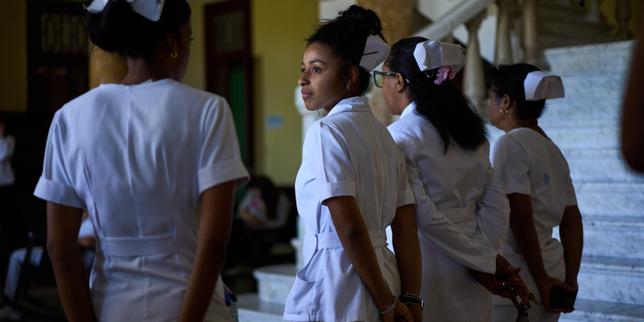
For years, the "Cuban Medical Model" was the crown jewel of socialist PR. The WHO frequently lauded their doctor-to-patient ratios. But as someone who has tracked the flow of "medical internationalism," I can tell you the numbers are a shell game.
Cuba exports its best doctors as a commodity. It’s their primary source of hard currency. While the UN frets over the lack of supplies in local clinics, the government is busy "renting" its personnel to foreign nations.
The result? A hollowed-out domestic system.
- The Supply Gap: Doctors are forced to tell patients to bring their own sheets, their own lightbulbs, and their own syringes to the hospital.
- The Dual System: There is a world for the elite and the tourists (Clinica Cira García) and a world for the citizens. The former has the latest tech; the latter has crumbling walls and a shortage of basic saline.
When the UN proposes an emergency plan for "health and nutrition," they are effectively subsidizing the state’s decision to prioritize medical exports over domestic stability.
The Logistics of Failure
The UN plan asks for millions to "restore basic services." Let's look at the logistics. In a country where the state controls every port, every truck, and every warehouse, aid becomes a political tool.
I’ve seen how this plays out in closed economies. "Emergency aid" arrives at the docks. The military-run conglomerate (GAESA) manages the logistics. The aid is then distributed through the Comités de Defensa de la Revolución (CDRs). If you aren't a "good" citizen, if you don't toe the party line, how fast do you think that aid package reaches your door?
Directing aid through official channels in Cuba doesn't bypass the problem; it fuels the machinery that created the problem.
The Wrong Question
People often ask: "How can we get more food and medicine to the Cuban people?"
That is the wrong question. It assumes the shortage is a supply chain issue. It isn't. The real question is: "Why is a fertile island with a highly educated population unable to feed itself or manufacture basic ibuprofen?"
The answer is the Internal Blockade.
- Agriculture: Farmers are forced to sell a massive percentage of their crops to the state (Acopio) at prices set by the government, often far below market value. This destroys the incentive to plant.
- Small Business: While the government recently "allowed" small and medium enterprises (SMEs), they are buried under a mountain of regulations designed to ensure they never grow large enough to challenge state monopolies.
The Risk of the "Humanitarian" Narrative
By framing this as a humanitarian crisis caused by external factors, the international community gives the Cuban leadership a "get out of jail free" card. It allows the administration to deflect from the fact that they have refused to implement the radical market reforms needed to make the country viable.
Vietnam did it. China did it. Cuba refuses.
Instead of demanding structural change, the WHO and UN offer "emergency plans" that act as a fiscal ventilator. It keeps the patient alive, but it does nothing to treat the underlying disease.
The Hard Truth for Investors and Observers
If you’re looking at Cuba as a "distressed asset" or a humanitarian cause, stop being sentimental.
- Debt is a black hole: Cuba stopped paying its Paris Club debt years ago. They are a sovereign credit risk of the highest order.
- Infrastructure is a liability: Any "reconstruction" will require billions, not millions. A $33 million UN plan is a rounding error in the face of the actual deficit.
The "nuance" the mainstream media misses is that the Cuban people are not victims of a drought or a sudden market crash. They are victims of a decades-long experiment in economic suppression that has finally run out of other people's money.
Stop calling for more "aid" and start calling for the removal of the internal restrictions that prevent Cubans from building their own future. Anything else is just financing the status quo.
Don't send a check. Demand a market.