The mechanical heartbeat of a primary aluminum smelter is relentless, unforgiving, and, as we just learned, remarkably fragile. When Emirates Global Aluminium (EGA) recently signaled that its main production site had sustained damage, the industry didn’t just blink; it started calculating the cost of a regional single-point-of-failure. This isn’t just about a broken potline or a transient technical glitch. It is a wake-up call regarding the sheer physical strain placed on massive industrial assets that have been pushed to their absolute thermal and electrical limits to satisfy a global market hungry for "green" metal.
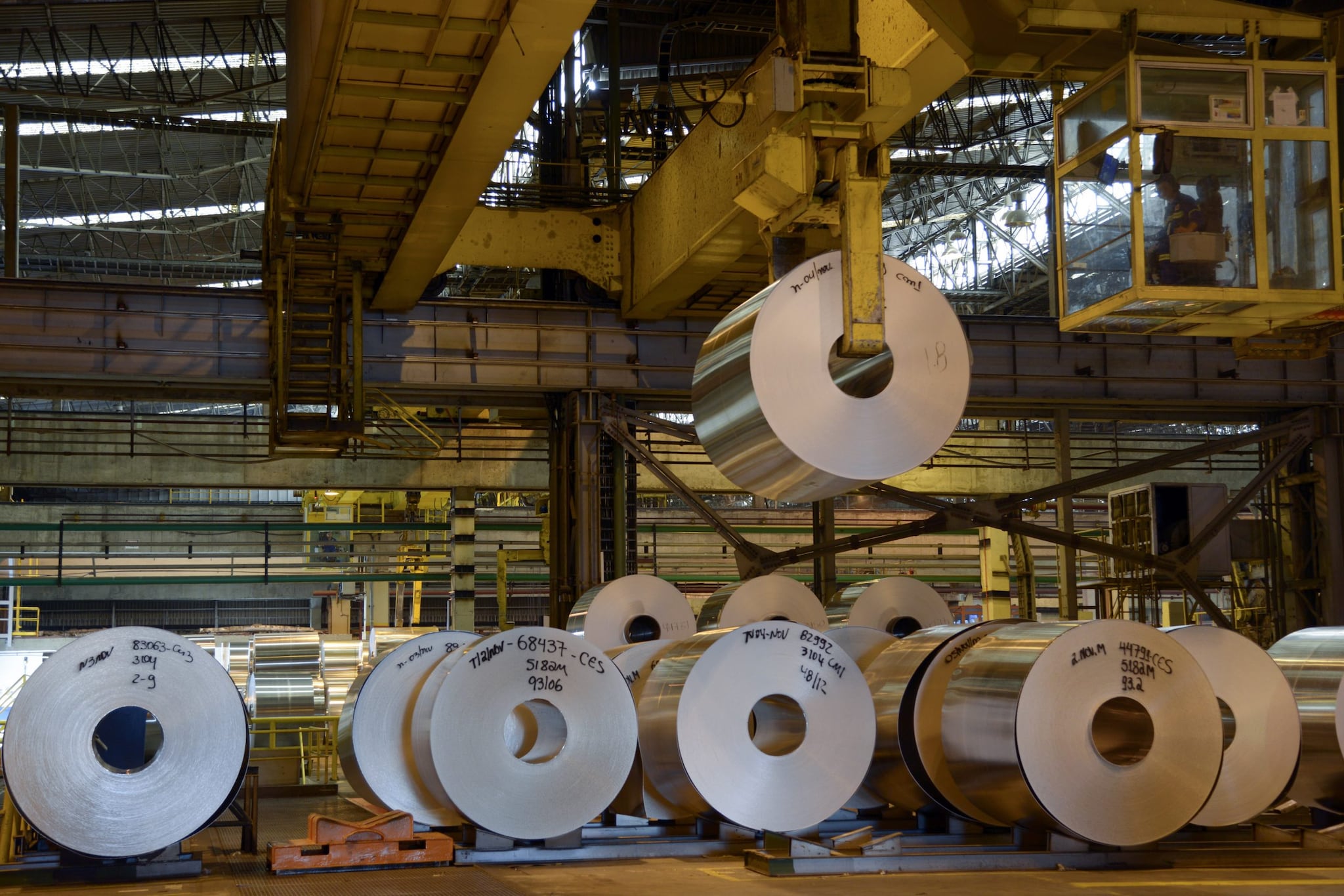
Aluminum smelting relies on the Hall-Héroult process, a method that has remained fundamentally unchanged for over a century but has been scaled to an almost terrifying degree in the Gulf. At its core, the process involves dissolving alumina in a molten bath of cryolite and zapping it with hundreds of thousands of amperes. If the balance of heat and chemistry shifts by even a few percentage points, the molten metal can eat through the refractory lining of the pots. Once the containment fails, the damage is rarely contained to a single unit. It cascades.
The disruption at a facility of this magnitude sends immediate ripples through the London Metal Exchange (LME). Because the Middle East now accounts for nearly 10% of global aluminum production, any hiccup in the desert is felt in European automotive plants and American aerospace hubs. But the real story isn't the temporary dip in tonnage. The real story is the aging infrastructure of the first-generation mega-smelters and the increasing difficulty of maintaining them under the current global economic pressure.
The High Price of Perpetual Motion
In the world of heavy industry, there is no such thing as a "pause" button. An aluminum smelter must run 24 hours a day, 365 days a year. If the power stays off for more than a few hours, the molten electrolyte freezes into a solid block of "bath" and metal, effectively turning a multi-billion dollar asset into a collection of very expensive paperweights. This inherent rigidity makes any mechanical failure or structural damage an existential threat to the quarterly earnings report.
Recent reports suggest that the damage at major regional sites often stems from the push for higher amperage. In the industry, we call this "creeping." Engineers try to squeeze 5% or 10% more output from an existing line by increasing the electrical current. While this boosts production in the short term, it creates intense localized heat that the original cooling systems were never designed to handle.
The physics are simple and brutal. Higher current leads to higher magnetic fields. These fields cause the molten aluminum to swirl and heave inside the pot. This turbulence thins the protective "ledge"—a frozen layer of electrolyte that protects the brickwork from the liquid metal. When that ledge disappears, the pot is essentially a ticking time bomb. The metal eventually finds a path to the steel shell, and the result is a breakout that can melt through concrete and electrical busbars in seconds.
Global Supply Chains and the Single Point of Failure
Western buyers have increasingly turned to Middle Eastern suppliers to decouple from Russian metal and move away from carbon-heavy Chinese coal-based production. This shift has turned the UAE, Bahrain, and Qatar into the new backbones of the global supply chain. However, this reliance creates a dangerous concentration of risk.
If a major smelter like Al Taweelah or Jebel Ali faces significant downtime, there is no "spare" capacity elsewhere in the world to pick up the slack. Most European smelters have been shuttered or curtailed due to astronomical energy costs. The U.S. domestic industry is a shadow of its former self. We have effectively placed the world's aluminum eggs in a very small number of very hot baskets.
- The Energy Nexus: Smelters in the Middle East thrive on cheap natural gas. If the gas turbines fail or the electrical grid fluctuates, the smelter is the first to suffer.
- The Logistics Trap: These facilities are integrated into massive port complexes. Damage to the smelter often clogs the entire logistical vein of the industrial zone.
- The Talent Gap: As the original engineers who built these sites retire, the specialized knowledge required to "save" a dying potline is becoming increasingly scarce.
The Myth of Indestructible Infrastructure
There is a prevailing sentiment in the markets that these Gulf giants are invincible because they are backed by sovereign wealth and state-of-the-art technology. This is a fallacy. No amount of money can override the laws of thermodynamics. When a potline is damaged, the "re-lining" process is a grueling, manual task that takes months. It requires chipping out thousands of tons of hardened carbon and cryolite, often in temperatures that exceed 50°C (122°F).
We are seeing a trend where maintenance cycles are being extended to keep up with record demand. In the past, a pot might be taken offline for scheduled maintenance every five to seven years. Now, operators are pushing them to eight or nine. This isn't efficiency; it's gambling. The "damage" being reported now is likely the first sign that the gamble is starting to fail.
Furthermore, the transition to "Green Aluminum" adds another layer of complexity. To reduce the carbon footprint, smelters are integrating renewable energy sources like solar. But solar is intermittent. Mixing the steady, massive load of a smelter with the fluctuating output of a solar farm requires complex battery storage or rapid-response gas peaker plants. Every time the power source switches or modulates, the thermal equilibrium of the pots is disturbed. These micro-fluctuations contribute to the long-term degradation of the cells, leading to the "unexpected" damage we see today.
Market Volatility and the Premium Gap
When news of damage breaks, the immediate reaction is a spike in the LME base price. But the real pain is in the "premiums"—the extra fee buyers pay to actually get the metal delivered to their door. Regional premiums for high-quality billet and slab are already under pressure.
If the Middle East's top producers cannot guarantee a steady flow of metal, industrial consumers in Germany and Japan will have to look elsewhere. The problem? There is nowhere else to look. This lack of alternatives gives the producers immense leverage, but it also makes the global economy incredibly vulnerable to a single faulty transformer or a ruptured cooling pipe in a desert industrial park.
The Hidden Cost of Scale
The sheer scale of these operations is their greatest strength and their greatest weakness. A modern "mega-pot" can produce over three tons of aluminum per day. If a line consists of 400 pots, and 10% are damaged, that is a loss of 120 tons of production every single day. Over the months it takes to repair them, the losses run into the tens of millions, not including the cost of the repairs themselves.
Industry analysts often overlook the "ancillary" damage. When a smelter runs hot or suffers a partial shutdown, the quality of the aluminum produced by the remaining pots often drops. Impurities like iron and silicon creep into the mix, making the metal unsuitable for high-end aerospace or electronics applications. The "damage" isn't just a hole in a pot; it's a stain on the brand's reputation for consistency.
Reframing the Industrial Narrative
The narrative from the companies involved is always one of "minimal impact" and "swift recovery." As investigative observers, we must look at the data. Watch the shipping manifests. Watch the spot market premiums in Rotterdam and Singapore. If the recovery were truly swift, the premiums wouldn't be climbing.
The reality is that we are entering an era of industrial fragility. The easy gains from scaling up have been realized. Now, we are left with the hard work of maintaining these gargantuan machines in an environment of fluctuating energy prices and increasing climate mandates. The damage reported today is not an isolated incident. It is a symptom of an industry operating at the very edge of what physics and human endurance allow.
Investors and stakeholders need to stop asking when the repairs will be finished and start asking how much "buffer" is left in the system. If the answer is "none," then the next mechanical failure won't just be a news headline—it will be a global supply chain catastrophe. The focus must shift from pure output to structural resilience, even if that means a lower "nameplate" capacity on the brochures.
Ask the procurement officers at the major automakers how they feel about the "minimal impact" of these outages. They aren't looking at the press releases; they are looking at their empty warehouses and the rising costs of their raw materials. The gloss of the Middle Eastern aluminum miracle is showing its first real scratches, and they run deep into the carbon-lined heart of the industry.
Check the secondary market for scrap aluminum. When primary production falters, the "remelt" business explodes. This is where the real movement is happening right now.