The unified front projected by the Gulf Cooperation Council is thinning. While the world watches high-profile summits and handshakes, the internal machinery of the Gulf is grinding against a new reality of fierce economic competition and diverging national interests. The "Rifts in the Gulf" are no longer about old diplomatic grievances or border disputes; they are about the desperate, high-stakes race to survive in a post-oil economy. Saudi Arabia and the United Arab Emirates are locked in a silent struggle for regional dominance that dictates everything from corporate headquarters locations to the price of crude.
This is not a localized spat. The tension between Riyadh and Abu Dhabi represents a fundamental shift in how the Middle East operates. For decades, the GCC functioned as a loose defensive and economic bloc with a "live and let live" approach to business. That era is over. Now, we see a winner-take-all scramble where one kingdom’s gain is often another’s direct loss.
The Death of the Unified Market
The illusion of a seamless Gulf market fell apart the moment Saudi Arabia issued its ultimatum to multinational corporations. By decreeing that companies must move their regional headquarters to Riyadh or lose out on lucrative government contracts, the Kingdom fired a direct shot at Dubai’s long-standing status as the Middle East’s primary business hub.
It was a bold, aggressive move. It signaled that the Saudi leadership is no longer content to be the region’s "big brother" in politics while playing second fiddle in commerce.
This "Headquarters Program" is a blunt instrument. It forces a choice. For a global tech giant or a major engineering firm, the decision isn't based on where the best coffee is served; it is based on where the capital is being deployed. Saudi Arabia, with its trillion-dollar "Giga-projects" like NEOM, holds the purse strings. Abu Dhabi and Dubai, meanwhile, rely on their established infrastructure, legal frameworks, and lifestyle perks.
The friction is visible in the data. Trade between the neighbors has faced sudden hurdles, with Saudi Arabia intermittently tightening customs rules on goods produced in "free zones"—a direct jab at the UAE’s economic model.
The OPEC Pressure Cooker
Nowhere is the friction more dangerous than within the halls of OPEC. The UAE has spent billions of dollars increasing its oil production capacity. They want to sell more oil now, while the demand remains high, to fund their own transition into technology and tourism.
Saudi Arabia, conversely, needs high prices to sustain its massive domestic spending. They want production cuts.
This creates a structural impasse. When the UAE publicly challenged Saudi-led production quotas in recent years, it wasn't just a technical disagreement. It was a declaration of sovereign priority over collective stability. The risk of the UAE leaving OPEC is a ghost that haunts every meeting in Vienna. If the Emirates were to go rogue, the world’s most powerful oil cartel would lose its grip on global energy markets, leading to price volatility that would shatter the budget projections of every nation in the peninsula.
Logistics and the Battle for the Sea
For years, Jebel Ali in Dubai was the undisputed gateway to the Middle East. That dominance is being challenged by a massive expansion of Saudi port capacity on the Red Sea. The Saudi "Global Supply Chain Resilience Initiative" aims to bypass the Persian Gulf entirely for many shipments, moving goods through the Kingdom's western coast to reach European markets faster.
The Rail Network Dilemma
The dream of a GCC-wide railway has stalled for years, partly due to technical hurdles, but mostly due to trust. Building a rail line that connects every major port and city in the region requires a level of data sharing and sovereign cooperation that simply does not exist right now.
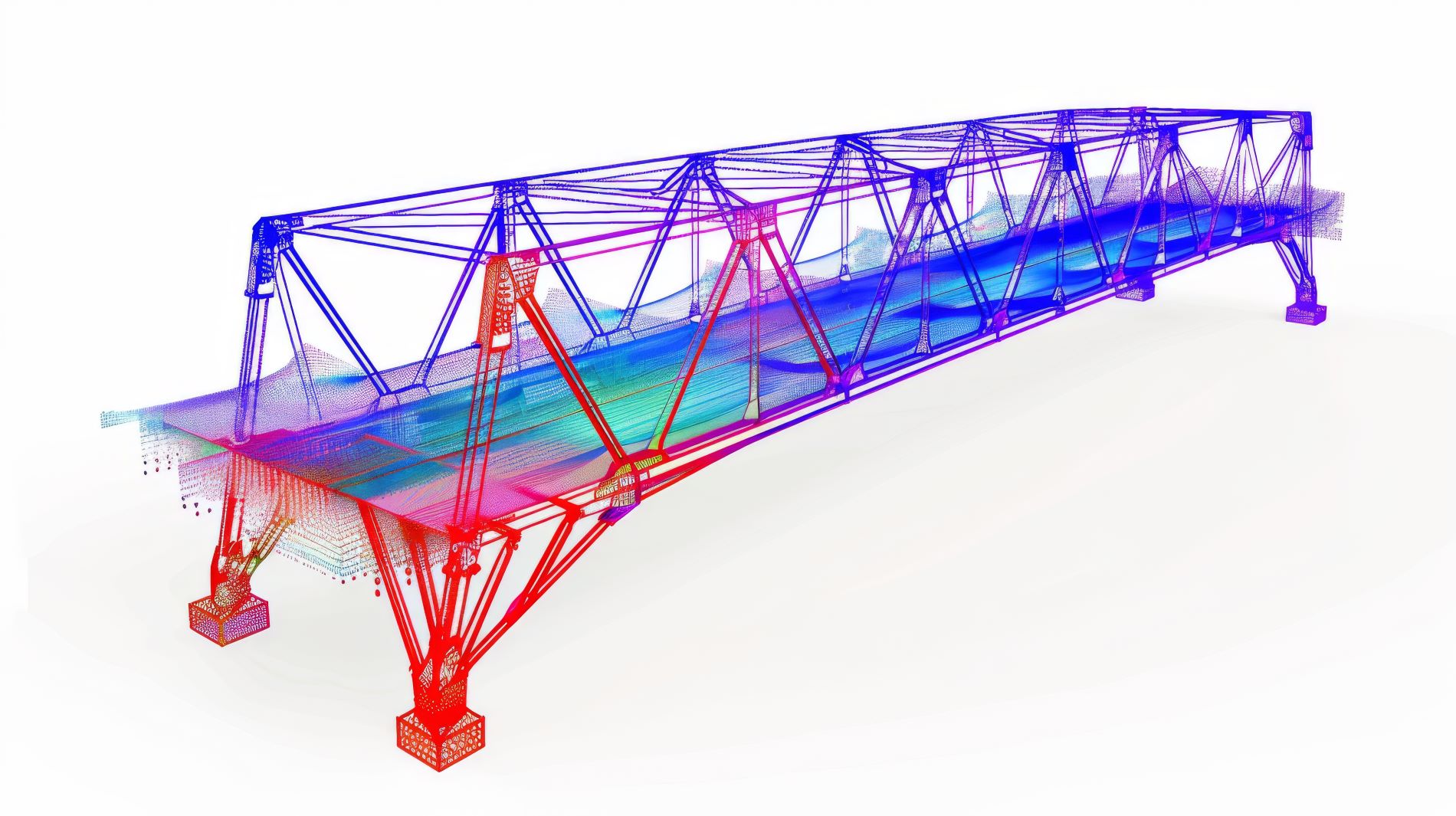
Instead of a unified network, we see competing projects. The UAE has pushed ahead with its own domestic rail, Etihad Rail, focusing on internal logistics. Saudi Arabia is building its own north-south lines. Without a bridge of trust to connect these tracks, the dream of a "Middle Eastern EU" remains a collection of expensive, disconnected segments of steel.
The Talent War
Money is the easy part. Talent is the bottleneck. The real rift is being fought in the hiring markets of London, New York, and Singapore.
Both nations are desperate for the same pool of experts:
- AI researchers to power their "Smart City" ambitions.
- Renewable energy engineers to build massive solar arrays.
- Fintech developers to modernize their banking sectors.
Saudi Arabia is using its "Vision 2030" branding to attract youth and ambition, offering a sense of "building the future from scratch." The UAE counters with its "Golden Visa" program, offering long-term residency and a more liberal social environment.
This competition drives up the cost of doing business for everyone. When two neighboring states are outbidding each other for the same consultancy firms and the same executive talent, the resulting inflation in labor costs threatens the viability of the very projects they are trying to build.
Divergent Foreign Policies
While the economic rivalry is the engine, foreign policy remains the steering wheel. The two powers no longer see the world through the same lens.
Consider the approach to regional hotspots. Whether it is the civil war in Sudan, the political vacuum in Libya, or the thorny issue of normalizing ties with Israel, Riyadh and Abu Dhabi are often backing different horses or moving at vastly different speeds. The UAE was the first mover on the Abraham Accords, fundamentally changing the regional security architecture. Saudi Arabia, holding the keys to the Islamic world's holiest sites, must move with more caution, balancing modernization with its role as a religious leader.
This creates a "security rift." When the two most powerful military and economic forces in the region cannot agree on a unified stance toward Iran or Turkey, it leaves a power vacuum that external players—Russia, China, and the United States—are more than happy to fill.
The China Factor
Beijing sees the rifts in the Gulf as a massive opportunity. By acting as a neutral broker—most notably in the Saudi-Iran rapprochement—China has positioned itself as the partner of choice for a region that is increasingly wary of American vacillation.
Both the UAE and Saudi Arabia are deepening their ties with China, not just in oil sales, but in telecommunications and defense. The 5G infrastructure in the Gulf is largely built on Chinese hardware, a fact that causes constant friction with Washington. However, the Gulf states are no longer interested in being "exclusive" partners. They are playing the field, and their internal competition for Chinese investment is only widening the distance between them.
The Sovereign Wealth Fund Arms Race
The scale of the capital involved is staggering. Between the Public Investment Fund (PIF) of Saudi Arabia and the various funds in Abu Dhabi (ADIA, Mubadala, ADQ), we are looking at trillions of dollars in assets.
In the past, these funds largely invested in Western trophy assets—Harrods, soccer teams, and Silicon Valley startups. Today, they are being used as domestic development engines. This shift from "passive investor" to "active industrialist" means the funds are now competing for the same global partnerships.
If a major EV manufacturer wants to build a factory in the Middle East, they are currently being pitched by three or four different Gulf entities, each offering better tax breaks and subsidies than the last. It is a race to the bottom in terms of incentives, which may benefit the foreign corporations but drains the collective coffers of the GCC.
Hydrogen and the Green Energy Split
The future of energy is the latest battleground. Both nations want to be the world's leading exporter of Blue and Green Hydrogen.
- Saudi Arabia has the sheer land mass for enormous solar farms to produce Green Hydrogen at scale.
- The UAE has the technological lead and the established shipping infrastructure to dominate the supply chain.
Instead of cooperating to create a "Hydrogen OPEC" that could set global standards and prices, they are developing separate certifications, separate pipelines, and separate trade agreements with Europe and Japan. This lack of standardization is a massive hurdle for the global energy transition. It forces buyers to choose a side, creating a bifurcated market that is less efficient for everyone involved.
The Myth of De-escalation
It is a mistake to view the current "quiet" periods as a sign that the rifts are healing. The recent de-escalation of the Qatar blockade was not a return to the status quo; it was a pragmatic realization that the cost of open hostility was too high during a global pandemic and an energy transition.
The underlying issues—the competition for regional supremacy and the struggle for economic survival—have not gone away. They have simply moved into the boardroom and the trade ministry. The "Cold War" of the Gulf is now being fought through regulatory changes, visa policies, and port fees.
The Middle Management Bottleneck
For all the talk of grand visions and trillion-dollar cities, the implementation of these competing strategies is often hamstrung by a lack of middle management. The Gulf has a "top-heavy" leadership structure. The Kings and Princes can sign decrees, but the bureaucrats on the ground are often working at cross-purposes.
A business trying to operate across the Saudi-Emirati border today faces a nightmare of conflicting regulations. The "Unified Customs Union" is a union in name only. The "Common Currency" project is dead in the water. For a small or medium-sized enterprise, the rift is not a geopolitical abstraction; it is a stack of paperwork and a series of "system errors" at the border crossing.
The Burden of Choice
International investors are starting to feel the fatigue. For years, the Gulf was a place where you could do business with everyone simultaneously. Now, you have to pick a side.
If you take a massive investment from the PIF, you might find your path blocked in certain Emirati sectors. If you base your regional tech hub in Abu Dhabi, you may find yourself excluded from the next round of Saudi infrastructure tenders. This "siloing" of the Gulf economy is the exact opposite of what the region needs to compete with the likes of India or China.
The rift is no longer a crack; it is a canyon. Every new policy, every new "City of the Future," and every new oil production target is another brick in the wall between these former allies. The Gulf is not becoming more integrated; it is becoming more fragmented, and the cost of that fragmentation will be paid by anyone who thinks they can still navigate these waters without picking a side.
The era of the "Gulf Bloc" is over, replaced by an era of sharp-elbowed nationalism. The winner of this contest will dictate the economic future of the Middle East, but the process of getting there is going to be messy, expensive, and deeply divisive for a region that can ill afford more instability.
Sovereignty is a jealous master. In the race to 2030 and beyond, the Gulf states have decided that their neighbors' success is no longer a prerequisite for their own. They are moving fast, and they are moving alone.