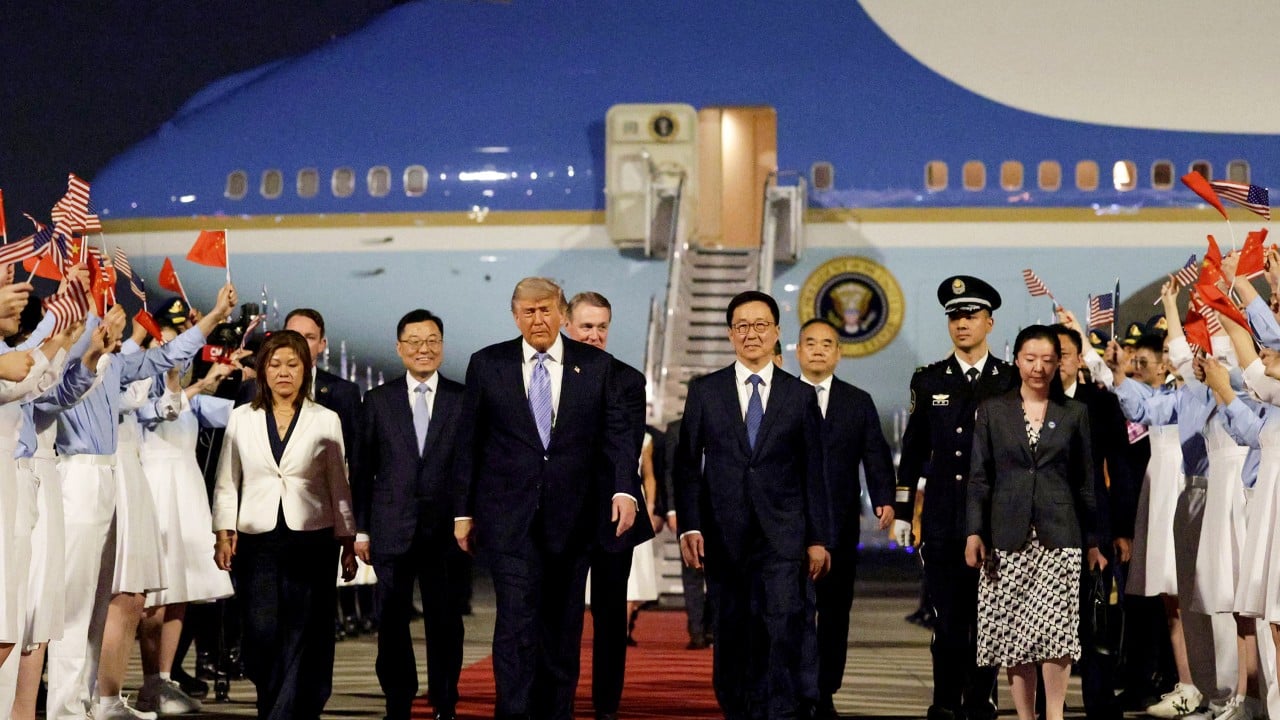
Donald Trump has touched down in Beijing, flanked by a massive delegation of American chief executives, signaling a shift in the way Washington handles its most complex economic rival. This is not a standard state visit. While the cameras focus on the formal greetings at the Great Hall of the People, the real story lies in the specific composition of the executive heavyweights trailing the President. They are there because the traditional diplomatic channels have frayed. The White House is now betting that raw corporate interests can achieve what years of polite policy discourse could not.
The presence of tech titans and energy moguls indicates that the administration is looking for immediate, tangible wins to show voters back home. This is about trade deficits, market access, and the forced transfer of intellectual property. For the CEOs in the room, the stakes are existential. They are walking a tightrope between the massive growth potential of the Chinese market and the increasing pressure from Washington to repatriate supply chains.
The Strategy of Direct Engagement
For decades, the United States followed a predictable script when dealing with China. It involved slow-moving working groups and incremental changes. That era has ended. By bringing the leaders of the largest American corporations directly into the room with Xi Jinping’s top lieutenants, the administration is attempting to bypass the bureaucracy.
This approach turns private companies into instruments of national policy. If a major tech firm secures a deal to build a data center without being forced to hand over its source code, it serves as a proof of concept for the President’s "America First" agenda. However, this tactic carries immense risk. If these deals are purely transactional and fail to address the underlying structural issues—like state subsidies for Chinese domestic firms—the long-term imbalance will only grow.
The Chinese leadership understands this dynamic perfectly. They are masters of the "buying spree" diplomacy, where they announce multi-billion dollar aircraft or energy purchases during state visits to cool political tensions. The question for this summit is whether the American side will settle for these one-time orders or push for a fundamental change in how Beijing treats foreign competition.
Intellectual Property as the New Front Line
The biggest hurdle in the room isn't the price of soybeans or the value of the yuan. It is the systematic acquisition of American technology. Many of the executives on this trip represent companies that have spent billions on research and development, only to see their products cloned by state-backed Chinese entities within years of entering the market.
For a Silicon Valley CEO, the choice is brutal. You can ignore China and lose out on 1.4 billion customers, or you can enter the market and risk losing your most valuable assets. The administration wants to break this cycle. They are pushing for a legal framework that protects American patents with the same rigor found in Western courts.
It is a tall order. The Chinese economic model relies heavily on "leapfrogging" through the acquisition of foreign expertise. Abandoning that strategy would require a total overhaul of their industrial policy. Most analysts on the ground in Beijing doubt that such a shift will happen because of a single visit, regardless of how many CEOs are present.
The Energy Equation
While tech dominates the headlines, energy is the quiet engine of this summit. The delegation includes significant representation from the oil and gas sector. China is the world's largest energy importer, and the United States has become a powerhouse exporter of liquefied natural gas (LNG).
A massive, long-term energy deal serves both parties. For the U.S., it narrows the trade gap significantly and creates jobs in the Gulf Coast. For China, it provides a cleaner alternative to coal and diversifies their supply away from the volatile Middle East. This is the "easy" part of the negotiation. It allows both leaders to stand in front of a podium and announce a massive dollar figure for the history books, even if the more difficult issues of cybersecurity and market equity remain unresolved.
The Silicon Valley Dilemma
The relationship between Washington and the tech sector has been strained, yet here they are, acting as the President's frontline negotiators. This shows that when it comes to China, the interests of the government and the boardroom have finally aligned.
Tech companies are no longer just looking for cheap labor. They are looking for a level playing floor. They are tired of "joint ventures" that are little more than sophisticated shells for technology theft. By joining this delegation, these firms are signaling to Beijing that the days of picking off individual companies one by one are over. They are now moving as a bloc, backed by the full weight of the executive branch.
Cultural Optics and Hard Power
The pageantry of a Beijing state visit is designed to project stability and strength. Every handshake and seating arrangement is choreographed to the second. But beneath the surface, there is a clear sense of friction. The American delegation is pushing for "reciprocity"—the idea that Chinese companies should only have the same level of access to the U.S. market that American companies have in China.
Currently, that balance is heavily skewed. Chinese firms can buy American real estate, invest in startups, and list on U.S. stock exchanges with relatively few hurdles. American firms in China face a maze of "negative lists," licensing delays, and security reviews.
If the President and his team of aides can move the needle on this single issue, the trip will be hailed as a success by the business community. If they return with nothing but a few high-profile purchase orders, the skepticism regarding the administration’s trade policy will intensify.
The Missing Pieces of the Puzzle
Observers should look closely at who was not invited on this trip. The absence of certain financial institutions and human rights advocates suggests a very narrow, commerce-driven focus. This is a deal-making mission, plain and simple.
The risk of this narrow focus is that it ignores the broader geopolitical tensions in the South China Sea and the growing rivalry in artificial intelligence. You can sign a contract to sell more planes, but that doesn't change the fact that both nations are locked in a race for technological supremacy that will define the next century.
American aides have been working around the clock to ensure that the "memorandums of understanding" signed during this trip are more than just pieces of paper. In the past, these agreements have often evaporated once the Air Force One wheels leave the tarmac.
The Implementation Gap
Success will be measured in the months following the summit, not the hours. The real test is whether the American executives find fewer "invisible walls" when they try to expand their operations in Shanghai or Shenzhen next year.
Beijing has a history of promising reform while simultaneously tightening internal controls. They might open up the financial sector while simultaneously passing new "national security" laws that make it impossible for a foreign bank to operate. The veterans of the industry know this game. They are watching to see if the administration has the stamina to follow through on the enforcement phase of these agreements.
The Era of the CEO Diplomat
We are seeing a new form of statecraft where the CEO is as important as the diplomat. This reflects a world where economic power is the primary tool of influence. By placing these business leaders at the center of the Xi summit, the White House is acknowledging that the private sector is the most effective lever the United States has.
The danger is that this merges corporate interests with national security in a way that is difficult to untangle. If a deal benefits a specific company but hurts the broader strategic position of the U.S., who wins? The administration argues that what is good for American business is inherently good for the American worker, but the reality is often more nuanced.
For now, the focus remains on the immediate optics of the Beijing meetings. The red carpet is out, the banquets are prepared, and the billions of dollars in potential deals are on the table. The titans of industry are in their seats, waiting to see if they are guests of honor or merely props in a larger geopolitical drama.
The results of this summit will dictate the flow of global capital for the next decade. There is no going back to the old way of doing business. The confrontation is here, and it is being fought in the boardrooms of Beijing just as much as in the halls of Washington.
The true measure of this trip will not be found in the joint press statements. It will be found in the quarterly earnings reports of the companies that took the flight to Beijing, and whether they are allowed to keep the profits—and the technology—they create there. Don't watch the handshakes; watch the fine print of the trade data six months from now.