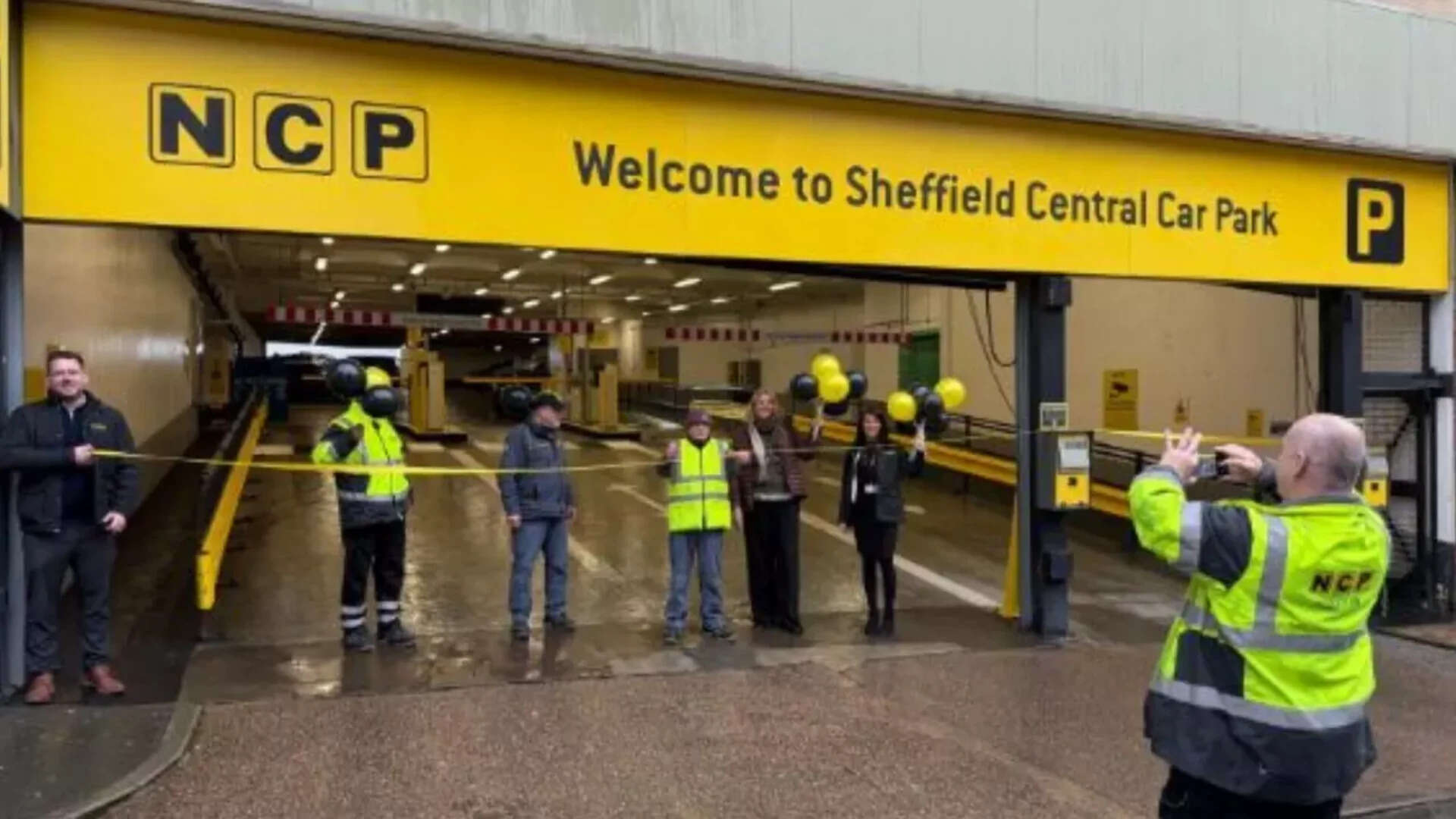
National Car Parks, the ubiquitous brand better known as NCP, has spent decades as a fixture of the British urban experience. For most drivers, the yellow-and-black signage represented an expensive but necessary evil. For the company’s creditors and the local councils that rely on its business rates, the recent slide into a restructuring plan—effectively a maneuver to avoid total insolvency—is a cold realization of how quickly a "license to print money" can turn into a liability.
The downfall of NCP is not merely a story of "netizens" complaining about high prices or dirty stairwells on social media. It is a structural failure at the intersection of private equity debt, shifting urban policy, and a post-pandemic reality that erased the traditional commuter. While the public reacts with a mix of schadenfreude and indifference, the internal mechanics of the company reveal a business model that was built for a world that no longer exists. NCP didn't just lose its customers; it lost its fundamental reason for being in the modern city center.
The Debt Burden That Suffocated Growth
To understand the current crisis, you have to look past the ticket machines and into the balance sheets. For years, NCP operated under a heavy shroud of debt. This wasn't accidental. Like many legacy British firms caught in the cycle of private equity ownership, the company was treated as a cash cow to be milked rather than an asset to be modernized.
When a company is loaded with interest payments, it loses the ability to pivot. While competitors were investing in electric vehicle (EV) charging infrastructure and frictionless, app-based entry systems, NCP was often struggling just to keep the lights on in its brutalist concrete blocks. The high prices that customers loathed weren't necessarily a sign of greed, but a desperate attempt to service the massive debt piles accrued through various changes in ownership, including its time under 3i and later the Japanese giant Park24 alongside the Development Bank of Japan.
When the pandemic hit, the cash flow stopped, but the debt didn't. Most businesses can survive a temporary dip, but NCP was already running on thin margins due to its financial structure. The "printing money" era ended when the cost of maintaining the printers exceeded the value of the currency they produced.
The Urban War on the Internal Combustion Engine
While the internal finances were rotting, the external environment became hostile. Local authorities across the UK have spent the last decade actively trying to price cars out of city centers. Through a combination of Clean Air Zones (CAZ), Low Emission Zones (LEZ), and the removal of street parking to make way for cycle lanes, the very act of driving into a city has become a gauntlet.
NCP’s primary assets—large, multi-story car parks—are situated in the exact locations that councils now want to pedestrianize. This creates a bizarre paradox. The councils need the business rates generated by these massive sites, yet their transport policies are designed to ensure those sites stay empty.
- Clean Air Zones: Increased the cost for older vehicles to even reach a car park.
- Public Transport Subsidies: While inconsistent, the long-term goal of "active travel" directly cannibalizes the parking market.
- Remote Work: The five-day-a-week commuter, once the bedrock of NCP’s revenue, has been replaced by the hybrid worker who only pays for parking twice a week.
The math is simple and brutal. If a car park requires 70% occupancy to break even and the city’s traffic policy caps potential demand at 50%, the asset is dead. NCP is currently holding a portfolio of dead assets.
The Commercial Rent Trap
The most immediate catalyst for the restructuring was the relationship between NCP and its landlords. NCP doesn't own all the land its car parks sit on. Many are held on long-term leases with fixed upward rent reviews.
During the boom years, these leases were seen as safe bets. In a declining market, they became a noose. The company found itself locked into paying 2015-level rents with 2024-level revenues. When the company entered its restructuring plan, the primary goal was to force landlords to accept lower rents.
Landlords, including major pension funds and local authorities, faced a grim choice: accept a haircut on the rent or take back a specialized concrete building that is incredibly expensive to demolish and even harder to repurpose. You cannot easily turn a multi-story car park into luxury flats; the floor-to-ceiling heights are wrong, the drainage is non-existent, and the structural integrity is tied to its specific use. This "asset-specific" trap gave NCP a sliver of leverage, but it destroyed its reputation as a stable tenant.
Failure to Innovate in a Frictionless World
Go to a modern shopping center or a private development today, and you will likely see ANPR (Automatic Number Plate Recognition) systems that charge your card automatically as you leave. The experience is silent and invisible.
Compare that to the legacy NCP experience:
- Stopping at a barrier that may or may not read your plate.
- Searching for a machine that may or may not accept your crumpled five-pound note.
- Dealing with a touchscreen that is unresponsive in the rain.
NCP’s late adoption of seamless technology allowed smaller, more agile operators to swoop in. Companies like JustPark or YourParkingSpace began turning private driveways and small commercial lots into a distributed network of parking that bypassed the need for massive, crumbling infrastructure. NCP was trying to defend a fortress while the enemy was already inside the walls using a smartphone app.
The Social Media Autopsy
The reaction from the public—the "netizens" the competitor article focused on—is more than just noise. It is a reflection of a complete brand divorce. There is no loyalty to a parking brand. When prices reached £30 or £40 for a few hours in London or Manchester, the brand became synonymous with exploitation.
This reputation damage has practical consequences. When a brand is hated, it finds no allies in the political sphere. When NCP asked for help or sought favorable terms during the pandemic, there was no public groundswell of support. No one "saves" a car park company. This lack of social capital made it easier for councils to push through anti-car measures without worrying about the impact on the town's largest parking provider.
A Ghost in the City Layout
What happens next isn't the total disappearance of NCP, but its transformation into a much smaller, quieter entity. The restructuring plan is a survival mechanism, not a growth strategy. We are likely to see the abandonment of the most problematic sites, leaving city centers with "ghost" car parks—vast, empty structures that represent a failed era of urban planning.
The lesson for the wider business community is that being a "giant" in a niche industry offers no protection when the niche itself begins to shrink. The car is being phased out of the British city center, and the infrastructure built to house it is the first thing to crumble. NCP didn't just fall; it was pushed by the changing tides of how we live, work, and move.
Property developers are now eyeing these sites for "urban logistics" hubs—delivery depots for the very vans that replaced the commuters' cars. If NCP cannot pivot to serve the delivery economy, it will simply be the landlord of a graveyard.
The future of the company depends on whether it can stop seeing itself as a parking provider and start seeing itself as a manager of urban space. This requires a level of agility and capital investment that its current debt-heavy structure might never allow. The yellow signs will remain for now, but they no longer signal a monopoly. They signal a warning about the fragility of legacy infrastructure in a digital, green-focused economy.
Don't look for a rebound. Look for a managed decline. The next time you drive past a half-empty NCP, recognize it for what it is: a monument to a 20th-century dream that ran out of fuel.