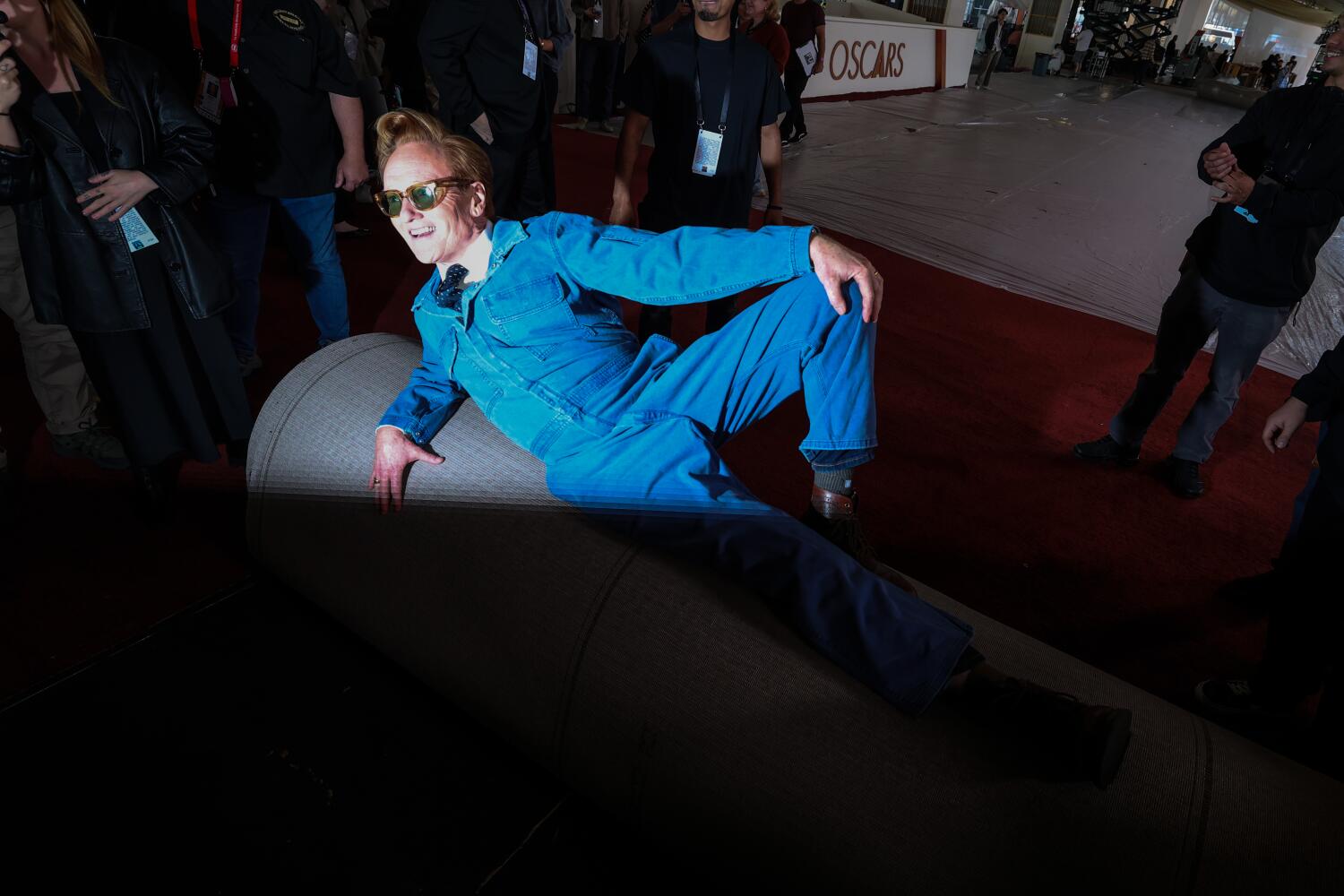
The Academy Awards have always been a weird, sparkly bubble, but the 2026 ceremony is walking straight into a buzzsaw. With the conflict in Iran dominating every news cycle and tensions at a breaking point, the choice of Conan O'Brien as host feels like a calculated gamble. People are wondering how you can hand out gold statues for best costume design while the world feels like it's falling apart. Conan knows this. He’s already signaled that he’s looking for the "right tone," which is code for trying not to get canceled or come across as a tone-deaf millionaire in a tuxedo.
Hosting the Oscars is usually a thankless job. You’re essentially a human shield for the Academy. If the show is boring, it’s your fault. If it’s too political, half the country hates you. If it’s not political enough, the other half thinks you’re complicit. Adding a hot war into that mix makes it a minefield. Conan’s approach isn’t about ignoring the elephant in the room. It’s about acknowledging it without letting it suck the oxygen out of the celebration of film.
Why Comedy is the Only Way Out
Comedy during a crisis is a high-wire act. If you go too dark, you lose the room. If you’re too goofy, you look out of touch. Conan has spent decades perfecting a specific brand of self-deprecating, slightly surreal humor that might actually work here. He isn't a "mean" comic like Ricky Gervais, and he isn't a purely political creature like Jon Stewart. He’s the guy who makes himself the butt of the joke to put everyone else at ease.
In a recent press talk, Conan touched on the reality of the Iran situation. He didn't offer a policy platform because he’s a late-night legend, not a diplomat. But he did emphasize that the show needs to provide a "respite" while staying grounded. This is the hardest needle to thread in show business. You have to honor the art without pretending the rest of the world doesn't exist.
Historical context matters here. Look back at the 2003 Oscars, which took place just days after the invasion of Iraq. Steve Martin was the host. The red carpet was scaled back. The glitz was dialed down. Martin managed to acknowledge the weight of the moment with a few somber words before pivoting back to the reason people tuned in. Conan is likely looking at that blueprint. He’s a student of comedy history. He knows that the audience at home is exhausted. They want to see their favorite stars, but they don't want to feel guilty for watching.
The Problem With Celebrity Activism on Stage
We’ve all seen it go wrong. A winner gets up, takes their trophy, and delivers a rambling three-minute lecture on geopolitics that they researched in the limo on the way over. It usually backfires. Instead of changing minds, it creates a viral moment of cringe that overshadows the work.
Conan’s job as the host is to manage these transitions. He has to be the guy who can follow a tearful political plea with a joke that resets the energy without being disrespectful. That’s a massive lift. If an actor goes off-script regarding Iran, the camera will immediately cut to Conan. His reaction will dictate whether the night stays on track or devolves into a series of awkward social media clips.
The "right tone" he keeps mentioning isn't a fixed point. It’s a sliding scale. He has to read the room in real-time. If the news from the front lines gets worse on the day of the show, the opening monologue he wrote on Tuesday becomes trash by Sunday. He’s likely working with a team of writers to create multiple paths for the evening. It’s a live-broadcast strategy that's more akin to a newsroom than a variety show.
Balancing the Glitz and the Gritty Reality
There’s a segment of the public that thinks the Oscars should be canceled during wartime. They see the jewelry and the gift bags as an insult to people suffering. But the film industry is also a massive employer and a major part of the global cultural conversation. Movies like The Zone of Interest or Oppenheimer in recent years show that film is often how we process war and tragedy.
Conan seems to understand that the Oscars can’t just be a party this year. It has to be a ceremony. There’s a difference. A party is about excess; a ceremony is about recognition. By focusing on the "tone," he’s signaling that the Academy is opting for the latter. Expect fewer over-the-top musical numbers and more focus on the craft.
I suspect we’ll see a very different Conan than the one who used to jump around on NBC. He’ll still be funny—he can’t help himself—but there will be a layer of gravity. He’s the elder statesman of comedy now. He has the gravitas to pull this off where a younger, less experienced host might crumble under the pressure of a million angry tweets.
What to Watch for on Oscar Night
When the show starts, pay attention to the first five minutes. That’s where the battle is won or lost. If Conan addresses the Iran war directly and honestly, he earns the right to be funny for the next three hours. If he ignores it until the middle of the show, he’ll look like he’s hiding.
- The Monologue: Look for how quickly he pivots from the world stage to the Dolby Theatre stage.
- The Fashion: Watch if celebrities use their platform for subtle protests, like pins or specific colors, which has become the standard move.
- The Energy: If the jokes feel forced, it’s because the tension in the building is too high.
If you're watching this year, don't expect a standard awards show. Expect a broadcast trying to justify its own existence in a world that feels increasingly volatile. Conan O'Brien didn't take this job because it was easy. He took it because he's one of the few people left who actually knows how to talk to a divided audience without making everything worse.
Check the live updates on the night of the ceremony to see how the telecast adapts to breaking news. The real test of Conan’s "right tone" will be his ability to handle the unexpected, whether it’s a protest on the street outside or a winner who goes rogue on the microphone. Stay tuned to the official Academy social channels for the most recent updates on the production's plan for the broadcast.