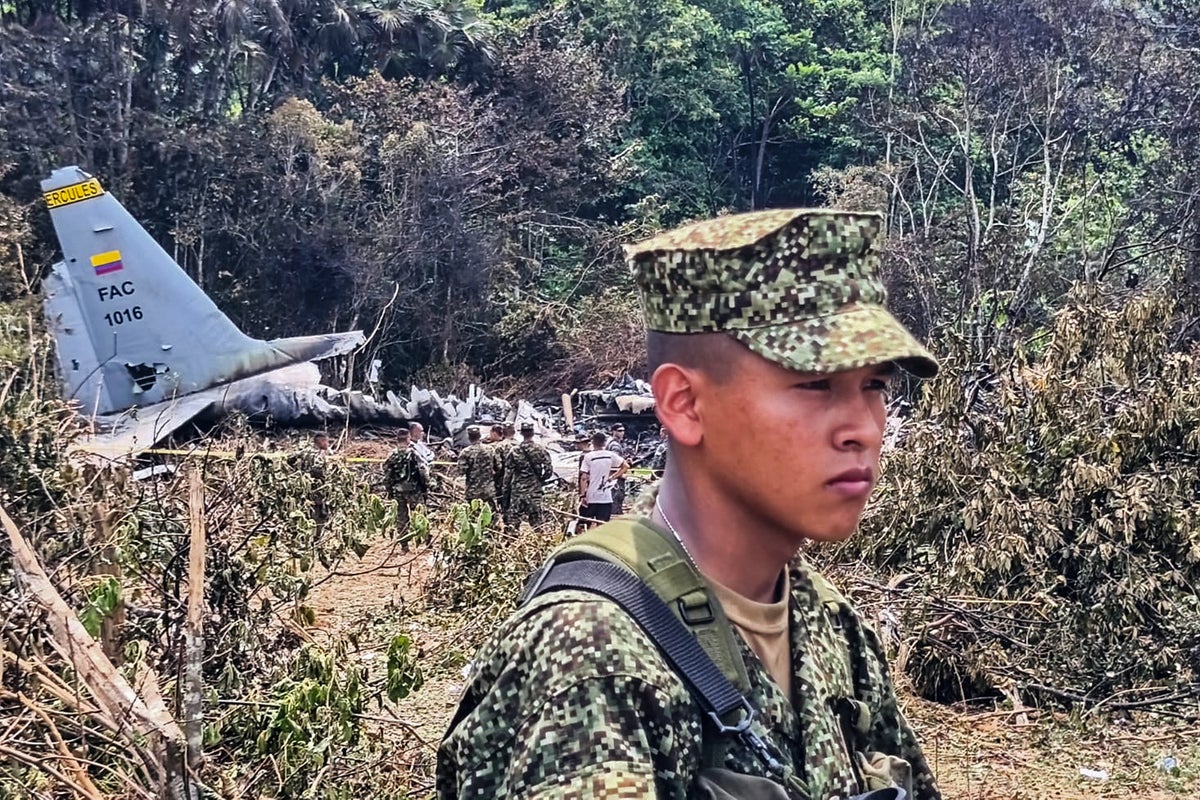
The crash of a Mi-17 helicopter in northern Colombia wasn't just a tragic accident. It was an alarm bell that the country’s leadership finally decided to hear. When nine soldiers lose their lives in a ball of fire while transporting supplies, you can’t just call it "bad luck" or "difficult terrain." President Gustavo Petro didn't hold back his fury this time. He pointed the finger directly at the practice of buying secondhand, aging military equipment that’s essentially reaching the end of its lifespan. It’s a systemic failure that treats the lives of service members as secondary to budget constraints.
Colombia's military has leaned on the Russian-made Mi-17 for decades. These birds are the workhorses of the jungle. They carry troops, move food, and perform rescues in places where roads don't exist. But the fleet is grounded, rotting, or falling out of the sky. The recent disaster in Bolivar department highlights a terrifying reality for the Colombian National Army. If the tools you give your soldiers are obsolete, you’re sending them on a suicide mission.
The Cost of Budgeting with Human Lives
Most people think military procurement is about getting the shiniest new toys. In reality, for countries like Colombia, it’s often about scavenging for what’s affordable. This "secondhand" mentality has created a graveyard of hardware that requires more maintenance than it provides utility. Petro’s criticism stems from a simple, brutal fact. You can't keep patching up 30-year-old airframes and expect them to perform like new in high-altitude, high-humidity environments.
The Mi-17 fleet specifically has become a diplomatic and logistical nightmare. Because of the ongoing conflict in Ukraine and international sanctions on Russia, getting genuine spare parts for these helicopters is nearly impossible. You can't just call up a supplier in Moscow and ask for a gearbox when the world has cut off the banking lines. This leaves the Colombian maintenance crews in a bind. Do they use third-party parts? Do they cannibalize other grounded helos? Either way, the risk profile spikes.
Soldiers know the risks of combat. They sign up for that. They don't sign up to die because a turbine gave out on a routine transport flight. The anger coming from the Casa de Nariño isn't just political theater; it’s a recognition that the military's operational capacity is hitting a wall. If the helicopters don't fly, the territory belongs to the cartels and the rebels.
Why Russian Maintenance Is a Non Starter Right Now
The geopolitical mess is a huge part of this story. Colombia has about 20 of these Mi-17s, but a significant portion of them are currently "cocooned" or in storage because they can't be serviced. The Russian company normally responsible for the heavy overhauls—National Aviation Service Company (NASSA)—is under heavy sanctions.
Petro has been vocal about not sending Russian equipment to Ukraine, despite pressure from the US. He wants to keep Colombian gear in Colombia. But keeping it there doesn't help if it can't leave the tarmac. This creates a massive hole in the country's "Total Peace" strategy. You can't enforce peace or provide humanitarian aid to remote villages if your transport fleet is a collection of static museum pieces.
The president's pivot toward criticizing secondhand purchases suggests a shift in how Colombia will buy arms in the future. We're likely looking at a move toward Western platforms—Black Hawks or similar utility aircraft—where the supply chain is stable and the tech is current. But that transition costs billions. It takes years. In the meantime, the pilots are the ones paying the price for decades of "frugal" decisions.
The Broken Logic of the Used Market
Buying used sounds smart on paper. It saves taxpayers money. It gets boots on the ground faster. But in aviation, "used" comes with a hidden tax. That tax is paid in flight hours lost to maintenance and, occasionally, in lives.
- Metal Fatigue: You can't see it with the naked eye, but decades of vibration and heat take a toll on an airframe.
- Outdated Avionics: Old Russian tech doesn't always play nice with modern navigation and safety systems.
- Sustainability: When the manufacturer is a pariah state, your warranty is worth zero.
Military experts have warned about this for years. The crash in Bolivar wasn't a freak occurrence; it was a statistical inevitability. When you fly old gear in high-stress environments long enough, the math eventually catches up to you.
Transitioning to a Modern Force
The path forward is expensive and politically sensitive. Petro has hinted at reinvesting in the Colombian aerospace industry to reduce dependence on foreign "hand-me-downs." The goal is to build a domestic capacity to maintain and perhaps even assemble components. It's an ambitious plan for a country struggling with internal strife and a volatile economy.
But the alternative is worse. Continuing to fly the Mi-17 fleet in its current state is a gamble that the Colombian government can no longer justify. We should expect to see more aggressive moves toward hardware from the United States or Europe. This isn't just about picking sides in a global power struggle. It’s about ensuring that when a Colombian soldier climbs into a cockpit, they have a reasonable expectation of landing in one piece.
The immediate priority has to be a rigorous audit of every single airframe in the inventory. If it doesn't meet the highest safety standards, it stays on the ground. Period. The military might lose some of its reach in the short term, but that’s better than losing more crews to preventable mechanical failures.
Anyone following Latin American defense trends needs to watch this space closely. The shift away from Russian hardware in Colombia marks a major turning point for regional security dynamics. It’s a hard lesson learned in the most painful way possible.
If you're tracking these developments, look for the upcoming budget proposals regarding the "Sikorsky" or "Airbus" contracts. Those will tell you if the government is serious about replacing the fleet or if this was just a moment of temporary outrage. The families of the fallen soldiers deserve more than just angry tweets; they deserve a military that values the lives of its members as much as the missions they fly. Watch for the grounding orders and the subsequent procurement bids—that's where the real change happens.