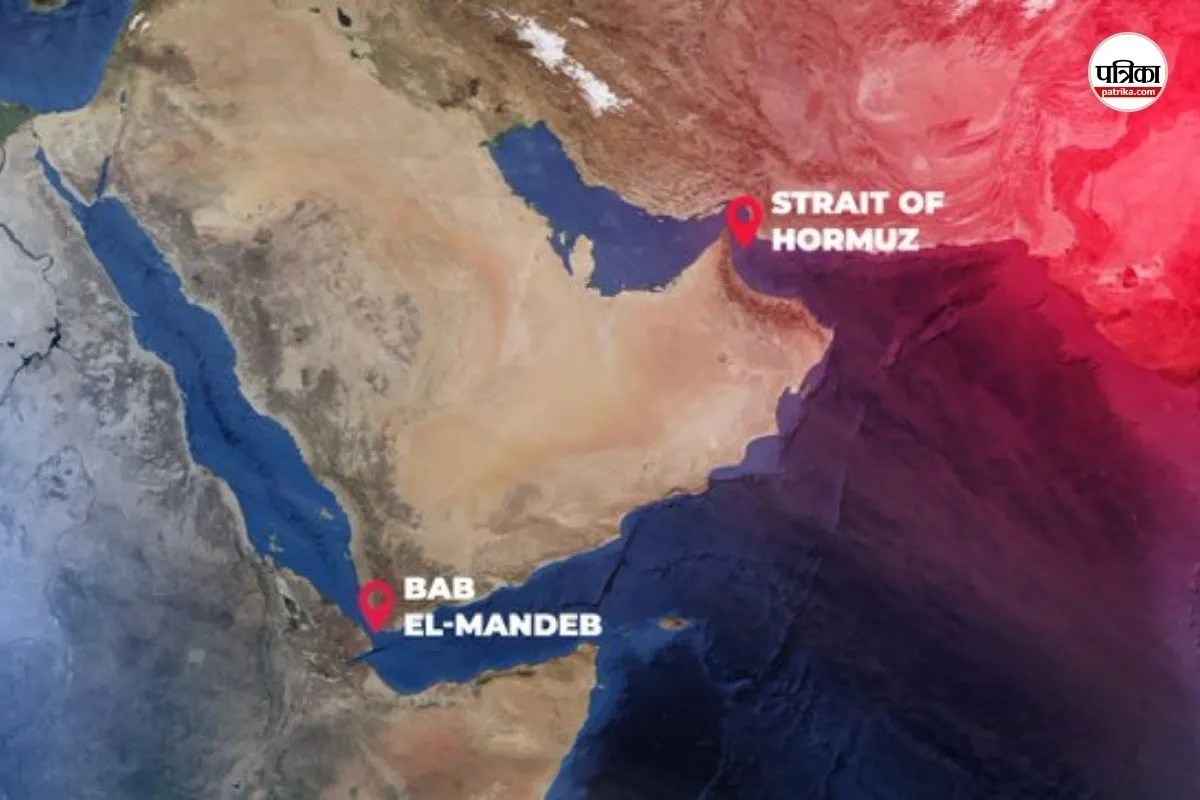
Global maritime trade operates on a principle of thin margins and precise timing, a system currently being dismantled by the strategic synchronization of two geographic bottlenecks: the Strait of Hormuz and the Bab el-Mandeb. While mainstream analysis treats these as isolated flashpoints, they function as a singular kinetic lever. If Iran or its proxies successfully constrict both simultaneously, the result is not a mere delay in shipping; it is the fundamental decoupling of Western markets from Eastern energy and manufacturing hubs.
The Mechanics of Maritime Asymmetry
The strategic value of the Bab el-Mandeb lies in its role as the Southern Gate to the Red Sea. It is a narrow passage—approximately 18 miles wide at its narrowest point—linking the Indian Ocean to the Suez Canal. Approximately 12% of total global trade and 30% of global container traffic passes through this corridor.
The threat model has shifted from traditional naval blockades to "asymmetric denial." This involves the use of low-cost technology to disrupt high-value assets. The cost-to-kill ratio is heavily skewed in favor of the disruptor. A one-way attack drone costing $20,000 can force a $2 billion destroyer to expend a $2 million interceptor missile, or worse, cause a commercial vessel to reroute around the Cape of Good Hope. This rerouting adds roughly 3,500 nautical miles and 10 to 14 days to a journey, increasing fuel costs and disrupting the "just-in-time" inventory models that define modern retail and manufacturing.
The Dual Chokepoint Correlation
The Strait of Hormuz and the Bab el-Mandeb represent two different types of strategic risk. Hormuz is an energy artery, carrying 20% of the world's liquid petroleum. Bab el-Mandeb is a consumer goods and refined product artery.
When a state actor like Iran signals intent to close or pressure both, they are targeting two different economic nervous systems:
- The Energy Shock (Hormuz): A closure here triggers an immediate spike in Brent Crude prices. Because oil is a foundational input for almost all industrial processes, this creates instant inflationary pressure globally.
- The Logistics Paralysis (Bab el-Mandeb): A closure here creates a "bullwhip effect" in supply chains. When ships are diverted, they arrive at ports out of sync. This leads to terminal congestion, equipment imbalances (empty containers being in the wrong hemisphere), and a localized surge in freight rates.
The synergy of these two pressures creates a geopolitical pincer. By threatening Hormuz, Iran exerts pressure on energy-dependent Asian economies like China and India. By threatening Bab el-Mandeb via Houthi proxies, they target the European Union's primary trade route with Asia.
The Cost Function of Red Sea Divergence
To understand the severity of the threat, one must quantify the operational impact of avoiding the Bab el-Mandeb. The decision for a shipping line to divert is a mathematical calculation of risk versus overhead.
- Fuel Consumption: A standard Triple-E class container ship consumes approximately 150-250 tons of heavy fuel oil per day. A 12-day detour at $600 per ton adds nearly $1 million in direct fuel costs per voyage.
- Capacity Crunch: When a round trip increases from 60 days to 80 days, the "effective capacity" of the global fleet drops. To maintain the same weekly frequency of service, a carrier must add two additional ships to the rotation. If the entire industry is forced to do this, the available supply of ships evaporates, sending spot rates from $2,000 to $10,000 per 40-foot container.
- Insurance Premiums: "War Risk" premiums are not static. During periods of active kinetic engagement in the Bab el-Mandeb, these premiums can rise to 1% of the total value of the hull and cargo. For a vessel carrying $200 million in goods, this is a $2 million surcharge per transit.
Tactical Evolution of Interdiction
The threat to the Bab el-Mandeb is no longer limited to surface-to-ship missiles. The interdiction strategy has become multi-domain, utilizing:
- Uncrewed Surface Vessels (USVs): Remote-controlled boats packed with explosives that use the sea's clutter to evade radar.
- Loitering Munitions: Drones that can circle a specific coordinate for hours, waiting for a target of high symbolic or economic value.
- Electronic Warfare (EW): Spoofing GPS signals to lure commercial vessels into disputed waters or to confuse their automated identification systems (AIS).
This technological escalation means that even a "partial" blockade—one that only targets specific flags or ownership structures—is enough to destabilize the entire corridor. Shipowners are risk-averse; the mere probability of an attack is often as effective as the attack itself in altering trade flows.
Structural Vulnerabilities in Global Response
The international community's ability to secure these waters is limited by the "Security Dilemma." While naval task forces like Operation Prosperity Guardian attempt to provide a defensive umbrella, they face a scalability problem.
Naval assets are finite. Protecting a single merchant vessel through the Bab el-Mandeb requires a dedicated escort or a massive area-denial capability. There are roughly 50 to 60 commercial transits per day. If the threat environment necessitates one-to-one protection, the global naval capacity would be exhausted within 48 hours.
Furthermore, the legal framework of the United Nations Convention on the Law of the Sea (UNCLOS) provides "Innocent Passage" rights, but these are difficult to enforce against non-state actors who do not recognize international law and operate from mobile, land-based platforms that are hard to target without violating the sovereignty of the coastal state.
The Inflationary Feedback Loop
The closure of the Bab el-Mandeb acts as a tax on the global consumer. Unlike a tariff, which is a policy choice, this "chokepoint tax" is unavoidable and immediate.
When shipping costs rise, they do not stay with the carrier. They are passed to the BCO (Beneficial Cargo Owner), then to the wholesaler, and finally to the consumer. This is particularly devastating for Europe, which relies on the Red Sea for the import of refined fuels (like diesel from the Middle East) and critical raw materials from China.
If the Bab el-Mandeb remains a high-risk zone for a duration exceeding six months, the result is a structural shift in inflation. Central banks may find their interest rate tools ineffective, as the inflation is driven by supply-side physical constraints rather than excess demand.
Strategic Realignment of Trade Routes
The persistent threat to these chokepoints is forcing a re-evaluation of "Globalism" itself. We are seeing the emergence of three defensive trade postures:
- Friend-shoring: Moving manufacturing to countries that do not require passage through the Bab el-Mandeb or Hormuz to reach the end market (e.g., US companies moving production from China to Mexico).
- Land-Bridge Expansion: Accelerated investment in the "Middle Corridor" (rail and road through Central Asia) to bypass maritime bottlenecks, though these currently lack the volume capacity to replace sea freight.
- Strategic Stockpiling: A return to industrial-scale inventory management, moving away from "Just-in-Time" to "Just-in-Case." This requires massive capital expenditure in warehousing and ties up liquidity in sitting inventory.
The weaponization of the Bab el-Mandeb is not a temporary disruption; it is a signal that the era of "safe seas" is over. The capability of a regional power to hold the global economy hostage through cheap, distributed technology is the new baseline of geopolitical leverage.
Governments and multinational corporations must now treat maritime security not as an external variable, but as a core operational risk. This requires the immediate integration of satellite-based "Dark Vessel" tracking to identify threats in real-time and the diversification of supply chains away from single-point-of-failure corridors. The strategic play is no longer to wait for the waters to clear, but to build an economic architecture that assumes they will remain contested. Any entity failing to price in the permanent volatility of the Bab el-Mandeb is effectively operating on a hope-based strategy that the math of modern warfare no longer supports.


