Geopolitics is often treated like a high-stakes chess match where everyone is trying to "win" stability. The consensus regarding the China-Pakistan Economic Corridor (CPEC) is a prime example of this intellectual laziness. Pundits claim Beijing is desperate to mediate between Islamabad and the Taliban to protect its investments. They argue that China needs a "peaceful neighborhood" to link its Belt and Road Initiative (BRI) from the Arabian Sea to Central Asia.
They are dead wrong.
Stability is a luxury China doesn't actually need, and in many ways, it’s a liability. The reality of Chinese foreign policy in the "Greater Central Asia" region isn't about fostering brotherhood; it's about managed chaos. By keeping Pakistan and Afghanistan in a state of perpetual, low-level friction, Beijing ensures that both remain dependent on a single, deep-pocketed patron.
The CPEC Debt Trap is a Feature, Not a Bug
The loudest argument for Chinese mediation is the protection of the $62 billion CPEC project. Conventional wisdom suggests that if the Tehrik-i-Taliban Pakistan (TTP) keeps blowing up dams and convoys, China will lose its shirt.
I have spent a decade watching state-backed enterprises navigate high-risk environments. They don't fear risk; they price it in and then use it as a lever. When a project in Khyber Pakhtunkhwa gets delayed due to security concerns, China doesn't just walk away. It renegotiates. It demands higher sovereign guarantees. It secures more equity in local infrastructure.
For Beijing, a Pakistan that is internally secure and at peace with Kabul is a Pakistan that might start looking for other partners. A Pakistan that is besieged by border skirmishes and internal insurgency is a Pakistan that has nowhere else to turn. The "security concerns" cited by the media are exactly what keep Islamabad tethered to the Yuan.
The Myth of the "Peace Broker"
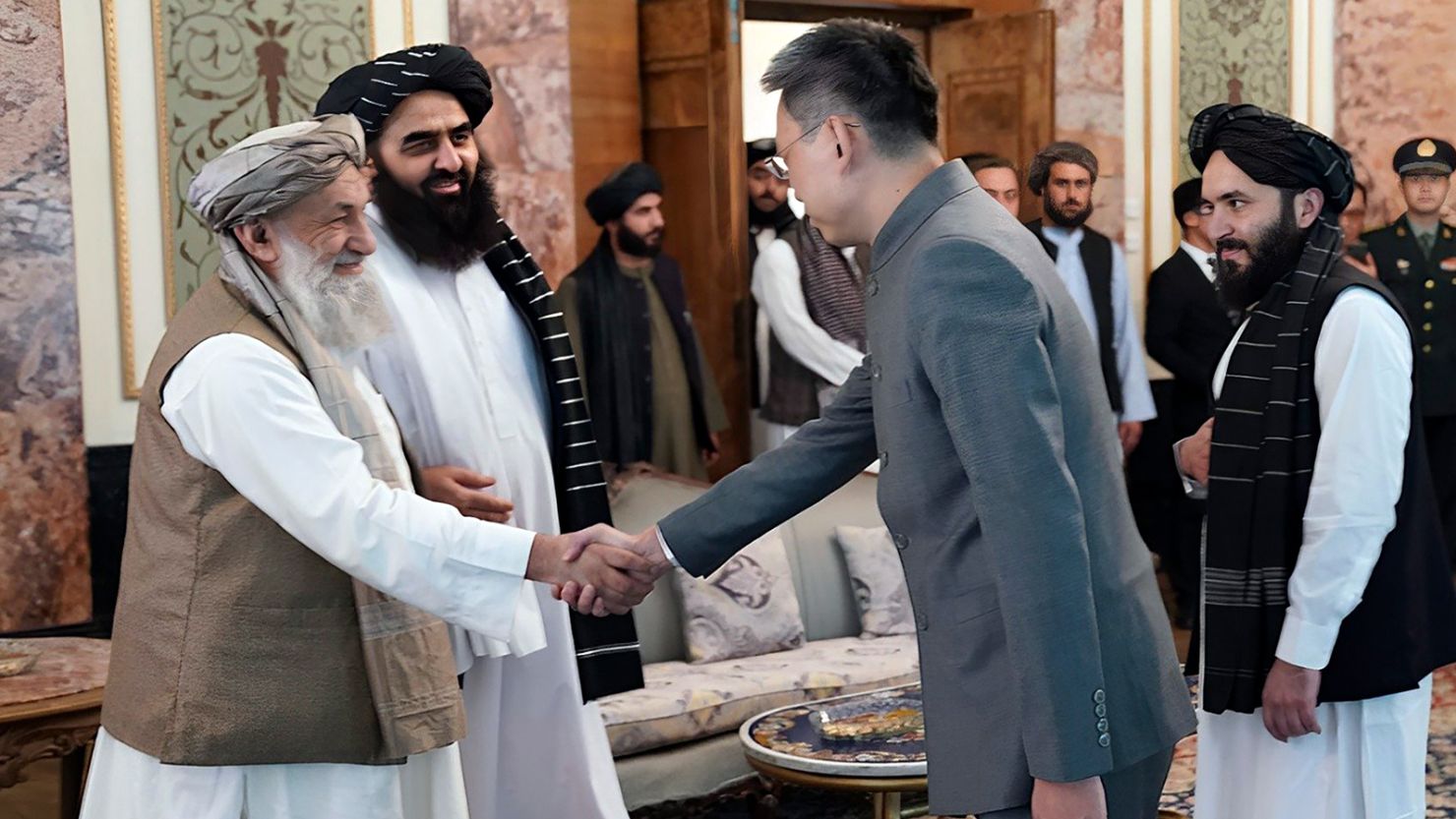
Whenever a Chinese envoy lands in Kabul or Islamabad to "talk peace," the press treats it like a Nobel prize bid. It isn't. It’s a reconnaissance mission.
China’s primary interest in Afghanistan isn't the lithium or the copper—at least not yet. The cost of extracting minerals in a war zone is astronomical, even for the CCP. Their real interest is containment. They want to ensure that the East Turkestan Islamic Movement (ETIM) doesn't find a sanctuary.
However, if China actually "fixes" the relationship between the Taliban and Pakistan, they lose their ability to play both sides. Right now, China can tell Islamabad, "We are your only shield against a hostile Afghan neighbor," while telling the Taliban, "We are the only ones preventing Pakistan from a full-scale military incursion."
If you solve the problem, you lose the leverage.
Why a Failed State is a Profitable State
Let's look at the "People Also Ask" obsession with whether Afghanistan will join CPEC. It’s the wrong question. The question should be: Does China want a functional Afghan economy?
A functional Afghan economy requires regional integration, which requires a degree of independence. China prefers a "vassal-lite" model. By providing just enough aid and infrastructure to keep the Taliban afloat, Beijing prevents a total collapse that would spill over its own borders, while ensuring the regime remains too weak to resist Chinese demands on resource rights or surveillance exports.
The Logistics of Dependency
- Strategic Inertia: By dragging out mediation, China prevents other regional players (India, Iran, or the remnants of Western influence) from gaining a foothold.
- Security Subcontracting: China has zero interest in putting boots on the ground. They want the Pakistani military to do the dying for them. By keeping the threat level "amber," they force the Pakistan Army to prioritize CPEC security over their own strategic autonomy.
- The Xinjiang Buffer: A messy, inward-looking Afghanistan is too busy fighting its own demons to export ideology to Xinjiang. Total peace might allow for a unified religious narrative to emerge—something Beijing fears far more than a few roadside bombs.
The Brutal Truth About "Mediation"
When China "mediates," it isn't looking for a treaty that will be taught in history books. It is looking for a temporary ceasefire that allows the next shipment of heavy machinery to pass through the Bolan Pass.
The TTP is a convenient boogeyman. It allows Beijing to demand "special security divisions"—essentially private militias funded by the Pakistani taxpayer to protect Chinese assets. This creates a state within a state. If the TTP disappeared tomorrow, China would lose its justification for the creeping securitization of the Pakistani landscape.
Follow the Money, Not the Press Releases
Stop reading the joint statements about "shared futures" and "iron-clad friendships." Look at the credit spreads and the port concessions.
The Port of Gwadar isn't a bustling commercial hub; it’s a strategic outpost. Its "failure" to become the next Dubai is irrelevant to Beijing. As long as it sits there, guarded by a Pakistani military that is financially strangled by Chinese debt and distracted by Afghan border disputes, it serves its purpose.
China isn't trying to fix the Pakistan-Afghanistan rift. They are managing the wound to ensure it never heals, but never turns gangrenous. It’s a surgical application of tension.
The Actionable Reality
If you are an investor or a policy analyst waiting for a "breakthrough" in Kabul-Islamabad relations, stop. The friction is the point. The "security concerns" are the collateral required to keep the Belt and Road moving.
China has mastered the art of being the only adult in a room they have helped keep messy. They don't want to be the hero who stops the fight; they want to be the guy selling bandages to both sides while they lease out the floor space.
Expect more "mediation" talks, more "security summits," and absolutely zero change in the body count. That is exactly how the spreadsheet says it should work.
Stop looking for peace in a region where the dominant superpower profits from the struggle.