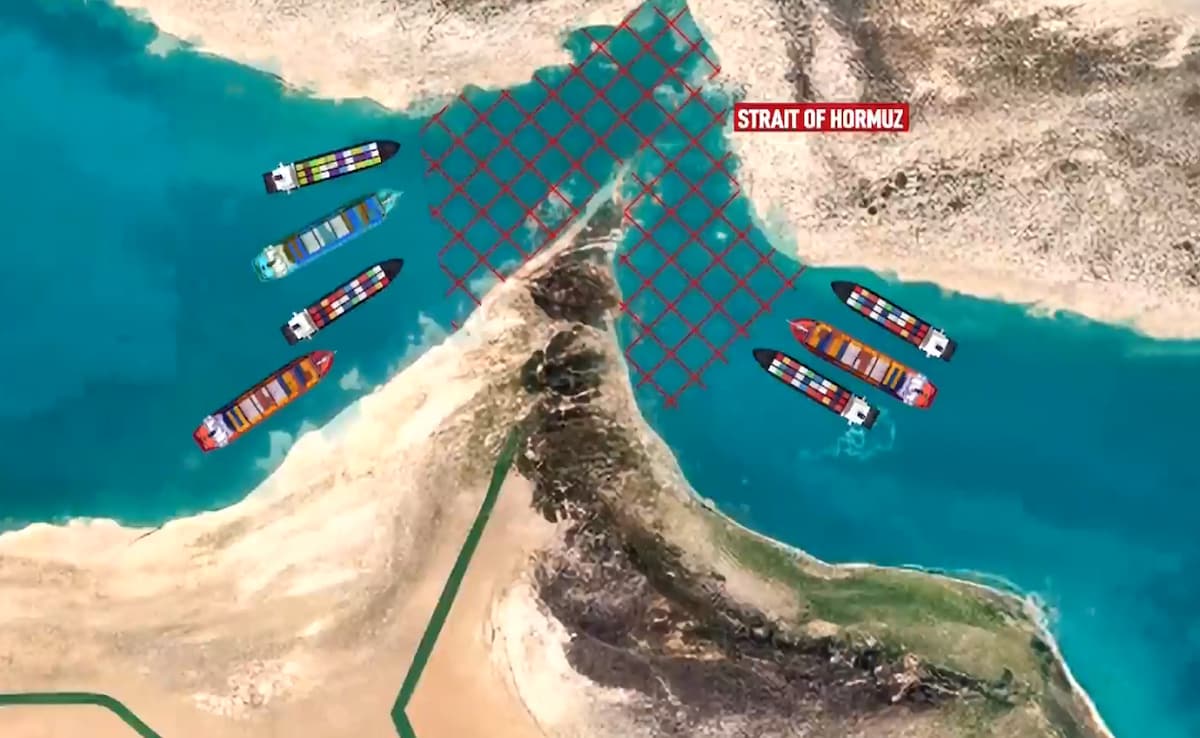
The Strait of Hormuz is currently the world's most expensive parking lot. Since the U.S.-Israeli strikes hit Iran on February 28, 2026, the waterway has turned into a ghost town for almost everyone—except, it seems, for China. While the rest of the world watches oil prices climb toward $120 a barrel, Beijing is working a side deal that makes one thing clear: Iran isn't just using the strait as a weapon; they’re using it as a toll booth where only Chinese currency buys a pass.
You've probably heard that the strait is "closed." That's not entirely true. It's effectively blocked by fear and risk, but the IRGC (Islamic Revolutionary Guard Corps) is selectively opening the gates. The catch? Iran is reportedly demanding that cargo transactions happen in Chinese yuan. This isn't just about moving oil; it’s a middle finger to the U.S. dollar and a desperate lifeline to the only superpower still willing to buy what Tehran is selling.
The yuan is the only ticket through the gates
Iran's strategy is simple but brutal. By restricting passage to vessels that play by Beijing’s financial rules, they’re trying to force a shift in how global energy is traded. Recent reports indicate that several tankers, including the Chinese-owned Iron Maiden, have successfully navigated the strait while hundreds of other ships remain stranded in the Gulf of Oman.
This isn't a coincidence. China buys roughly 80% of Iran’s oil exports. They provide the economic oxygen that keeps the clerical regime from suffocating under "maximum pressure" 2.0. If you’re a shipping firm and you want to avoid being "set ablaze"—as one IRGC commander recently threatened—you basically have to prove you’re serving Chinese interests.
Why Beijing is losing patience with its partner
Don't mistake this for a perfect friendship. China is actually furious behind the scenes. While they love the idea of the yuan replacing the dollar, they hate the chaos. China gets about 45% of its oil and gas through that narrow s-curve of water. They aren't just importing Iranian crude; they're the biggest customer for Qatari LNG and Saudi oil, both of which are currently stuck behind the Iranian blockade.
Foreign Minister Wang Yi has been telling Tehran to heed the "reasonable concerns" of its neighbors. That’s diplomatic speak for "stop messing with our energy security." China’s state-owned gas firms are terrified of a total cutoff. Qatar alone provides 30% of China’s LNG, and if those shipments don't move, the Chinese industrial machine starts to grind.
The risk of a $150 oil spike is real
If you’re wondering why your local gas station just hiked prices by 50 cents in a week, look at the math. Roughly 20 million barrels of oil pass through Hormuz daily. Since the conflict started, that flow has slowed to a trickle.
- Brent Crude was sitting at $73 before the war; it's already hit $100 and is eyeing $120.
- U.S. Diesel prices are up 25% because the market is global—if it's short in Asia, the price jumps in Alabama.
- Insurance premiums for tankers have gone through the roof, adding what experts call a "risk premium" of $14 to $20 per barrel.
The Trump administration has talked about naval escorts, but there’s a massive problem: mines. U.S. intelligence has detected signs of Iranian mining in the strait. You can't just sail a carrier strike group through a minefield without a massive, slow clearing operation.
The loophole that keeps China in the game
China has a massive advantage that Europe and Japan don't. They have a 1.2 billion barrel crude stockpile. That’s about 108 days of "we don't need the world" cover. This allows Beijing to play the long game. They can afford to wait while the U.S. and Iran trade blows, knowing that eventually, any "peace" will likely be negotiated on Chinese terms because they're the only ones still talking to both sides.
But there's a flip side. If the U.S. decides to start intercepting those " yuan-cleared" Chinese tankers to cut off Iran’s revenue, we aren't just looking at a regional war. We're looking at a direct confrontation between the world’s two largest economies.
What you should do right now
The era of cheap, stable energy is on a ventilator. Even if a ceasefire happens tomorrow, it takes weeks to clear mines and months to restore market confidence.
- Watch the yuan-to-oil trade. If more tankers start signalling "Chinese-owned" to get safe passage, the U.S. dollar’s grip on the energy market will take its biggest hit in decades.
- Prepare for sustained inflation. Energy is the "input of all inputs." High oil prices mean higher food prices and higher shipping costs for everything you buy online.
- Diversify your energy exposure. If you’re invested in traditional transport or heavy manufacturing, look for companies with hedged energy costs or those moving toward localized supply chains.
The "China catch" isn't just a hurdle for Iran; it’s a trap for the global economy. Iran is betting that the world's need for oil—and China's need for a win—will outweigh the threat of U.S. sanctions. So far, the tankers moving through the smoke suggest they might be right.