Burkina Faso's military government just wiped hundreds of civil society groups off the map with a single stroke of a pen. It's a massive move. We aren't talking about a handful of small-time clubs here. The transition authorities officially suspended nearly 360 associations. This isn't just administrative cleanup. It’s a clear signal about who holds the leash in Ouagadougou.
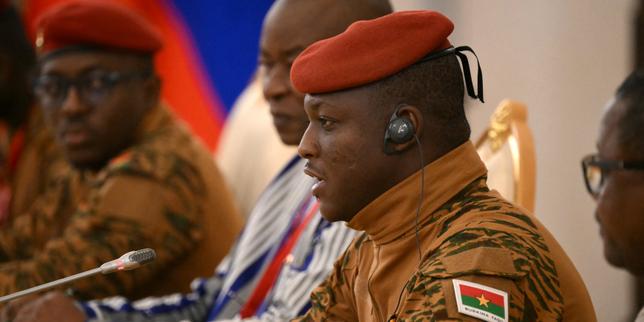
Captain Ibrahim Traore's administration says these groups aren't playing by the rules. Most of them allegedly failed to renew their licenses or didn't submit required activity reports. That’s the official line. But if you look at the political climate in the Sahel right now, it’s obvious there's more to the story. The state wants total control over the narrative and the money flowing into the country.
The real reason behind the massive crackdown on NGOs
Civil society has always been the backbone of Burkinabe politics. Remember 2014? It was the streets and the local associations that toppled Blaise Compaoré after 27 years. The current junte knows this history better than anyone. They aren't about to let the same thing happen to them.
By suspending 357 specific organizations, the Ministry of Territorial Administration is effectively pruning the garden. They're removing groups that operate in the shadows or receive foreign funding without state oversight. It’s about sovereignty. Or at least, that’s how the government sells it to a public that’s increasingly weary of Western influence.
Many of these suspended groups were involved in human rights monitoring or local governance. When those groups disappear, so does the external "check" on military operations. In a country fighting a brutal insurgency, the government views any internal criticism as a distraction—or worse, as complicity with the enemy.
How the junte is reshaping Burkinabe law
This didn't happen in a vacuum. The legal framework in Burkina Faso has been tightening for months. The authorities are using a 1992 law on freedom of association, but they're applying it with a new level of strictness. They're demanding transparency that many smaller NGOs simply can't provide.
If you don't have your paperwork in order, you're out. It’s that simple. But let’s be real. It’s nearly impossible to maintain perfect administrative records when you're working in a war zone. Large chunks of the country are under the control of armed groups. Expecting a small rural association to file digital reports to the capital every year is a tall order.
The government isn't just looking for typos. They're looking for loyalty. They want to ensure that every active group in the country aligns with the "National Vision" of the transition. This means supporting the military's effort to reclaim territory and distancing the country from old colonial ties, specifically France.
The impact on local communities
What happens when 360 groups stop working overnight? The vacuum is huge. These associations often fill the gaps where the state is missing. They provide clean water, basic schooling, and legal aid.
- Local development projects will likely freeze.
- International donors will hesitate to send funds if their local partners are blacklisted.
- The flow of information from the provinces to the capital will dry up.
I've seen this play out in other parts of West Africa. When the state shuts down the "middlemen," the people at the bottom suffer first. The junte argues that the state will take over these roles. Maybe. But the Burkinabe treasury is stretched thin by the war. Replacing the social safety net provided by 360 organizations isn't something you do with a press release.
Breaking down the list of suspended organizations
The list is a mix of everything. You have sports clubs, religious groups, and neighborhood watches. But the ones that matter are the political and social advocacy groups. By grouping them all together, the government avoids the optics of a targeted political purge. It looks like a "general audit."
It’s a clever tactic. If you suspend 300 sports clubs and 10 human rights groups, you can tell the international community you're just "cleaning up the registry." But the 10 human rights groups are the actual targets. The rest is just noise to hide the signal.
The Ministry of Territorial Administration, led by Colonel Émile Zerbo, has been very specific. They claim these groups haven't held a general assembly or updated their executive boards in years. In many cases, they’re probably right. Burkinabe civil society is messy. But the timing is what smells. Why now? Because the junte is preparing for a longer stay in power and they need a quiet house.
Security vs Liberty in the Sahel
You can't understand this without looking at the security situation. Burkina Faso is currently the global epicenter of terrorism according to the 2024 Global Terrorism Index. Over half the country is effectively outside government control. In that environment, the military feels it can't afford the "luxury" of a boisterous, critical civil society.
They see NGOs as potential Trojan horses. There’s a deep-seated suspicion that some groups are being used by foreign intelligence services to destabilize the transition. It sounds like a conspiracy theory, but in the current geopolitical "tug-of-war" between Russia and the West in the Sahel, it's a fear the junte takes very seriously.
The message to the remaining associations is loud and clear. Get in line or get out. If you want to operate in Burkina Faso, you need to show exactly where your money comes from and exactly what you're saying to the people in the villages.
What this means for the 2026 outlook
The suspension is likely just the beginning. We're seeing a total reorganization of the Burkinabe state. The junte isn't just a temporary fix anymore. They're building a new system.
Expect to see a new breed of "approved" associations. These will be groups that actively promote the government's agenda and help recruit for the Volunteers for the Defense of the Homeland (VDP). The independent, "old-school" civil society is being phased out. It’s a pivot toward a more centralized, authoritarian model of governance that prioritizes security over everything else.
If you’re running a group in Burkina right now, you need to audit your own books immediately. Don't wait for a letter from the Ministry. Make sure your executive board is up to date and your reports are filed. The margin for error has hit zero. The state is no longer ignoring the paperwork; they're using it as a weapon.
Stay quiet, stay compliant, or stay closed. That’s the new reality in Ouagadougou.