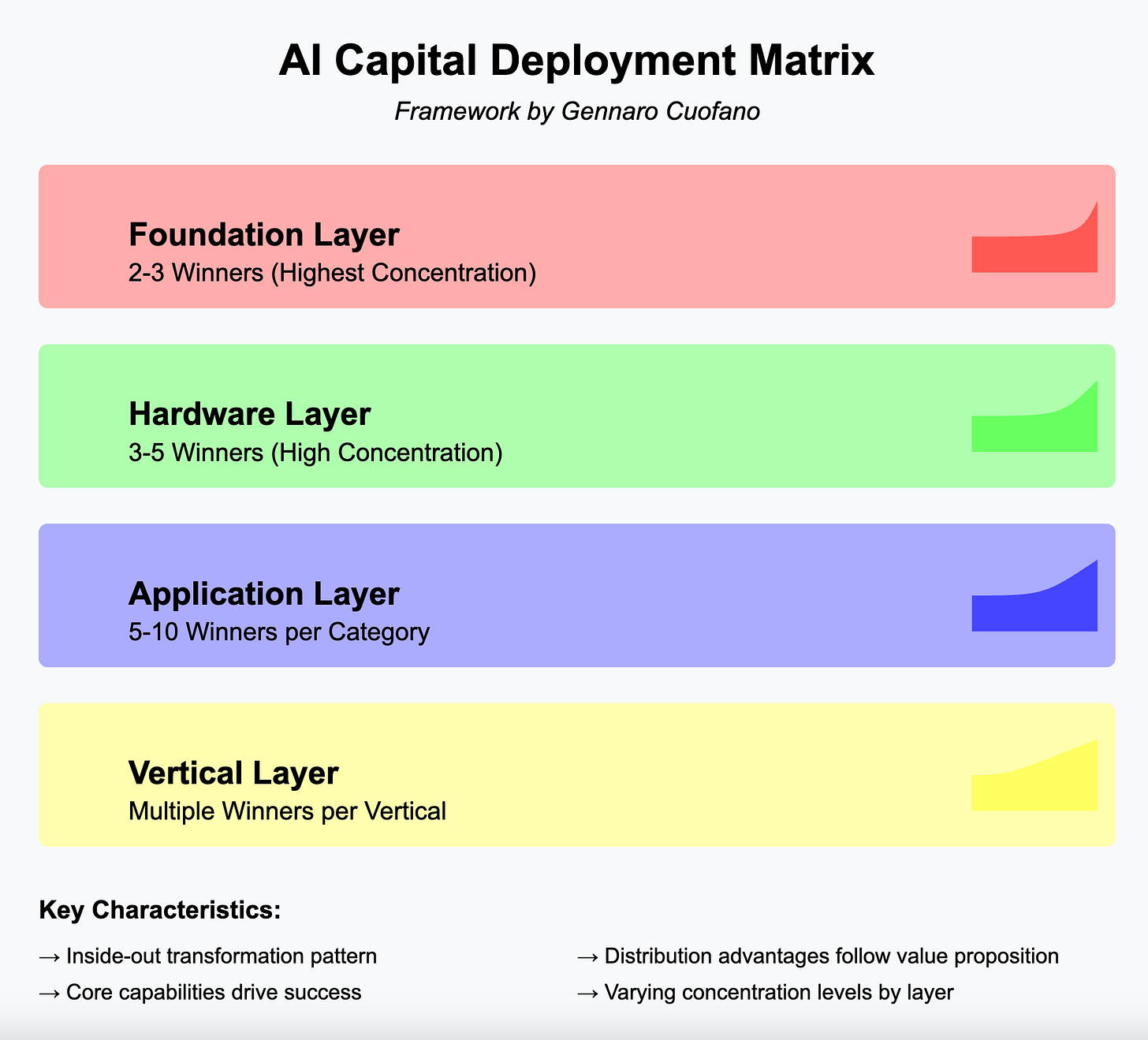
European equity markets are currently trapped in a structural divergence from the United States, driven by a "winner-takes-all" dynamic that favors scale, digital integration, and aggressive capital deployment. The CEO of Norges Bank Investment Management (NBIM), Nicolai Tangen, highlights a $2 trillion perspective on a fundamental reality: the valuation gap between U.S. and European firms is no longer a temporary fluctuation but a symptom of deep-seated institutional and cultural discrepancies in risk-taking and regulatory burden.
The blueprint for understanding this divergence requires analyzing three distinct friction points: the Cost of Inertia, the Regulatory Compression of Margins, and the Risk-Aversion Feedback Loop.
The Mechanics of the Valuation Gap
The widening spread between the S&P 500 and the STOXX Europe 600 stems from the composition of the indices. U.S. markets are dominated by high-growth technology entities with high operating leverage, while European indices remain weighted toward legacy industrial, financial, and commodity sectors.
In a digital economy, the marginal cost of serving an additional customer is near zero for software-driven firms. European firms, primarily focused on physical goods and traditional services, face linear cost structures. This creates a fundamental difference in the Terminal Value of these companies. When a market leader captures a global niche, the "winner-takes-all" effect ensures that capital flows disproportionately toward the top 1% of firms, starving the mid-cap ecosystem in Europe of necessary liquidity.
The Three Pillars of European Stagnation
To quantify why European markets are losing ground, we must categorize the obstacles into a functional framework.
1. The Regulatory Arbitrage Deficit
European companies operate under a "precautionary principle" regulatory framework. While intended to protect consumers, this creates a high Compliance Floor—the minimum cost required just to exist in a market.
- GDPR and AI Act Impacts: While the U.S. allows for "permissionless innovation," European firms must account for heavy legal overhead before a product reaches Beta. This slows the speed of iteration.
- Fragmentation: Despite the "Single Market" moniker, localized labor laws, tax codes, and language barriers prevent a startup in Berlin from scaling to 450 million people as efficiently as a startup in San Francisco scales to 330 million.
2. The Capital Allocation Asymmetry
There is a profound difference in how capital is recycled within the two ecosystems. In the U.S., failure is treated as a depreciable asset—an educational expense that informs the next venture. In Europe, bankruptcy carries a social and professional stigma that discourages the aggressive "moonshot" thinking required for dominant market positioning.
The U.S. utilizes a deep pool of private equity and venture capital that supports companies long before they reach public markets. European firms often go public too early or rely on bank-led financing. Bank debt is inherently conservative; it requires collateral and steady cash flows, which are the antithesis of the high-risk, high-reward profiles of the companies that currently lead global market caps.
3. The Ambition Gap and Work Culture
Tangen’s critique extends to the "General Level of Ambition." This is not a subjective observation but an analysis of Economic Output per Hour.
$$Output = (Capital \times Labor) \times Total Factor Productivity$$
If the Labor component is constrained by shorter work weeks, longer vacations, and a cultural preference for "work-life balance" over "market dominance," the Total Factor Productivity must be significantly higher to compensate. However, because Europe lags in the adoption of high-productivity tools (AI, cloud infrastructure, and automation), the gap widens. The U.S. has effectively decoupled hours worked from output through technology, while Europe remains tied to a more traditional labor-to-value ratio.
The Cost Function of Fragmentation
European markets suffer from Liquidity Fragmentation. When a market is split across the LSE, Euronext, Deutsche Börse, and others, the depth of the order book for any single stock is thinner than its U.S. counterpart.
- Bid-Ask Spreads: Higher spreads in Europe increase the cost of entry and exit for institutional investors.
- Price Discovery: Thinner markets lead to higher volatility and less accurate pricing, which in turn makes European stocks less attractive to global pension funds and sovereign wealth funds.
- IPO Starvation: European tech champions, such as Arm, frequently choose U.S. listings to access the deeper pool of capital and the higher valuation multiples assigned by U.S. investors who are more comfortable with growth-oriented accounting.
This creates a negative feedback loop: lower valuations lead to fewer IPOs, which leads to a stagnant index, which leads to further capital flight toward the U.S.
Structural Requirements for Market Rejuvenation
For Europe to "get its act together," the transformation cannot be cosmetic. It requires a shift in the fundamental economic engine.
Aggregation of Capital Markets
The Capital Markets Union (CMU) is often discussed but rarely executed with the necessary vigor. A unified European stock market would provide the scale required to rival the NYSE or NASDAQ. This would involve harmonizing insolvency laws across the EU, a move that currently faces intense political resistance due to national sovereignty concerns. Without this, the cost of cross-border investment remains a tax on growth.
Shift from Debt to Equity Financing
The European financial system is bank-centric. To foster a "winner-takes-all" environment, there must be an institutional shift toward equity-based financing. This involves incentivizing retail participation in equity markets—something currently hindered by a cultural preference for low-yield savings accounts and real estate.
Recalibrating the Risk-Reward Ratio
Tax incentives for Research and Development (R&D) and favorable treatment of capital gains are necessary to offset the inherent risks of the digital economy. If the "Winner" takes it all, Europe must decide if it is willing to let "Losers" fail quickly. Protecting zombie companies through subsidies or protective labor laws prevents the Creative Destruction necessary for new leaders to emerge.
The Logic of Global Portfolio Rebalancing
Institutional investors, including the Norwegian Oil Fund, operate on a risk-adjusted return basis. If the U.S. consistently offers higher returns due to its concentration of "Winners," capital will continue to flow out of Europe.
The primary risk for Europe is becoming a "Museum Economy"—an ecosystem that is excellent at preserving the past and regulating the present, but incapable of inventing the future. The valuation gap is a warning signal. When the $2 trillion manager of the world’s largest sovereign wealth fund points out that Americans simply "work harder" and take more risks, it is a clinical assessment of the competitive landscape.
The strategic play for European policymakers and CEOs is to identify and protect niches where Europe still holds a competitive advantage—specifically in high-end manufacturing, green technology, and specialized luxury—while simultaneously stripping away the bureaucratic layers that prevent these firms from achieving digital-scale returns.
The competitive advantage of the next decade will not be found in labor costs or raw materials, but in the speed of capital deployment and the ability to scale without friction. Europe is currently optimized for stability; the global market is optimized for growth. These two objectives are increasingly mutually exclusive.
The immediate tactical requirement for European firms is to decouple from local constraints. This means looking at the U.S. not just as a market for sales, but as a model for corporate governance and capital structure. Companies that fail to internalize the "winner-takes-all" reality will find themselves categorized as "value traps"—stocks that appear cheap on a P/E basis but lack the structural catalysts to ever realize their theoretical worth.
To break the loop, Europe must prioritize the creation of a continental-scale venture ecosystem that allows a company to grow from a seed stage to a trillion-dollar valuation without ever needing to list in New York. Anything less is merely managing a slow-motion decline.
Analyze the internal hurdles within your own organization: identify where the "precautionary principle" is stifling product development. Map your capital allocation to ensure that you are not over-investing in legacy maintenance at the expense of high-leverage digital assets. The market is no longer rewarding incrementalism. If the goal is survival, you must optimize for the scale that the current global environment demands. Is your capital structure designed for the "winner-takes-all" era, or are you still operating on a 20th-century industrial timeline?
Would you like me to develop a comparative framework for assessing your firm's operational efficiency against U.S. sector leaders?