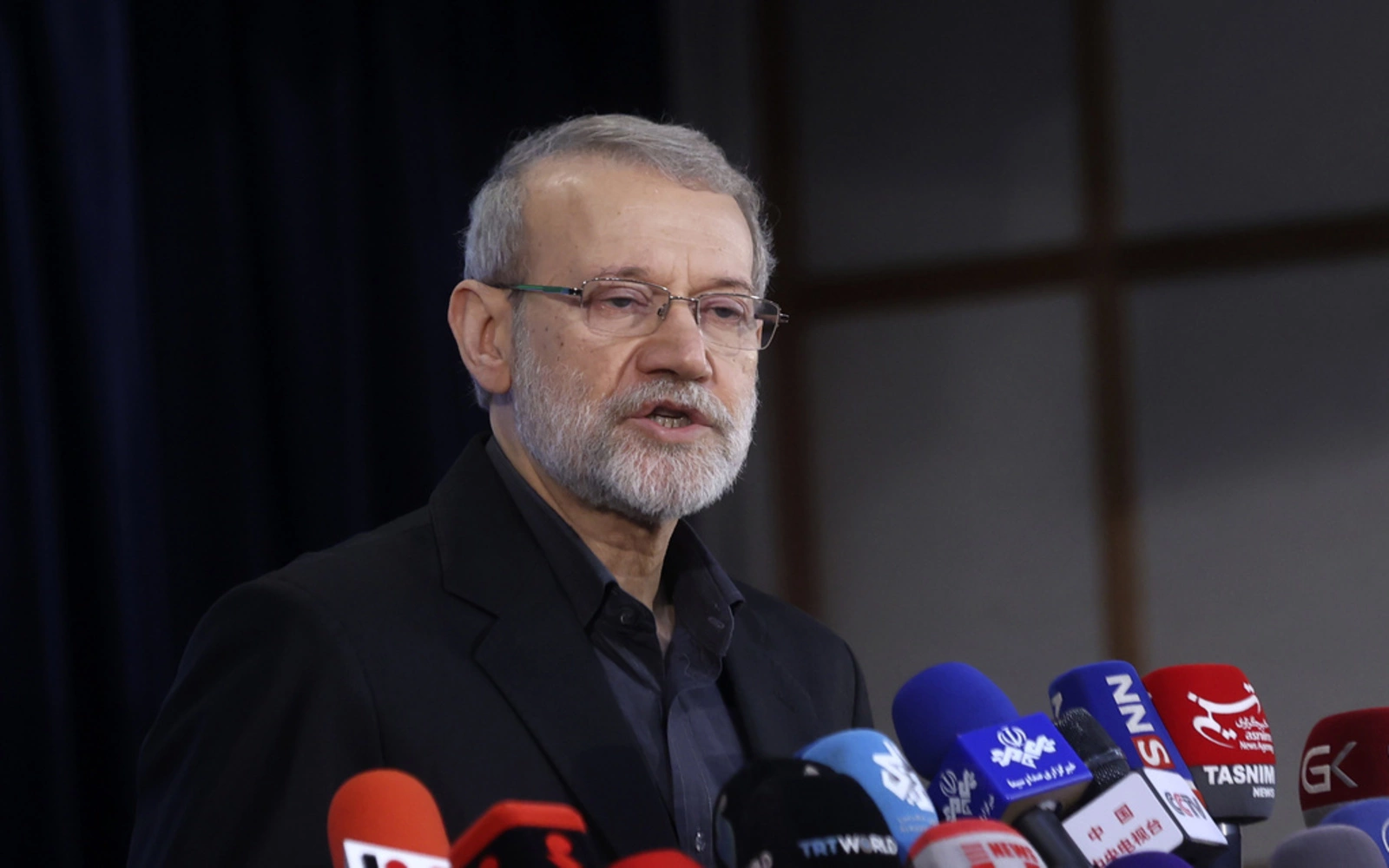
The recent emergence of a rare public statement from Mojtaba Khamenei, the second son of Iran’s Supreme Leader, did more than just debunk internet-driven rumors of his physical injury or flight to Moscow. It signaled a shift in the internal mechanics of the Islamic Republic. For years, Mojtaba has operated as a ghost in the machine of the clerical establishment, a figure defined by his proximity to power and his absolute refusal to speak directly to the public. By breaking that silence to address whispers of his own demise, he has inadvertently confirmed that the battle for succession in Tehran has entered a new, more volatile phase.
Western intelligence circles and regional analysts have spent months tracking rumors that the younger Khamenei was either incapacitated by an assassination attempt or had fled to Russia amidst rising domestic unrest. These stories, often fueled by dissident social media channels, suggested a regime in a state of physical and logistical collapse. However, the reality is far more grounded in the cold logic of authoritarian preservation. Mojtaba is not running; he is positioning. The statement issued through his office was a tactical maneuver designed to reassure the Basij and the Islamic Revolutionary Guard Corps (IRGC) that the line of succession remains intact and stable.
The Myth of the Russian Escape
The narrative that a high-ranking member of the Khamenei family would seek refuge in Russia ignores the fundamental psychology of the Iranian leadership. To the inner circle of the Office of the Supreme Leader, known as the Beit-e Rahbari, fleeing to Moscow would be an admission of terminal weakness. While Tehran and Moscow have tightened their military and economic ties—particularly through the exchange of drone technology and sanctions-evading trade—there is a deep-seated historical distrust of Russian intentions within the Iranian psyche.
Mojtaba Khamenei is a product of this insular environment. He does not view Russia as a sanctuary, but as a geopolitical partner of convenience. The rumors of his "lost leg" or a clandestine flight to a dacha outside Moscow were likely psychological operations intended to sow discord among the regime’s rank-and-file. By allowing these stories to circulate before eventually swatting them down with a calculated rebuttal, Mojtaba demonstrated a level of media savvy that his aging father lacks. He waited for the noise to reach a crescendo before proving he was still very much in control of his faculties.
Succession and the Shadow of Ebrahim Raisi
The sudden death of President Ebrahim Raisi in a helicopter crash last year cleared a significant obstacle from Mojtaba’s path to the leadership. Raisi was widely viewed as the preferred "official" candidate—a man who had proven his loyalty through decades of judicial purges. With Raisi gone, the field narrowed significantly, leaving Mojtaba as the most prominent figure capable of maintaining the status quo.
However, the prospect of a hereditary succession is a sensitive issue in Iran. One of the core tenets of the 1979 Revolution was the rejection of the Pahlavi monarchy. For the Supreme Leader to hand power to his son would be a poetic irony that many within the clerical establishment in Qom find distasteful. This is why Mojtaba’s recent public engagement is so significant. He is no longer just the son of the leader; he is attempting to build a profile as a theologian and a statesman in his own right. He has spent the last decade teaching advanced jurisprudence classes, a necessary credential for anyone aspiring to the role of Vali-ye Faqih.
Control Over the Security Apparatus
If the clerics in Qom are skeptical of a Khamenei dynasty, the IRGC is far more pragmatic. The Guard prefers a known entity who will protect their vast economic interests and maintain the current "Forward Defense" strategy across the Middle East. Mojtaba has spent two decades cultivating deep ties within the intelligence wings of the IRGC. He is widely believed to oversee the financial empires that sustain the regime’s paramilitary wings.
The IRGC does not want a reformer. They want a guarantor. In the eyes of the security apparatus, Mojtaba Khamenei represents a continuation of the policies that have allowed the Guard to become the dominant force in the Iranian economy. His recent statement was a signal to these generals that the rumors of his instability were unfounded. It was a message of "business as usual" delivered to the men who hold the guns.
The Reality of Public Discontent
While the elite bicker over titles and lineage, the Iranian public remains largely alienated from the process. The "Woman, Life, Freedom" movement and the subsequent crackdowns have created a chasm between the state and its citizens that a simple press release cannot bridge. The rumors about Mojtaba found fertile ground because the Iranian people are eager for any sign of fracture within the ruling class.
The regime understands that its greatest threat is not a foreign invasion, but internal collapse triggered by a messy succession. If the transition from Ali Khamenei to his successor is seen as illegitimate or contested, it could provide the spark for another round of nationwide protests. Mojtaba’s emergence from the shadows is an attempt to preempt that chaos. He is trying to project an image of inevitability.
A Precarious Balance of Power
The move from shadow player to public figure is fraught with risk. In the Byzantine world of Iranian politics, visibility often invites target acquisition. By raising his head above the parapet, Mojtaba has made himself a focal point for both domestic frustration and international scrutiny. He can no longer hide behind the anonymity of his father’s office.
The Assembly of Experts, the body officially charged with selecting the next leader, is currently packed with Khamenei loyalists. Yet, history shows that when a dictator dies, the best-laid plans often evaporate in the face of raw ambition. Mojtaba’s statement was a defensive play, but it reveals a deep-seated anxiety about his standing. If he were truly secure, he would not feel the need to deny internet rumors about his physical health.
The coming months will likely see more frequent, albeit carefully managed, appearances by Mojtaba. He must convince the religious elite of his scholarly merit while simultaneously convincing the military elite of his toughness. It is a narrow path to walk. One misstep could embolden rivals who have been waiting for years to strike. The rumors of his "lost leg" may have been false, but the political ground beneath him is certainly shifting.
Succession in a closed system is never a clean process. It is a slow-motion collision of interests, family ties, and military power. Mojtaba Khamenei has officially entered the arena, and the silence that once protected him is gone for good.
Would you like me to analyze the specific financial networks within the IRGC that are reportedly under Mojtaba Khamenei's direct oversight?