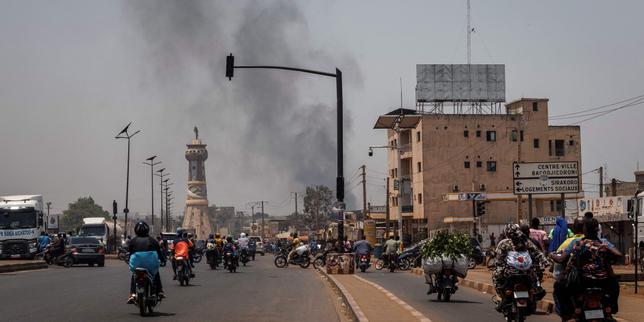
The collapse of French influence in Mali was not a sudden accident of history. It was a slow-motion train wreck fueled by a fundamental misunderstanding of Sahelian power dynamics and a stubborn refusal to see the limits of kinetic military force. France entered Mali in 2013 as a liberator under Operation Serval, stopping a jihadist advance on Bamako. Yet, a decade later, French troops were expelled by a populist military junta that preferred Russian mercenaries to Parisian diplomats. This transition from savior to pariah reveals the deep rot in "Françafrique" and the specific tactical errors that turned a tactical victory into a strategic catastrophe.
France's primary mistake was treating a complex social and political crisis as a simple counter-terrorism problem. By focusing almost exclusively on neutralizing high-value targets and clearing territory, Paris ignored the underlying reasons why local populations were turning toward insurgent groups or supporting military coups. When the state provides no security, no justice, and no services, the man with the gun becomes the law.
The Mirage of Military Superiority
Operation Barkhane was a masterpiece of logistics and tactical execution. French Special Forces and drone strikes effectively decimated the leadership of Al-Qaeda in the Islamic Maghreb (AQIM) and the Islamic State in the Greater Sahara (ISGS). But tactical success in the desert did not translate to stability in the villages.
The French military strategy relied on a "light footprint" that used elite units to strike and then retreat to large bases. This left a vacuum. Once the French helicopters flew away, the jihadists returned to punish anyone who had cooperated with the foreign forces. This cycle created a "protection gap." The Malian Armed Forces (FAMa), poorly equipped and underpaid, were often unable or unwilling to hold the ground the French had cleared.
The gap between Parisian rhetoric and the reality on the ground in Mopti or Gao became impossible to ignore. While French officials spoke of "stabilization," Malian civilians saw a conflict that was spreading, not shrinking. The violence migrated from the northern deserts to the central plains, where it ignited ethnic tensions between Fulani herders and Dogon farmers. By the time France realized that the war was becoming a communal bloodbath, their presence was already being framed as an occupation rather than an intervention.
The Junta and the Russian Pivot
The 2020 and 2021 coups in Bamako were the final nails in the coffin. Colonel Assimi Goïta and his inner circle didn't just seize power; they seized a narrative. They tapped into a deep, historical resentment against French paternalism. For the young generation in Bamako, France was no longer the ally that saved them in 2013. It was the former colonial master that was perceived as protecting its own interests while the country burned.
The arrival of the Wagner Group—now rebranded under the Russian Africa Corps—was a deliberate middle finger to the Elysee Palace. Russia offered the junta something France never could: a security partnership with no lectures on human rights or democratic transitions.
Moscow didn't need to win the war for the Malians. They only needed to provide the junta with enough personal security and "deniable" firepower to stay in power. France found itself in an impossible diplomatic position. President Emmanuel Macron tried to set ultimatums, demanding a return to civilian rule, but these threats lacked teeth. When the junta expelled the French ambassador and demanded the immediate withdrawal of Barkhane forces, Paris was caught flat-footed.
The Failure of Intelligence and Local Nuance
France’s intelligence apparatus in the Sahel was top-tier for tracking signals and satellite imagery, but it was remarkably deaf to the "bruit de la rue"—the noise of the street. French planners consistently underestimated the sophistication of the anti-French propaganda campaigns, many of which were amplified by Russian troll farms but rooted in genuine local grievances.
There was also a persistent blind spot regarding the Kidal region and the Tuareg rebellion. Southern Malians often viewed French cooperation with certain Tuareg groups as a betrayal, suspecting Paris of secretly supporting Malian partition. This suspicion poisoned the well of public opinion. Even when France provided undeniable evidence of its sacrifices—58 soldiers killed over the course of the mission—the Malian public was increasingly convinced that France was actually in league with the terrorists to justify a permanent military presence.
This logic seems absurd in a vacuum, but in the context of post-colonial trauma, it gained massive traction. France failed to counter this narrative because it spoke the language of technocracy while its opponents spoke the language of sovereignty and dignity.
The Economic Ghost in the Machine
While the conflict was sold as a war on terror, many in the region viewed it through the lens of resource control. Although Mali's gold mines are not primarily owned by French firms, the CFA franc and the perceived grip of French corporations on West African infrastructure created a backdrop of economic resentment.
The French government often argued that it was spending billions of euros to stabilize the region with no direct economic gain. While strictly true in terms of the defense budget, the argument fell on deaf ears. For a Malian youth facing 80 percent underemployment, the sight of high-tech French armored vehicles patrolling past mud huts was a provocation, not a comfort.
The lack of a serious "Marshall Plan" for the Sahel meant that the military mission was always on a timer. You cannot kill your way out of a poverty-driven insurgency. Development aid was often tied to complex bureaucratic requirements that local administrations couldn't meet, leading to a situation where the "security" part of the "security-development nexus" was the only part that actually functioned.
The Regional Domino Effect
Mali was the anchor of the G5 Sahel, a regional defense pact that France hoped would eventually take over the burden of security. With Mali’s exit and the subsequent coups in Burkina Faso and Niger, that entire security architecture has disintegrated.
The "Alliance of Sahel States" (AES) formed by these three juntas represents a total break from the Western-led order. They have shifted their defense posture toward a "total war" footing, often involving the arming of civilian militias. This approach might yield short-term gains in clearing certain villages, but it risks permanent civil war and mass atrocities that will only serve as recruitment tools for Al-Qaeda and the Islamic State.
France now finds itself trying to reinvent its presence in countries like Chad, Ivory Coast, and Senegal. But the "Mali Model"—where thousands of French troops are stationed in a country to prop up a failing state—is dead. The era of the French gendarme in Africa is over.
The True Cost of Paternalism
The real lesson of the Mali crisis is that external military intervention, no matter how well-intentioned or tactically proficient, cannot substitute for a legitimate domestic social contract. France tried to build a house starting with the roof (security) before the foundation (governance) was even poured.
When the roof inevitably collapsed, Paris blamed the weather and the neighbors. It failed to acknowledge that the blueprints were flawed from the start. The exit from Mali was not just a retreat; it was a total loss of credibility that will haunt French foreign policy for a generation.
If the West wants to prevent the rest of the Sahel from following Mali's lead, it must stop treating African nations as battlefields for geopolitical competition and start treating them as sovereign entities with legitimate, if difficult, internal grievances. The alternative is a permanent arc of instability stretching from the Atlantic to the Red Sea, where the only winners are the warlords and the merchants of chaos.
The junta in Bamako may find that Russian help comes with a much higher price tag than they anticipated, but for now, they are willing to pay it just to prove they can survive without Paris. France is left watching from the sidelines, wondering how a decade of sacrifice resulted in a total loss of the board.
The French military did its job. The French politicians did not.