On a Tuesday afternoon in Knutsford, a six-year-old boy was struck by a van while walking on Manchester Road. He died. This is the baseline reality of a tragedy that the local press covered with the standard clinical detachment of police bulletins and floral tribute photography. But to view this as an isolated "accident" is to ignore the systemic degradation of pedestrian safety across Cheshire’s aging infrastructure. When a child dies on a road designed for 1950s traffic volumes but forced to carry 2026 logistical loads, the fault lies far beyond the driver’s seat.
The incident occurred near the junction with Bluebell Lane, a stretch of asphalt that serves as a primary artery for local commerce. Initial reports focused on the emergency response—the air ambulance, the road closures, the grieving community—yet they missed the structural culpability. We are seeing a lethal intersection of increased delivery van frequency and a failure to implement modern traffic calming measures in residential zones that have transitioned into de facto bypasses.
The Ghost of Infrastructure Past
Cheshire East Council has long struggled with a backlog of road maintenance and safety upgrades. While local authorities often point to budget constraints, the physical reality of Manchester Road reveals a deeper indifference to the pedestrian experience. Narrow pavements, inconsistent lighting, and a speed limit that feels more like a suggestion than a mandate create a hostile environment for the most vulnerable users.
Road safety isn't just about signs. It is about physics. When a multi-ton Mercedes Sprinter or Ford Transit interacts with a thirty-kilogram child, the outcome is dictated by kinetic energy. $E_k = \frac{1}{2}mv^2$. This formula is the silent arbiter of life and death on our streets. Because velocity is squared, even a marginal increase in speed dramatically raises the probability of a fatal outcome. If we allow vehicles to travel at 30mph in areas where children play or walk to school, we are mathematically accepting a certain percentage of deaths.
Most of these suburban corridors were never designed to handle the sheer mass of modern transit. The vehicles are wider, the blind spots are larger, and the drivers are often under immense pressure from algorithmic dispatch systems that prioritize speed over situational awareness.
The Suburban Logistics Trap
The rise of the "delivery economy" has turned quiet residential streets into high-velocity logistics hubs. In Cheshire, this is particularly evident. The proximity to the M6 and M56 motorways makes towns like Knutsford, Wilmslow, and Northwich attractive for commuters, but it also turns them into shortcuts for couriers looking to shave minutes off their routes.
These drivers are frequently subcontracted. They don't have the training of heavy goods vehicle (HGV) operators, yet they pilot vehicles that can weigh up to 3.5 tonnes. When you combine high-pressure work environments with roads that lack physical barriers between the sidewalk and the street, the margin for human error disappears. A momentary distraction—a glance at a GPS, a notification on a handheld device—becomes a death sentence for a bystander.
The public often calls for "more education" for drivers. Education is a weak defense. Human beings are fallible. We get tired, we get distracted, and we make mistakes. A truly safe road system uses "forgiving infrastructure"—designs that assume human error will happen and mitigate the consequences through physical intervention.
Why Speed Cameras Aren't Enough
There is a persistent myth that sticking a yellow box on a pole solves the problem. It doesn't. Drivers learn where the cameras are, brake sharply, and then accelerate once they are out of range. This creates a rhythmic "accordion effect" in traffic flow that can actually increase the risk of rear-end collisions and unpredictable vehicle behavior near crossings.
What Cheshire actually needs is a complete rethink of Modal Priority. For decades, the car has been the apex predator of the British road system. Every planning decision has been made to ensure that motorized traffic flows as freely as possible. Pedestrians are treated as an afterthought, funneled into narrow "islands" or forced to wait for permission to cross their own streets.
Until the council adopts a "Vision Zero" philosophy—the idea that no level of death or serious injury is acceptable—we will continue to see these tragedies. This requires hard, unpopular choices. It means narrowing lanes to naturally slow traffic. It means installing raised "table" crossings that force vehicles to physically lift as they pass through pedestrian zones. It means prioritizing the life of a six-year-old over the convenience of a van driver's three-point turn.
The Silence of the Authorities
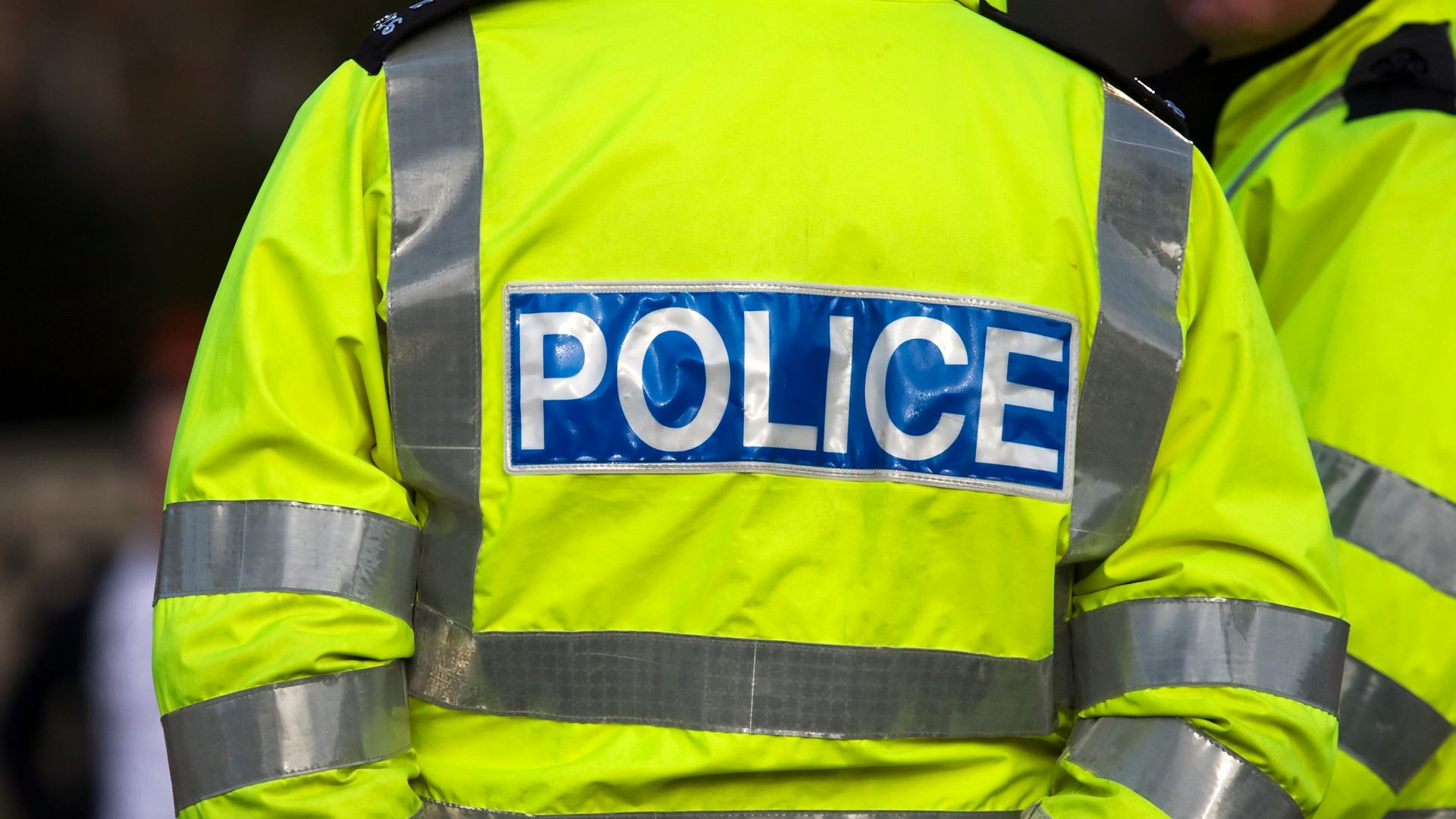
Following the Knutsford collision, the official statements were predictably vague. "Enquiries are ongoing." "Witnesses are urged to come forward." While the police must perform their forensic duties, the political leadership of the county remains largely silent on the broader implications of the crash.
There is an uncomfortable truth that politicians hate to address: making roads safer for children usually makes them slightly more inconvenient for motorists. In a county like Cheshire, where car ownership is high and the "freedom of the road" is a cherished middle-class value, suggesting that we should reduce speeds or close certain through-routes is seen as an act of war.
We see this play out in the "Low Traffic Neighborhood" (LTN) debates. Opponents scream about "15-minute cities" and government overreach, while the actual data shows that these interventions save lives. The tragedy in Knutsford happened on a road that is a textbook candidate for traffic evaporation strategies. By making it more difficult for non-local traffic to use Manchester Road as a high-speed shortcut, the total volume of vehicles drops, and the safety of the remaining environment increases.
Forensic Reality vs Public Perception
When we look at the statistics, "road traffic collision" is a sanitized term. It implies a random act of God. It wasn't. It was the result of a specific set of circumstances: a driver, a vehicle, a speed, and a road design. If any one of those variables had been different, that boy might be at home today.
The Problem with "Accident" Language
The use of the word "accident" in official police communications and media reports is a subtle form of gaslighting. It suggests that nothing could have been done. In the aviation industry, they don't call it an "accident" when a plane goes down; they call it a crash or an incident, and they investigate every single mechanical and human failure that led to it. We don't apply that same rigor to our roads because we are all complicit in the culture of speed.
The difference between 20mph and 30mph is the difference between a broken bone and a closed casket. At 20mph, a driver has a much wider field of vision and a significantly shorter stopping distance. Most importantly, a pedestrian hit at 20mph has a 90% chance of survival. At 30mph, that chance drops to about 50%. These are not just numbers; they are the fundamental laws of survival in a built environment.
The Cost of Inaction
Every time a child is killed on a UK road, there is a flurry of activity. Flowers are left. A petition is started. Perhaps a new "Slow Down" sign is erected. Then, the news cycle moves on, and the status quo remains.
The economic cost of a fatal road collision is estimated by the Department for Transport to be roughly £2 million, factoring in emergency services, healthcare, lost economic output, and the immense human suffering. Investing £500,000 in a comprehensive traffic-calming scheme for a dangerous junction isn't just a moral imperative; it’s a fiscally responsible decision. Yet, councils often cite a lack of "evidence" for a specific location until someone actually dies there.
We are effectively using the blood of children as the primary data point for infrastructure investment.
The Driver’s Burden
It is easy to demonize the person behind the wheel, but the driver is also a product of the system. Most people driving vans in Cheshire are not monsters. They are workers trying to hit targets in an economy that demands instant gratification. They are driving vehicles with massive pillars that create lethal blind spots. They are navigating roads that suggest, through their wide lanes and clear sightlines, that it is safe to drive fast.
If the environment tells a driver "you can go fast here," they will. You cannot solve a design problem with a lecture on personal responsibility. You solve it by changing the environment so that it is physically impossible, or at least highly uncomfortable, to drive dangerously.
A Failed Duty of Care
The death of a six-year-old in Cheshire is a failure of the state. It is a failure of Cheshire East Council to prioritize safety over flow. It is a failure of the Department for Transport to mandate safer vehicle designs for urban deliveries. And it is a failure of our collective society to demand better for our children.
We have accepted a level of carnage on our roads that we would never tolerate in any other aspect of life. If a playground had a piece of equipment that killed one child every few years, it would be torn down and the manufacturer sued into bankruptcy. But because it happens on a road, we call it a tragedy and move on to the next headline.
The "why" behind this collision isn't a mystery. It is written in the asphalt of Manchester Road. It is found in the spreadsheets of logistics companies. It is visible in the budgets of local councils that prioritize "pothole filling" over life-saving redesigns.
Demanding "justice" for one driver is a distraction. True justice would be a road network where a six-year-old making a mistake doesn't result in a fatality. We know how to build those roads. We simply choose not to.
Stop calling these events accidents. They are the predictable results of a transportation system that values the movement of goods and commuters over the lives of the people who actually live there. Until the geometry of the street changes, the flowers at the side of Manchester Road will not be the last.