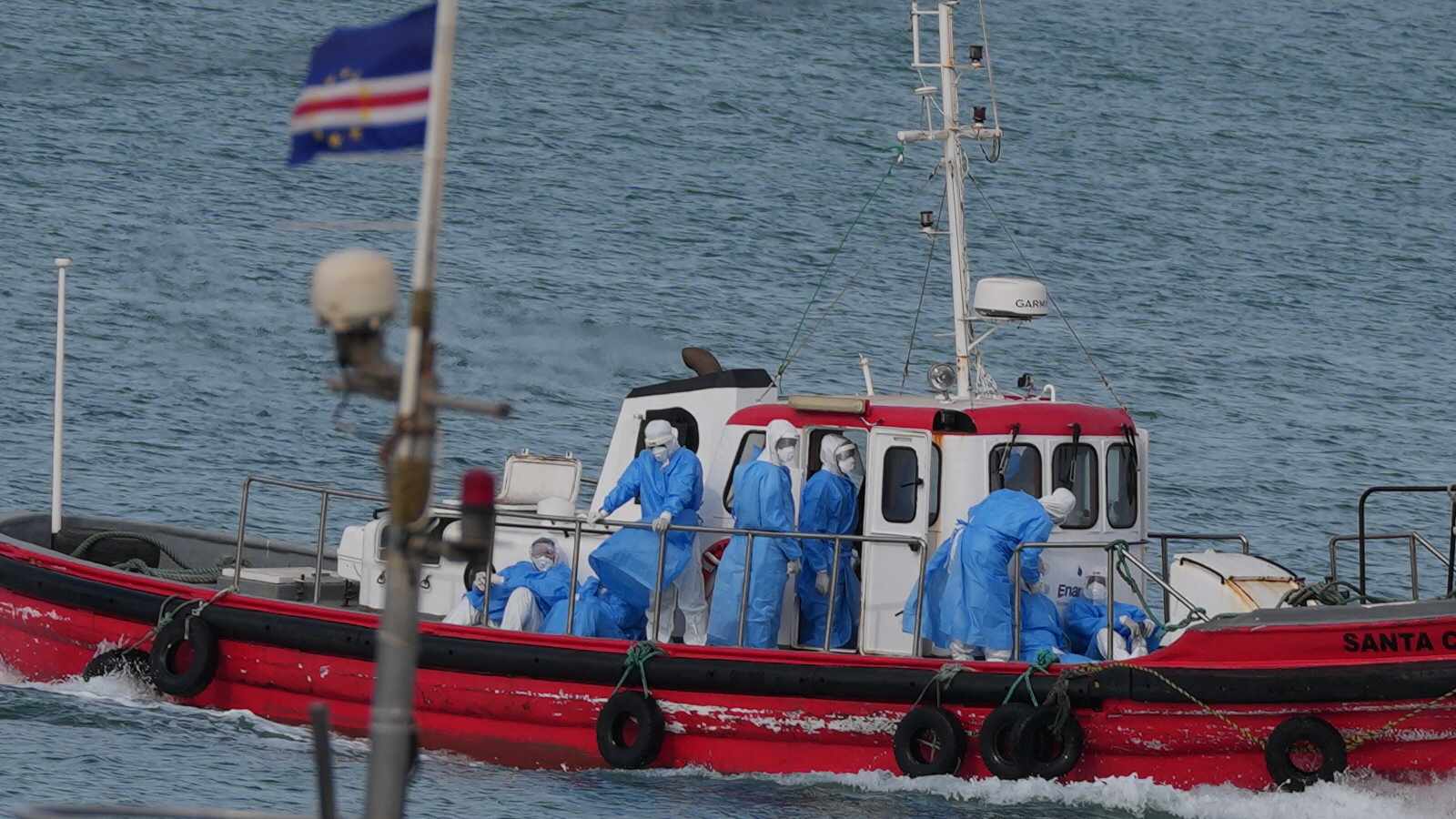
The arrival of a cruise vessel carrying a suspected Hantavirus outbreak at a Spanish port represents a critical failure in maritime health filtration and a complex stress test for European Union biosafety protocols. Standard public health reporting often frames such events as "preparatory measures," yet a clinical analysis reveals a high-stakes coordination problem between the International Health Regulations (IHR 2005) and the physical limitations of shipboard isolation. The primary challenge is not merely the presence of a pathogen, but the logistical friction of managing a high-consequence zoonotic virus within a sealed, high-density environment while balancing the legal obligations of the port of call.
The Etiological Reality of Hantavirus in Maritime Contexts
Hantavirus is not a monolithic threat; it is a genus of viruses primarily transmitted by rodents. Unlike norovirus—the standard maritime contagion—Hantavirus typically spreads through the aerosolization of viral particles found in rodent excreta, urine, or saliva. The specific strain dictates the clinical trajectory.
- Hantavirus Pulmonary Syndrome (HPS): Characterized by rapid respiratory failure and high mortality rates, primarily found in the Americas.
- Hemorrhagic Fever with Renal Syndrome (HFRS): Characterized by renal dysfunction and internal bleeding, more common in Eurasia.
The presence of this pathogen on a cruise ship suggests a breach in the vessel's Integrated Pest Management (IPM) system. Rodent infiltration on modern cruise liners is rare due to rigorous sanitation, but the risk vector usually involves contaminated provisions or structural ingress during dry-docking. Once a human host is infected, the incubation period ranges from one to eight weeks, creating a significant "detection lag" where the vessel becomes a mobile incubator before symptoms manifest.
Structural Bottlenecks in Shipboard Quarantine
A cruise ship is a closed-loop system designed for leisure, not biocontainment. When Spanish authorities prepare for docking, they must account for three structural bottlenecks that dictate the success or failure of the intervention.
The Ventilation Constraint
Modern vessels utilize HVAC systems that recirculate a portion of cabin air to optimize energy efficiency. While HEPA filtration is increasingly standard, it is rarely sufficient to provide the Negative Pressure Environment (NPE) required for viral sequestration. If the virus is aerosolized within a cabin, the mechanical ventilation system becomes a distribution network rather than a barrier. Spanish medical teams must determine if the infected individuals can be safely isolated in situ or if the risk of cross-contamination necessitates immediate extraction to a terrestrial biocontainment unit (Level 3 or 4).
The Density-to-Care Ratio
Cruise ships operate with a minimal medical staff-to-passenger ratio, typically optimized for minor injuries and cardiac events. A Hantavirus outbreak requires intensive hemodynamic monitoring and potentially mechanical ventilation. The ship’s infirmary lacks the surge capacity to manage multiple HFRS or HPS cases simultaneously. This creates an immediate "export requirement," forcing the host nation to absorb the clinical burden.
The Diagnostic Deficit
Point-of-care testing for Hantavirus is notoriously limited in maritime settings. Initial symptoms—fever, myalgia, and gastrointestinal distress—are indistinguishable from common influenza or early-stage COVID-19. Without Enzyme-Linked Immunosorbent Assay (ELISA) or Polymerase Chain Reaction (PCR) confirmation, authorities are forced to treat every febrile passenger as a potential Hantavirus carrier, leading to massive over-quarantine and the associated psychological and legal liabilities.
The Spanish Response Framework: A Multi-Tiered Protocol
The Spanish Ministry of Health, in coordination with Sanidad Exterior (Foreign Health), operates under a specific hierarchy of intervention. This is not a reactive "preparation" but a rigid sequence of operational triggers.
Tier 1: Pratique Denial and Remote Assessment
Before the vessel enters Spanish territorial waters, it is denied "free pratique"—the license for a ship to enter a port and embark or disembark. The Maritime Declaration of Health (MDH) is scrutinized. Discrepancies between the ship surgeon’s report and the real-time clinical data of the passengers trigger a "Red Status" alert.
Tier 2: The Sanitary Buffer Zone
Spanish authorities designate a specific pier, usually isolated from commercial and passenger traffic, to serve as the "hot zone." Logistics involve:
- Cordon Sanitaire: Establishing a physical perimeter guarded by the Guardia Civil.
- Decontamination Stations: Modular units for the disinfection of medical personnel and any extracted patients.
- Waste Stream Management: The ship's gray and black water, as well as solid waste, are classified as Biohazard Level 3. Standard port disposal is suspended.
Tier 3: Triage and Extraction
Patients are categorized by the severity of symptoms and the probability of exposure. The priority is the extraction of the "Index Case" and their immediate contacts.
Sovereign Risk and the "Lepers of the Sea" Precedent
The arrival of a stricken vessel forces a conflict between maritime law and national security. Under the UN Convention on the Law of the Sea (UNCLOS), ships in distress have a right to seek refuge. However, the 2020 pandemic established a precedent where nations could prioritize domestic biosecurity over maritime tradition.
The risk for Spain is twofold. First, the Direct Clinical Risk: the potential for the virus to jump to the local rodent population, creating an endemic reservoir in a previously "clean" region. Second, the Economic Reputation Risk: the optics of a major tourist hub managing a viral outbreak can have immediate cooling effects on the broader cruise industry, which contributes significantly to the Spanish GDP.
Quantifying the Failure: The IPM Audit
The root cause of this incident is a breakdown in the Integrated Pest Management (IPM) chain. An effective IPM for a vessel of this scale relies on three pillars:
- Exclusion: Physical barriers (rat guards on mooring lines, sealed cable runs).
- Sanitation: Eliminating food sources and nesting sites within the vessel's superstructure.
- Surveillance: Constant monitoring using non-toxic baits and sensors to detect rodent presence before a population can establish.
A Hantavirus case suggests that the "Exclusion" pillar failed, likely during a provisioning cycle in a port with poor sanitary oversight. The virus didn't just appear; it was invited through a gap in the vessel’s operational armor.
Operational Recommendation for Maritime Stakeholders
The current Spanish intervention is a reactive measure to a systemic failure. To prevent the recurrence of maritime Hantavirus sequestration, the industry must move toward a Real-Time Bio-Surveillance Model.
- Molecular Onboard Diagnostics: Investing in rapid PCR capabilities that allow ship surgeons to differentiate between seasonal flu and high-consequence pathogens within 90 minutes.
- Dynamic HVAC Zoning: Redesigning ship ventilation to allow for the immediate creation of negative pressure zones in passenger decks, preventing the shipwide distribution of aerosolized pathogens.
- Unified Biosafety Standards: Establishing a Mediterranean-wide biological port-entry standard that requires vessels to present "Bio-Clear" certificates, verified by independent third-party environmental audits, 48 hours prior to arrival.
The Spanish response is currently focused on the immediate containment of a single vessel, but the strategic play is the hardening of the maritime border. The transition from "medical emergency" to "logistical containment" is the only way to mitigate the sovereign risk of mobile pathogens. Authorities must treat the ship as a biological entity, not just a transport vehicle, requiring a total audit of its internal ecosystem before any person or piece of cargo touches Spanish soil.