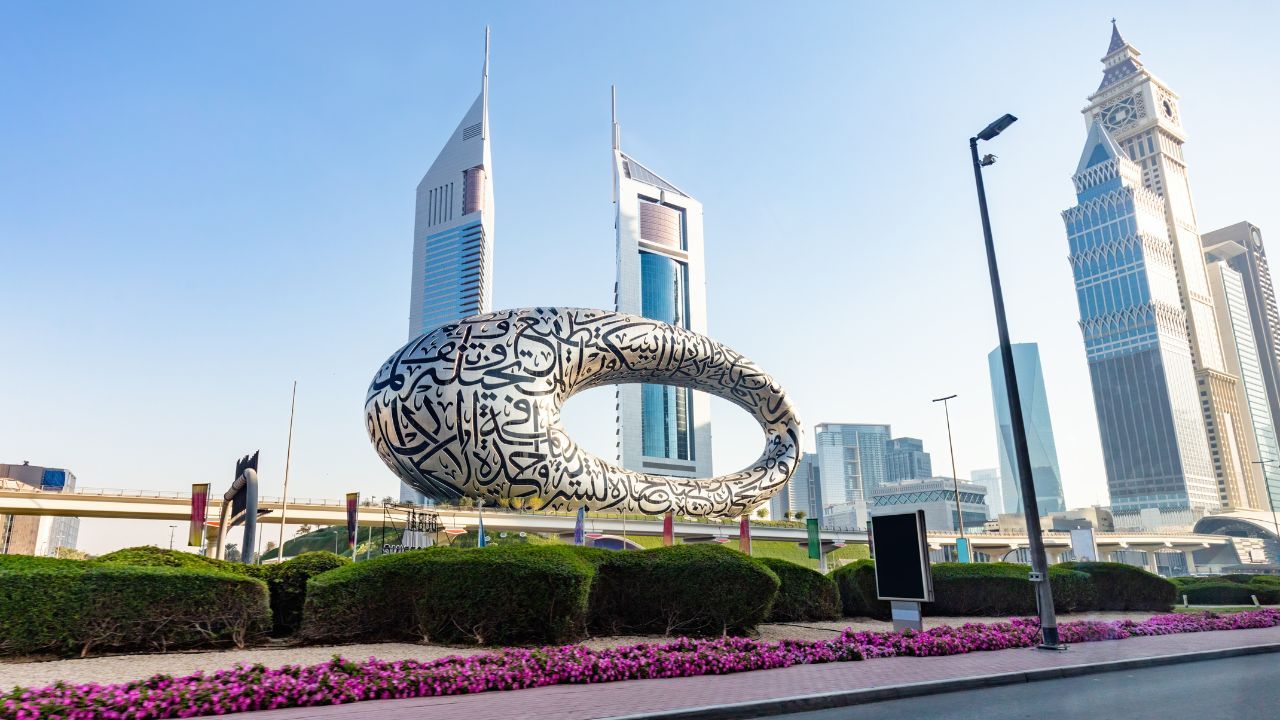
The heat in Dubai is not just a meteorological fact; it is a physical weight. On a Tuesday afternoon in the Al Quoz industrial district, the air tastes of salt and ambition. Inside a modest warehouse-turned-studio, a young furniture designer named Omar stares at a spreadsheet that refuses to balance. He is skilled. He is tireless. But he is also tethered to the ground by the gravity of overhead, licensing fees, and the predatory creep of inflation.
He represents the silent engine of the city. For every gleaming skyscraper that defines the skyline, there are ten thousand Omars trying to figure out how to keep the lights on while chasing a dream that feels increasingly like a luxury.
Then the news broke.
The government announced a massive AED 1 billion stimulus package. In the world of high finance, a billion is a round number, a line item on a ledger. But on the streets of Dubai, it is a pulse. It is a decision to intervene in the physics of the market to ensure that the city doesn't just grow taller, but grows deeper roots.
The Cost of Entry
For years, the narrative of this city has been one of vertical expansion. Build it and they will come. They did come. They came in droves. However, the price of being part of this miracle started to create a barrier. When the cost of doing business becomes a barrier to the act of creation itself, the soul of a city begins to thin.
The new measures are not merely a handout. That would be too simple, and Dubai is rarely simple. Instead, the Crown Prince announced a targeted strike against the friction of commerce. This includes a freeze on certain government fees and a massive injection of capital specifically designed to lower the stakes for small and medium-sized enterprises.
Imagine Omar again.
He isn't looking for a gift. He is looking for a gap. If the cost of his trade license drops, or if the burden of bureaucratic red tape is slashed by thirty percent, that isn't just money saved. It is a hire. It is a new lathe for his workshop. It is the ability to say "yes" to a contract that previously felt too risky to touch.
This is the "multiplier effect" stripped of its academic dry-rot. When the government decides to leave a billion dirhams in the pockets of the people who actually build things, that money doesn't disappear. It circulates. It pays for school fees, it settles grocery bills, and it eventually finds its way back into the treasury through a more vibrant, high-velocity economy.
Gravity and Grace
There is a specific kind of anxiety that comes with running a business in a global hub. You are competing with the world. You are up against the smartest, fastest, and most well-funded entities on the planet. In that arena, any weight you carry is a disadvantage.
The Dubai government’s move to simplify the regulatory environment is an admission of a fundamental truth: complexity is a tax on time.
By streamlining the digital transformation of government services, they are returning hours to the week of every entrepreneur. Think of the psychological relief. If you no longer have to spend your Sunday nights navigating a labyrinth of portals to renew a permit, you spend that time thinking about your product. You spend it with your family. You spend it being a human being instead of a data entry clerk for the state.
The stakes are invisible until they aren't. We see the cranes, but we don't see the sleepless nights of the restaurant owner in Jumeirah who is wondering if a sudden hike in utility costs will force him to let go of his head chef. We don't see the freelance coder in Marina who is weighing the cost of a residency visa against a flight back to a cheaper, slower life.
These are the people this billion dirhams is meant to protect. It is a shield.
The Psychology of Certainty
Markets are not moved by numbers; they are moved by moods.
When a leadership team commits a billion dirhams to economic incentives, they are sending a signal that penetrates the noise of global instability. They are saying, "We are betting on you, so you can keep betting on us." This creates a floor. It tells the investor in London or the startup founder in Singapore that Dubai is not a fair-weather friend.
The measures aren't just about the money. They include a total rethink of how the city interacts with its residents. There is a shift toward a more empathetic bureaucracy. They are looking at housing, at the cost of living, and at the long-term viability of making this place a home rather than a transit lounge.
Consider the "Golden Visa" expansions and the long-term residency perks that have been woven into these economic updates. These aren't just legal categories. They are emotional anchors. For a long time, the unspoken deal in the Gulf was: stay as long as you work, leave when you're done. That deal is dead.
The new deal is: stay because you belong.
This shift in philosophy is worth far more than the nominal value of the stimulus. It changes the way people spend. If you think you might be here for twenty years instead of two, you buy a house. You renovate. You plant a tree. You invest in the community.
The Ripple in the Water
The impact of these incentives is often described as a "boost," but that word is too aggressive. It’s more like a thaw.
In the weeks following the announcement, the mood in the business districts shifted. It wasn't an overnight explosion of wealth, but a softening of the tension. The conversation at the coffee shops in DIFC moved from "how do we survive" to "how do we scale."
This is where the real magic happens.
When a government removes a billion dirhams of friction, it creates a vacuum that is inevitably filled by innovation. We are seeing it already. New fintech firms are popping up not because the technology changed, but because the risk profile did. If the cost of failure is lowered, the courage to try is heightened.
Logic dictates that if you make it easier to exist, more things will exist. But there is a deeper, more human logic at play here. It is the logic of gratitude. When a city looks at its people—not just its citizens, but its residents, its builders, its dreamers—and says, "We see the struggle, and we are going to make it lighter," it earns a loyalty that no amount of marketing can buy.
Beyond the Ledger
Critics might argue that a billion dirhams is a drop in the bucket for a city with the GDP of a small country. They miss the point. This isn't an accounting exercise. It's a statement of intent.
It is the difference between a landlord who raises the rent every year because the market allows it, and one who keeps it steady because they value the tenant. One approach maximizes short-term profit; the other builds a neighborhood.
Dubai is choosing to be a neighborhood.
The invisible stakes are the lives of the millions who have pinned their hopes to this patch of desert. They are the families who moved here with nothing but a suitcase and a plan. They are the tech geniuses who could live anywhere but chose to live here because they felt the energy of the "possible."
If the government had done nothing, the city would have survived. It is too big and too central to fail. But it would have become harder. It would have become colder. By injecting this capital and these incentives now, they are ensuring that the "Dubai Dream" remains accessible to the person who is arriving tomorrow morning at Terminal 3 with a vision and a very small bank account.
The real story isn't the billion dirhams.
The real story is the architect who decides to stay. It's the nurse who realizes she can finally afford to bring her children here. It's the tech founder who sees the fee reduction and decides to hire two more developers instead of one.
These are the human dividends of a fiscal policy.
As the sun sets over the Arabian Gulf, casting long, purple shadows across the Burj Khalifa, the lights in the Al Quoz studio are still on. Omar is still there. But he isn't looking at his spreadsheet anymore. He is looking at a piece of wood, carving something new, something intricate, something that didn't exist yesterday.
He is working with a lighter heart because the city decided to carry some of his load.
In the end, that is the only metric that matters. A city is not its buildings. It is not its highways or its ports. A city is a collective agreement to build a better future together. And sometimes, that agreement needs a billion-dirham signature to remind everyone that the dream is still alive, still inclusive, and still worth the work.
The desert is vast and indifferent, but the city is a choice we make every single day.