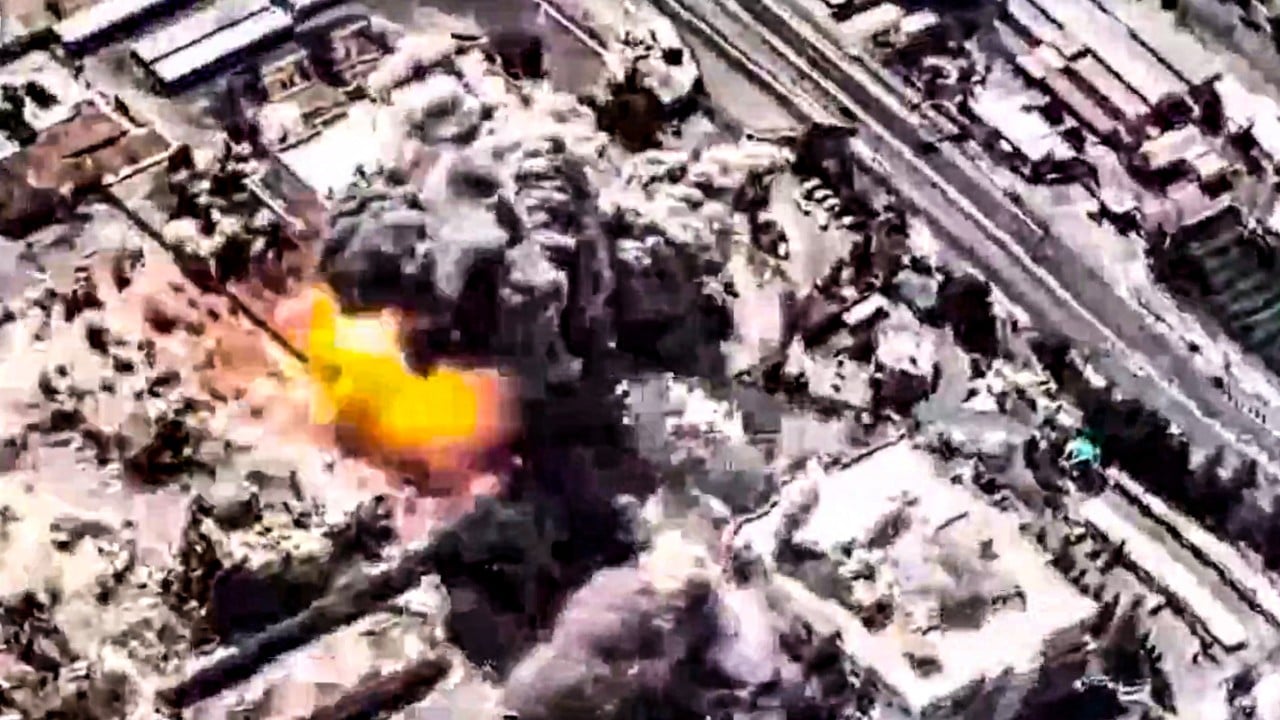
When missiles fly in the Middle East, the view from Beijing is not just about the explosion. It is about the radio frequency spectrum. While Western observers often fixate on the sheer kinetic power of munitions, Chinese military planners are scrutinizing the silent, invisible battlespace where signal intelligence and electronic warfare determine if those weapons hit their targets or disintegrate in the sky.
Recent Iranian operations, characterized by complex, multi-vector strikes, have forced a recalibration within the People’s Liberation Army. The message arriving at command centers in China is clear: the doctrine of massive, synchronized digital warfare is vulnerable to agile, persistent interference.
The Blind Spot in Electronic Dominance
China has spent decades refining the concept of "Informationized Warfare." The goal has always been total dominance across the electromagnetic spectrum. If an adversary cannot communicate, they cannot fight. However, the recent engagements in the Levant demonstrate a messy, friction-filled reality that traditional wargaming models rarely capture.
The assumption was that advanced systems would function like well-oiled machinery. The reality? Complex environments generate unexpected noise. When multiple parties operate overlapping radar arrays, communication links, and jamming suites, the resulting electromagnetic congestion creates a "fog of war" that modern software struggles to parse.
This presents a specific problem for the PLA. Their sophisticated systems rely on massive amounts of data throughput. If the environment becomes saturated—not just by intentional jamming, but by the chaos of battle itself—the high-end sensors that China prides itself on begin to suffer from data overflow. The Iranians, utilizing a blend of repurposed legacy gear and clever, low-cost drone swarms, have shown that high-tech sensors are only as effective as their signal-to-noise ratio.
Learning from the Drone Swarm
The shift toward swarm tactics has rendered many traditional air defense protocols obsolete. For decades, radar operators were trained to identify specific, high-velocity signatures. Now, they face thousands of low-and-slow targets that move in concert. This is not just a tactical shift; it is a fundamental challenge to how China approaches situational awareness.
Beijing is observing how these swarms degrade enemy intelligence networks. By forcing defense systems to engage cheap, expendable assets, the attacker achieves two objectives. First, they deplete the inventory of expensive interceptors. Second, they reveal the precise location, engagement range, and reaction time of the defender’s radar batteries.
It is a classic bait-and-switch, but executed at a digital scale. The PLA is acutely aware that if their own intelligence networks are forced into a constant state of high alert, they become susceptible to burnout. When operators are flooded with data, fatigue sets in. Critical signals get missed. The adversary knows this. They are playing the long game, using electronic signatures as a probe to map the vulnerabilities in the defense.
The Shift to Resilient Networks
There is a movement within Chinese military research circles away from centralized, monolithic command systems toward what they term "distributed intelligence." This mimics some of the adaptive behavior seen in recent conflicts. The idea is to move away from relying on a few massive, vulnerable sensors. Instead, the focus is on a mesh network of thousands of smaller, cheaper, and expendable nodes.
This is a direct response to the vulnerability of centralized hubs. If one radar dish gets knocked out, the network must survive. China is pouring resources into ensuring that their communication lines remain encrypted and resilient even when the primary bandwidth is jammed. They understand that in a future high-intensity conflict, the ability to operate in a "disconnected" state is a strategic necessity.
However, moving to this decentralized model introduces its own friction. Keeping thousands of distributed nodes synchronized requires immense computing power, much of which is currently reliant on semiconductors that are becoming increasingly difficult to source. The struggle is not just about hardware; it is about maintaining a consistent, unified picture of the battlespace without a central brain.
The Reality of Signal Intelligence
Signal intelligence, or SIGINT, has long been the crown jewel of modern espionage. But the efficacy of these tools relies on stable, predictable signals. The battlefield in the Middle East is anything but predictable. The sheer volume of electronic noise—commercial satellites, civilian communication grids, and tactical jamming—means that intercepting and deciphering the "truth" from the noise has become significantly harder.
For China, this means their massive investment in signals intelligence infrastructure may be yielding diminishing returns. They are gathering more data than ever, but the signal-to-intelligence conversion rate is dropping. It is like trying to drink from a firehose in the middle of a monsoon.
Beijing is now forced to confront the limitation of their own data-gathering machinery. They have built the vacuum to suck up all the information, but they lack the algorithmic sophistication to sort through the noise in real time. This is why you see such intense focus in China on AI integration. They need machines to do the sorting because human analysts are simply overwhelmed. Yet, as any engineer knows, an algorithm is only as good as the training data provided, and the current combat theater is producing anomalies that existing models were never designed to interpret.
The Ghost in the Machine
One of the most concerning aspects for Chinese planners is the potential for their own systems to be manipulated. If an adversary knows your signature, they can spoof it. This is the danger of relying on automated response systems. If the software recognizes a friendly signature, it lets it pass. But what if the enemy is masquerading as a friendly?
The PLA is heavily invested in "friend-or-foe" identification technologies. The assumption has been that these systems are secure. Events abroad are causing a deep, uncomfortable re-evaluation of that confidence. If the underlying logic of a sensor network can be tricked by a sophisticated electronic mimic, the entire defensive structure collapses from the inside.
This is where the tactical analysis turns into deep anxiety. It is one thing to lose a sensor to a missile; it is quite another to have that sensor turn against you, feeding false data into the command chain. That is the nightmare scenario for any military force, and it is exactly what China is attempting to design against.
The Economic Warfare Parallel
The financial cost of these electronic skirmishes is another layer Beijing is studying. While the focus remains on the technology, the sustainability of the campaign is not ignored. If you have to burn a multimillion-dollar missile to intercept a drone that cost a few thousand dollars, you are losing the war of attrition, regardless of whether you hit the target.
This is where China’s industrial base becomes their strongest asset, but also a potential liability. They can produce cheap drones at a scale that dwarfs almost everyone else. But can they produce the sophisticated, high-end guidance systems required to make those drones lethal in a jammed environment? That is the question keeping planners awake.
The current trend is clear. The future of conflict is moving toward a synthesis of low-cost hardware and high-end software. Whoever can best manage the electronic spectrum—not by dominating it, but by being the most adaptive within it—will dictate the outcome.
The obsession with maintaining a clean, orderly, and synchronized electromagnetic environment is being abandoned. In its place, there is a grudging acceptance of the chaos. The Chinese military is shifting its focus to building systems that are hardened, adaptive, and capable of operating in the dark. They are watching the Middle East, noting the failures, and quietly rewriting their own manuals. They know that in this new domain, the loudest signal is not always the strongest. Sometimes, it is the one that is simply impossible to jam.